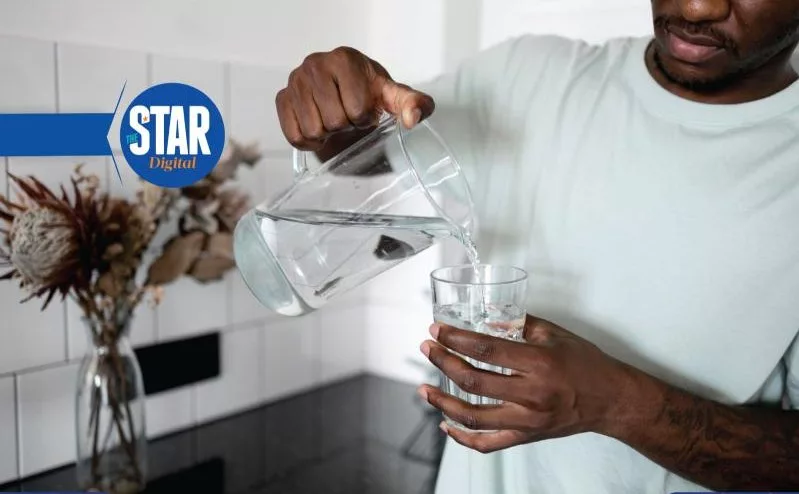
For a decade, Kenya taxed water like whisky.
In 2016, the government introduced an excise duty of Sh5 per litre on bottled water. Excise duty. The same category of tax reserved for alcohol, cigarettes and gambling — things the state wants to discourage.
Then
inflation adjustments kicked in and the tax on water was ratcheted up: from Sh5
to Sh5.25, then Sh5.74 and finally Sh6.41 per litre, where it sat for years,
quietly making Kenya's bottled water arguably the most expensive on the
continent.
Consider what that meant in practice. A bottler bought an empty one-litre PET bottle for around Sh9.80. Before filling it, the state was already owed Sh6.41 in excise duty.
On a 20-litre bottle — the one delivered to homes, offices and shops across the country — the excise duty alone was Sh128.20. Before the water. Before purification. Before VAT, fuel, electricity labour and delivery.
Then we wondered why clean water was expensive and why fake excise stamps flooded the market. When you tax a necessity like a vice, people find a way around the tax because, unlike alcohol, nobody can choose to stop drinking water.
On July 1, 2026, that era ended. Through the Finance Act, 2026, excise duty on bottled water was removed entirely.
No more duty. No more stamps.
The Kenya Revenue Authority confirmed it in a public notice this week. It is one of the few tax changes in recent memory that every Kenyan, rich or poor, should celebrate.
Article 43 guarantees every person the right to clean and safe water in adequate quantities. UN Sustainable Development Goal 6 commits the world to clean water for all. A right that is taxed into unaffordability is a right that exists only on paper.
Here is what many people miss when they dismiss bottled water as a middle-class luxury. In large parts of Kenya, packaged and vended water is not a lifestyle choice. It is the only safe option.
There are regions where groundwater carries fluoride at levels that destroy teeth and bones over a lifetime. That water must pass through reverse osmosis before anyone can drink it. At the Coast, communities living beside an ocean of undrinkable water depend on purification to survive.
If you want proof of what untreated borehole water can do, remember 2018, when 11 of Kenya's black rhinos died after being translocated to Tsavo East. The official cause was salt poisoning from borehole water so saline that it corroded the metal around the pump. If water can kill a two-tonne rhino, imagine what it can do, quietly, to families with no alternative.
This is the work water bottlers and vendors actually do. They take polluted, saline and fluoride-heavy water and treat it to WHO standards. That is not a vice to be taxed. It is public health infrastructure built by the private sector where public supply has failed.
Look at Ongata Rongai. Its groundwater is laden with fluoride, so residents cannot simply drink from the tap or a borehole. Not long ago, the town paid for it twice: first through unsafe water, then through plastic bottles littering every road and drainage.
Then water vendors moved in aggressively, setting up refill shops across the town. Today, Rongai has more than 500 water vending shops and you can hardly find a plastic bottle on its roads.
One town solved a public health problem and an environmental one through the same business model. At roughly three workers per shop, that is more than 1,500 livelihoods in Rongai alone, most of them young people, each with a family depending on them.
Multiply that across the country. In 2022, when water ATMs in residential estates faced closure for allegedly dealing in an excisable product, more than 5,000 water ATMs and about 15,000 jobs were on the line.
Every 20-litre bottle refilled dozens of times is dozens of single-use plastic bottles that never need to be manufactured. Water vending is one of the few businesses fighting the plastic menace while feeding families.
This victory did not fall from the sky.
In May 2023, the Water Bottlers Association of Kenya appeared before the National Assembly during submissions on the Finance Bill and made its case on the record: repeal the provision subjecting basic goods such as water to excise duty, remove bottled water from the First Schedule of the Excise Duty Act, and, if the government must levy a sin tax, impose it on the plastic bottle that harms the environment, not on the water that sustains life.
Tax the bottle, not the water.
The
association exhausted every avenue, from committee rooms to courtrooms and the
court of public opinion, year after year, until the argument finally prevailed.
Even the National Treasury has now conceded the point, stating in the 2026-27 budget that bottled water is a commonly consumed product across urban and rural Kenya and can no longer be treated as a luxury.
One task remains.
The Treasury CS has publicly called on manufacturers, distributors and retailers to pass the savings on to consumers. That Sh6.41 per litre must be reflected on the shelf and at the water shop, not absorbed into anyone's margin.
Kenyans fought for this relief. Kenyans must feel it.
Because when you touch water, you touch the life of every Kenyan. We can joke about many things in this country. The right to clean, safe water will never be one of them.
Henry Kabogo is the chairperson of the Water Bottlers Association of Kenya