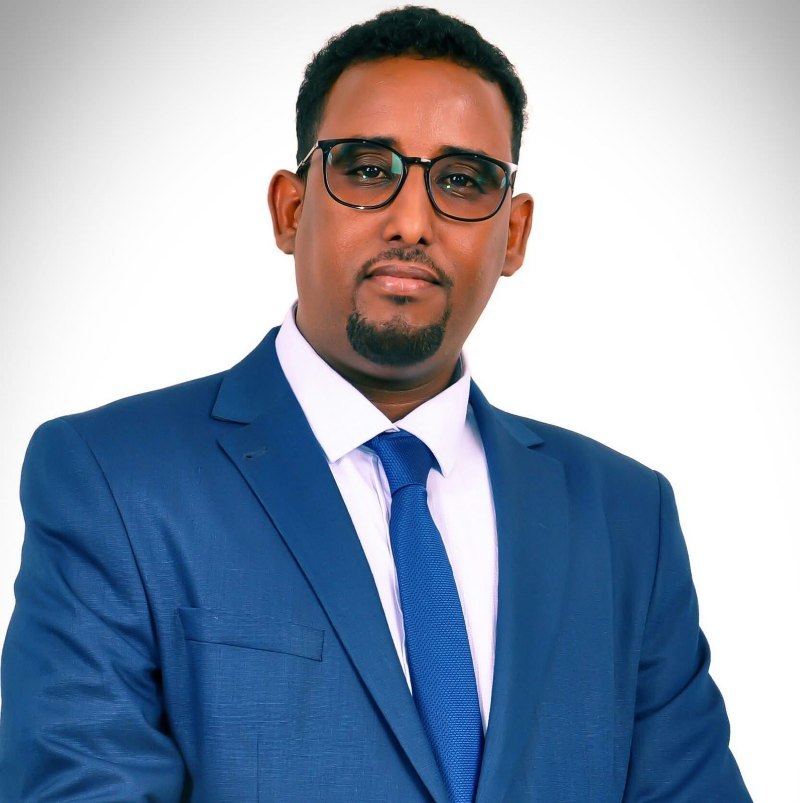
 Ahmed Shakur
Regional Communications Officer
RACIDA
Ahmed Shakur
Regional Communications Officer
RACIDA
"The greatest measure of humanitarian success is not the number of people reached today, but the number of communities that no longer need emergency assistance tomorrow."
Across the Horn of Africa, communities are living through an increasingly complex reality. Climate shocks are becoming more frequent. Droughts are lasting longer. Floods are arriving with greater intensity. Livestock diseases are spreading across borders, while competition over shrinking natural resources is fuelling conflict and displacement.
For many years, humanitarian responses focused on meeting immediate needs—providing food, water, shelter, or emergency assistance after disaster had already struck.
While these interventions saved lives, they often left one important question unanswered:
How do communities continue thriving when humanitarian organisations eventually leave?
For the Rural Agency for Community Development and Assistance (RACIDA), the answer lies in one simple but transformative principle:
Build systems, not dependency.
A PHILOSOPHY THAT BEGINS WITHIN
At RACIDA, building systems that last is more than a programming approach—it is an organisational philosophy embedded across the institution.
Recognising that lasting change requires more than technical expertise, RACIDA has invested in strengthening the capacities of its own staff to think beyond activities and outputs. Staff across sectors are equipped to design programmes through a systems lens, understanding how governance, markets, climate resilience, natural resource management, livelihoods, peacebuilding, health, education and humanitarian response interact and influence one another.
This approach encourages teams to ask different questions.
Instead of asking, "How do we respond to this crisis?" they ask, "What systems need to function better so this crisis becomes less devastating next time?"
Instead of creating parallel community structures, they strengthen existing ones.
Instead of delivering isolated interventions, they connect institutions, services, markets and communities into functioning systems capable of adapting long after project funding has ended.
This institutional shift has fundamentally changed how RACIDA designs and delivers its programmes.
TURNING SYSTEMS THINKING INTO ACTION
Every RACIDA project begins with the understanding that resilience cannot be built through standalone interventions.
Communities are complex systems.
Water influences livelihoods.
Livelihoods influence peace.
Peace influences trade.
Trade influences household income.
Income determines how families cope with drought, conflict or displacement.
When one part of the system fails, the effects ripple across entire communities.
This understanding has shaped RACIDA's programme cycle—from assessments and project design to implementation, monitoring, learning and adaptation.
Rather than measuring success only through infrastructure completed or people trained, projects increasingly focus on strengthening the relationships between institutions, government systems, markets and communities.
The result is resilience that continues to grow even after a project closes.
BORESHA-NABAD: A LIVING EXAMPLE OF SYSTEMS CHANGE
This philosophy is clearly reflected in the implementation of the BORESHA-NABAD programme, funded by the European Union and implemented by RACIDA through a regional consortium.
Implemented by RACIDA as part of a regional consortium, the project was designed around a simple but powerful idea:
Communities already possess institutions, knowledge and leadership. What they often lack are stronger coordination mechanisms, technical capacity and stronger connections between these systems.
Instead of establishing new structures, BORESHA-NABAD strengthens those already trusted by communities.
Disaster Risk Reduction Committees work alongside Peace Committees to anticipate risks before they become crises.
Community Water Committees manage shared water resources while coordinating with Natural Resource Management Committees to reduce competition over scarce resources.
Livestock Common Interest Groups work with veterinary departments and Community Disease Reporters to detect and control livestock diseases before they spread across borders.
Village Savings and Loan Associations improve household financial resilience while connecting entrepreneurs with formal financial institutions and markets.
Women and young people move from being beneficiaries to becoming decision-makers, participating in peacebuilding platforms, climate adaptation initiatives and local governance structures.
Cross-border dialogue platforms connect neighbouring communities in Kenya, Ethiopia and Somalia, allowing them to jointly manage shared natural resources, coordinate disaster preparedness and strengthen peaceful coexistence.
Every intervention reinforces another.
Every institution strengthens another.
Every investment contributes to a larger resilience ecosystem.
COMMUNITIES BECOME ARCHITECTS OF THEIR OWN RESILIENCE
Perhaps the greatest transformation occurs within the communities themselves.
Over time, project participants begin adopting the same systems-thinking approach that guides RACIDA's work.
Community leaders no longer view drought simply as a water problem.
Pastoralists no longer see livestock disease as only an animal health issue.
Women's groups recognise that financial inclusion strengthens household resilience.
Young people understand that skills development contributes to peace and social stability.
Natural Resource Management Committees appreciate that environmental restoration reduces conflict while improving livelihoods.
Communities begin planning collectively rather than responding individually.
Risks are identified earlier.
Solutions are developed together.
Local institutions coordinate before emergencies escalate.
Government departments become partners instead of distant service providers.
The project gradually shifts ownership from implementing partners to the communities themselves.
That transition is where sustainable resilience begins.
BEYOND HUMANITARIAN RESPONSE
The humanitarian sector is increasingly recognising that emergencies cannot be solved through emergency response alone.
Communities require stronger systems that enable them to anticipate shocks, adapt to changing conditions, recover more quickly and continue developing despite uncertainty.
RACIDA's systems-building approach reflects this evolution.
It bridges humanitarian assistance, development, climate adaptation and peacebuilding into one integrated model, where every investment strengthens local capacity rather than creating long-term dependence.
This is resilience by design.
It is an approach in which projects become catalysts rather than permanent solutions.
Where institutions continue functioning after donor funding ends.
Where communities lead their own development.
Where local knowledge becomes the foundation for sustainable change.
BUILDING THE FUTURE TOGETHER
As climate change, displacement and resource pressures continue reshaping the Horn of Africa, the need for stronger local systems has never been greater.
For RACIDA, resilience is no longer defined by how quickly communities recover after disaster.
It is defined by how effectively they prepare before disaster strikes.
That transformation begins inside the organisation, with staff equipped to think differently.
It continues through programmes like BORESHA-NABAD, where systems are strengthened rather than replaced.
And ultimately, it lives within communities that have the confidence, capacity and institutions to shape their own future.
Because lasting humanitarian impact is not measured by how long an organisation remains in a community.
It is measured by how well that community continues to thrive when the organisation is no longer needed.
The writer is the Regional Communications Officer RACIDA


![[PHOTOS] Calm prevails in Kisumu, Homa Bay](https://cdn.radioafrica.digital/image/2026/06/dff8923b-c99a-4f40-a4be-cc996653e4e0.jpg)