Talking about Kenya’s financial sector is never easy. It is technical, political, emotional and, for most ordinary citizens, deliberately difficult to understand.
Yet behind the language of credit ratings, fiscal consolidation, donor confidence, sovereign debt, tax reforms and investor sentiment lies a painful question: how free is a country when its economic choices are shaped more by foreign expectations than by the lived reality of its own people?
Kenya gained political independence decades ago. The flag changed. The anthem changed. The faces in government changed. The proverbial colonial administrator left.
But years later, the struggle for economic freedom remains unfinished. Today, control no longer always arrives wearing a uniform or carrying a flag. Sometimes it comes dressed as a loan agreement, a policy recommendation, a credit rating, a development partnership, or a high-level economic forum.
This is the quiet face of modern-day control.
Countries like Kenya are constantly labelled. Developing economy. Emerging market. Third-world country. Frontier market. High-risk borrower. These terms may sound harmless, even academic, but they carry real consequences. They influence how the country is treated in international markets. They affect the cost of borrowing. They shape investor confidence. They determine the terms under which loans are given, the pressure under which budgets are written, and the kind of economic discipline demanded from the government.
The ordinary Kenyan may not sit in meetings with the International Monetary Fund or the World Bank, but they feel the effect of those meetings in very real ways.
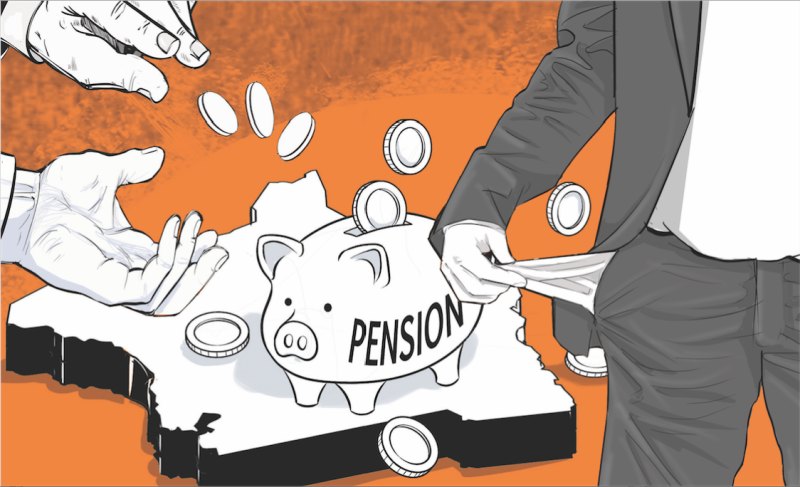
They feel it when taxes rise. They feel it when fuel becomes more expensive. They feel it when basic goods become harder to afford. They feel it when small businesses are squeezed by compliance demands, levies and operating costs that make survival feel like a punishment.
This is not to excuse poor governance. Far from it. Kenya’s economic pain is not caused by outsiders alone. We have built expensive things without always asking whether they solve the deepest problems of the people. Our leaders have too often traded tomorrow’s freedom for today’s ribbon-cutting ceremony.
But there is still a larger problem worth naming.
We have built an economy that often performs for the world before it serves its people. We build roads, stadiums, convention centres and polished national spaces to prove that we are modern, investable and ready for global attention. Yet the Kenyan who pays for those projects may never truly benefit from them. The road is built, then tolled. The debt remains. The ordinary citizen pays once through taxes, again through user fees, and again through the future burden passed to their children.
A stadium is built to host international matches, foreign teams and visiting dignitaries. The public is told to celebrate. Yet the same citizen who funded it may be kept at a distance by security barriers and police batons when the powerful arrive. State buildings are renovated for guests. Conference centres are upgraded for high-level meetings. Cities are cleaned when delegations are coming. Suddenly, pavements matter. Streetlights work. Flowers are planted. Roads are patched. The country becomes beautiful for visitors.
It is like the old china set in many homes: kept carefully in a cabinet, not for the family that lives there every day, but for guests.
That is the tragedy of development as performance.
We are told to chase status. To become attractive. To rise from the shame of being called poor, developing, third world or high risk. But too often, the price of that status is carried by the very people who are supposed to benefit from it. The mwananchi is asked to tighten the belt so the country can appear disciplined. The small trader in Gikomba is taxed harder so the government can meet revenue targets. The young entrepreneur in Koja is buried under permits and levies while multinational companies are offered incentives, tax breaks and policy comfort in the name of attracting investment.
This is where the contradiction becomes painful. A foreign company is welcomed with red carpets, exemptions and promises of ease of doing business. Meanwhile, the Kenyan trying to run a stall in Gikomba, a shop in Kisii, a farm in Eldoret, a workshop in Kariobangi or a logistics business in Mombasa is treated as a revenue source before being treated as a citizen building the economy.
We bend our backs to impress international capital, yet frustrate local enterprise.
Even regional trade, which should be one of Africa’s strongest paths to economic freedom, remains underdeveloped and under-prioritised. We speak beautifully about Pan-Africanism, but in practice, trading across African borders can be harder and more expensive than importing goods from thousands of kilometres away. It can sometimes feel easier to bring in goods from China than from Tanzania, Uganda or Ethiopia. That alone should disturb us.
If our future is African, why is our economic imagination still so externally directed?
We host global meetings and celebrate being chosen, but too often we do not ask what we are giving away in return. We welcome international institutions, but we do not always challenge the assumptions behind their prescriptions. We accept economic medicine that may balance spreadsheets while breaking households. We are told to raise revenue, but not enough is said about protecting dignity. We are told to cut spending, but not enough is said about cutting waste before cutting relief. We are told to liberalise, privatise, reform and comply, but too rarely do we ask: reform for whom?
The danger of modern financial dependence is that it can make a country govern for approval rather than for justice.
A government begins to fear the reaction of markets more than the suffering of its citizens. It begins to explain hardship as necessary discipline. It begins to speak the language of investors more fluently than the language of the people. It begins to view ordinary pain as a temporary sacrifice for long-term stability, even when that long-term stability never seems to arrive for those doing the sacrificing.
Kenya must be honest about this moment.
We need international partnerships, yes. We need investment, yes. We need infrastructure, yes. We need financial discipline, yes. But we must refuse a model of development that turns citizens into spectators of progress built in their name but not for their benefit. We must refuse an economy where local businesses are squeezed while foreign players are courted. We must refuse debt that builds monuments instead of livelihoods. We must refuse policies that make the country look strong abroad while families are collapsing at home.
True economic freedom will not come from simply changing the language used to describe us. It will not come from hosting more summits, building grander venues, or appearing more attractive to foreign investors. It will come when Kenya builds an economy whose first loyalty is to its people.
That means borrowing carefully. Spending honestly. Taxing fairly. Protecting local enterprise. Strengthening regional trade. Investing in production rather than performance. Building infrastructure that lowers the cost of living and doing business, not infrastructure that becomes another bill for the citizen. It means treating the ordinary Kenyan not as a burden to be taxed, but as the foundation of the economy itself.
Modern slavery does not always look like chains. Sometimes it looks like a country that cannot say no.
A country that keeps borrowing to impress. A country that keeps taxing to repay. A country that keeps performing development for guests while its own people wait outside the gate.
And until Kenya learns to place the mwananchi at the centre of its financial decisions, independence will remain incomplete.