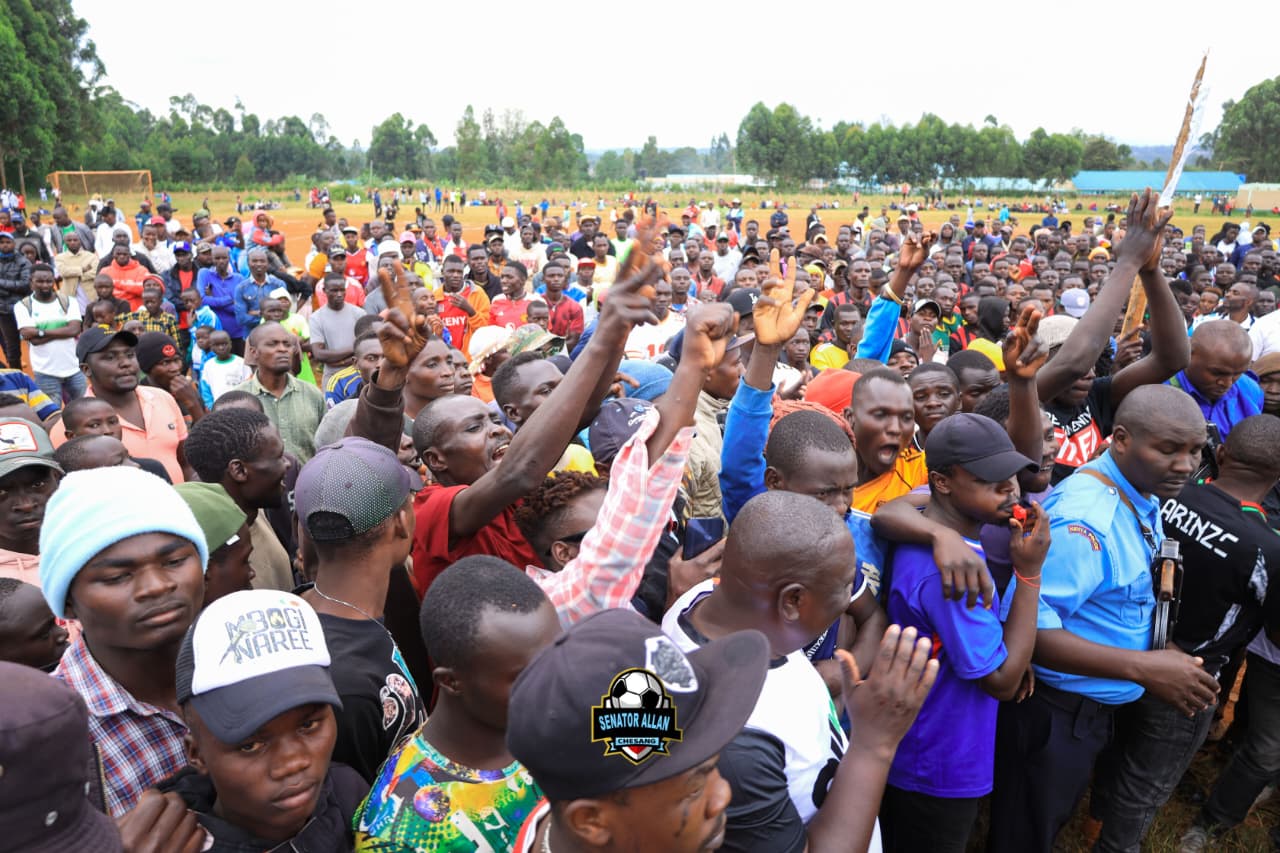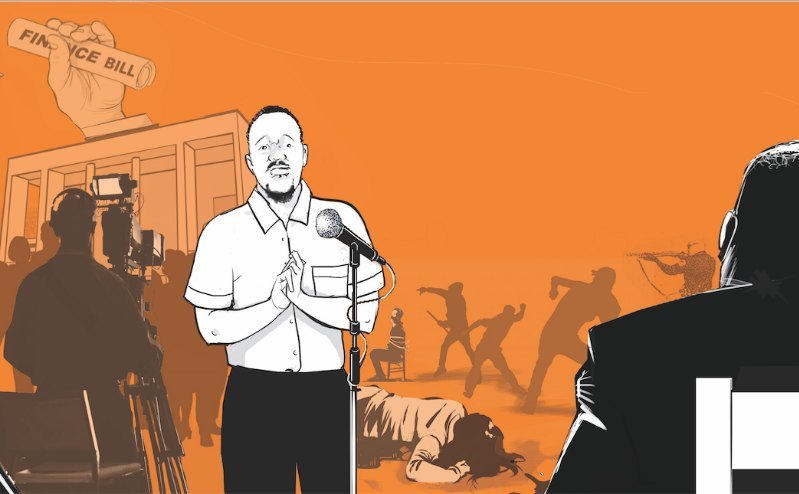
In June 2024, young Kenyans took to the streets to reject a Finance Bill. They were not refusing to pay tax. They were asking a simple question: where did the last round of our money go? The state's answer was not an audit. It was live ammunition.
The Kenya National Commission on Human Rights, an institution of the state itself, documented at least 63 deaths at the hands of security forces between June and October 2024. Eighty-seven Kenyans were abducted. Twenty-six are still missing. The Kenya Human Rights Commission puts the death toll at 65. Amnesty International confirms 60 killed and hundreds injured in the first wave alone.
The national commission also recorded 1,376 arbitrary arrests and more than 600 injuries over the protest period, the great majority inflicted by security personnel on unarmed civilians. In June 2025, on the anniversary, security forces killed another 31 people across 17 counties.
These are not abstract figures. They are the human cost of defending a fiscal arrangement that the state's own auditors have shown to be untenable. And it is worth stating plainly why those deaths matter to a discussion about tax.
A government that answers a question about its own arithmetic with bullets has not won the argument. It has confessed it cannot win the argument. If the books were clean, the state could have produced them. If the previous taxes had been spent on what was promised, the state could have pointed to the roads, the clinics, the houses. Instead, it reached for the rifle. The reflex tells you everything about which question the state was actually afraid of.
The deeper truth is that willingness to pay tax has very little to do with the rate. The research on this is settled. People pay willingly when they can see what the state delivers in return. The Scandinavian countries collect Sh40 to Sh50 out of every Sh100, two or three times what Kenya collects, and their citizens pay with relatively little complaint, because the contract is visible: healthcare that works, schools that function, roads that survive the winter.
Kenya is trying to push its own collection toward Sh25 out of every Sh100 in a country where the contract is invisible, because the contract is not being honoured. The Social Health Authority that replaced NHIF launched into a rollout dogged by complaints from patients turned away and providers left unpaid.
The Housing Levy collected more than Sh73 billion in the year to June 2025 and delivered fewer than 2,000 completed units for occupation, a fraction of one per cent of its own stated target of 200,000 homes a year.
The fuel levy, which raises around Sh70 billion annually, is itself under a parliamentary-ordered forensic audit after the Auditor General flagged billions in disbursements that could not be explained or reconciled.
A reasonable person, asked to pay more into a system like that, says no. The young people who filled the streets were not rejecting the idea of a state. They were rejecting a specific, dishonest transaction. They were, in the most literal sense, doing the arithmetic correctly. The tragedy is that they paid for that arithmetic in blood, while the people who benefit from the broken deal paid nothing at all.
So what should be done? A Finance Bill is again before
the country, again in public participation. That window is the one moment the
citizen's voice carries legal weight. Here is what it should demand, built on a
single principle: no further extraction is owed until the existing leakage is
closed.
First, no Finance Bill should pass without a published, audited recovery target tabled alongside it. The Auditor General produces a report every year. The EACC produces dockets. Parliament should refuse to debate any new revenue measure until Treasury publishes, beside the Bill, a schedule of what was flagged as lost last year, how much has been recovered, what is in active proceedings, and the recovery target for the year ahead. New taxes and recovery of stolen funds should travel together, vote together, and stand or fall together.
Second, every new tax must be tied by law to a named purpose. The Housing Levy should fund houses, or it should not exist. The health contribution should fund a defined, audited package of care, or it should not exist. The fuel levy should fund roads whose contracts are public, or it should not exist. The current habit, where every new tax dissolves into a general pool and disappears, must end.
Third, the institutions that police the theft must be funded as a share of what they recover. The Auditor General, the EACC, the Director of Public Prosecutions and the Asset Recovery Agency could, between them, recover sums far larger than their combined budgets. Today, they are starved and harassed. They should be protected by law, their budgets linked to their recoveries, their leaders shielded from the people they investigate. There is no higher-return investment in the entire national budget.
Fourth, if the state insists on new powers to watch the citizen, the citizen must receive equivalent powers to watch the state. Any Bill that grants the revenue authority access to private data must, in the same breath, open public procurement records, contract awards and the ownership registers of every company doing business with the government. Scrutiny must flow in both directions, or it is not scrutiny. It is surveillance.
Fifth, the framing of the entire debate must change. We argue as though tax is the variable and theft is a fixed feature of nature. The truth is the reverse. Theft is the variable. Tax, by global comparison, is almost reasonable. Any leader who comes to the citizen asking for more before visibly closing the leak is asking the wrong question, and deserves the answer they keep receiving.
Kenya is not a poor country being honestly taxed to build itself. It is a moderately taxed country quietly being drained and asked to refill the bucket faster while no one repairs the holes. The citizens who pointed this out were met with force. The least the rest of us owe them is to say the same thing they died saying, in language Parliament cannot pretend not to have heard.
The deal is broken. It was always the state's job to fix it, and never the citizen's job to die asking.
Surgeon, writer and advocate of healthcare reform and leadership in Africa