


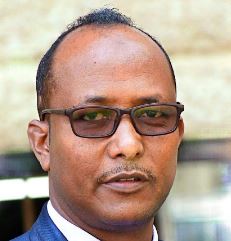
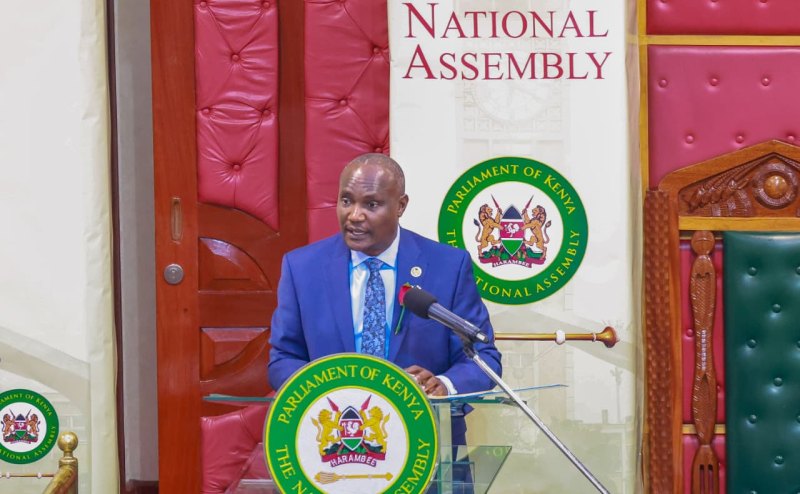
 Dr Harun Issack
Hassan, PhD Professor of
Psychology, Governance and Leadership Expert./HANDOUT
Dr Harun Issack
Hassan, PhD Professor of
Psychology, Governance and Leadership Expert./HANDOUT
The reported confrontation involving an elected leader and a senior police officer during the recent Madaraka Day celebrations in Kakamega County should concern every Kenyan who values constitutional governance, public order, and the rule of law. While the relevant authorities must establish the facts through due process, the incident raises broader questions about leadership accountability and respect for the institutions that safeguard our democracy.
At the heart of every constitutional democracy lies a simple principle: no person is above the law. This principle applies equally to ordinary citizens and to those entrusted with public office. Indeed, elected leaders bear a greater responsibility because they are expected to exemplify respect for the law and the institutions created to enforce it. Police officers deployed at national celebrations perform critical duties. They manage access control, enforce security protocols, assess risks, and ensure the safety of dignitaries and members of the public. Their role is not ceremonial. It is an essential component of national security.
When a law enforcement officer carrying out lawful duties is intimidated, obstructed, or physically confronted, the consequences extend beyond the individuals involved. Such conduct undermines institutional authority, weakens public confidence, and sends a dangerous message that power can supersede lawful procedures.
The Constitution of Kenya leaves little room for ambiguity on this matter. Article 10 establishes national values and principles of governance, including the rule of law, integrity, transparency, accountability, and respect for human dignity. These values bind all State officers and public officials in the exercise of authority.
Article
73 further states that authority assigned to a State officer is a public trust
to be exercised in a manner that demonstrates respect for the people, brings
honour to the nation, and promotes public confidence in the integrity of public
office. Leadership is therefore not merely about power; it is fundamentally
about responsibility and example.
Chapter Six of the Constitution was enacted precisely to ensure that public
office is exercised with integrity, accountability, and respect for the law.
The framers of the Constitution understood that democratic institutions can
only thrive when leaders themselves submit to the standards they expect others
to follow.
Equally important are the constitutional provisions governing security. Article 238 requires that national security be pursued in compliance with the law and with utmost respect for democracy, human rights, and the rule of law. Article 245 guarantees the operational independence of the National Police Service in executing its constitutional mandate.
These provisions recognise an important reality: security institutions cannot
function effectively when officers are subjected to intimidation by the very
individuals they are assigned to protect. Security protocols are developed
through professional assessment of risks and vulnerabilities. They are not
optional guidelines that can be ignored according to status or political
influence.
The symbolism of an elected leader allegedly confronting a police officer at a security checkpoint is particularly troubling. It risks creating a public perception that some individuals enjoy privileges beyond the reach of lawful procedures. Such perceptions erode trust in public institutions and weaken the social contract between citizens and the State.
Throughout history, stable democracies have been distinguished by strong institutions rather than powerful individuals. As former United Nations Secretary-General Kofi Annan observed, “Good governance is perhaps the single most important factor in promoting development and strengthening institutions.” Respect for institutions begins with respect for those entrusted to implement the law.
Kenya has invested heavily in professionalising its security services and strengthening accountability mechanisms within government. These gains should not be undermined by conduct that appears to diminish the authority of law enforcement officers performing legitimate duties.
The response to incidents of this nature must be guided by constitutional principles rather than political considerations. The Independent Policing Oversight Authority, investigative agencies, and other relevant institutions should establish the facts objectively and transparently. If evidence confirms misconduct, the law should take its course without fear or favour.
Equally, Parliament and relevant ethics bodies should assess whether such conduct, if established, is consistent with the leadership and integrity standards envisioned under Chapter Six of the Constitution. Accountability should never be viewed as persecution. Rather, it is the foundation upon which public trust is built.
The Inspector-General of Police must also send a clear message that officers performing lawful duties will receive institutional protection and support. Failure to protect officers from intimidation risks undermining morale and weakening operational effectiveness across the service.
Public office should never be interpreted as a licence to disregard lawful authority. On the contrary, those who make the laws have an even greater obligation to obey them. Leadership carries not only privileges but also responsibilities to uphold constitutional values and strengthen public confidence in democratic institutions.
Kenya's future depends not merely on the strength of its leaders but on the strength of its institutions. The rule of law cannot survive where authority is exercised selectively. Respect for law enforcement officers is therefore not simply a matter of professional courtesy; it is a constitutional obligation and a prerequisite for national security.
If our democracy is to flourish, leaders must demonstrate through both words
and actions that no individual is above the law. The nation must remain
steadfast in defending the institutions that protect us all and in ensuring
that accountability remains the cornerstone of public leadership.
The writer is a PhD Professor of Psychology, Governance and Leadership Expert









![[PHOTOS] The Star, Chinese Embassy host Kenya-China media dialogue](https://cdn.radioafrica.digital/image/2026/06/215e29cd-5ca2-4faf-bb4e-d1686b2c3dad.jfif)