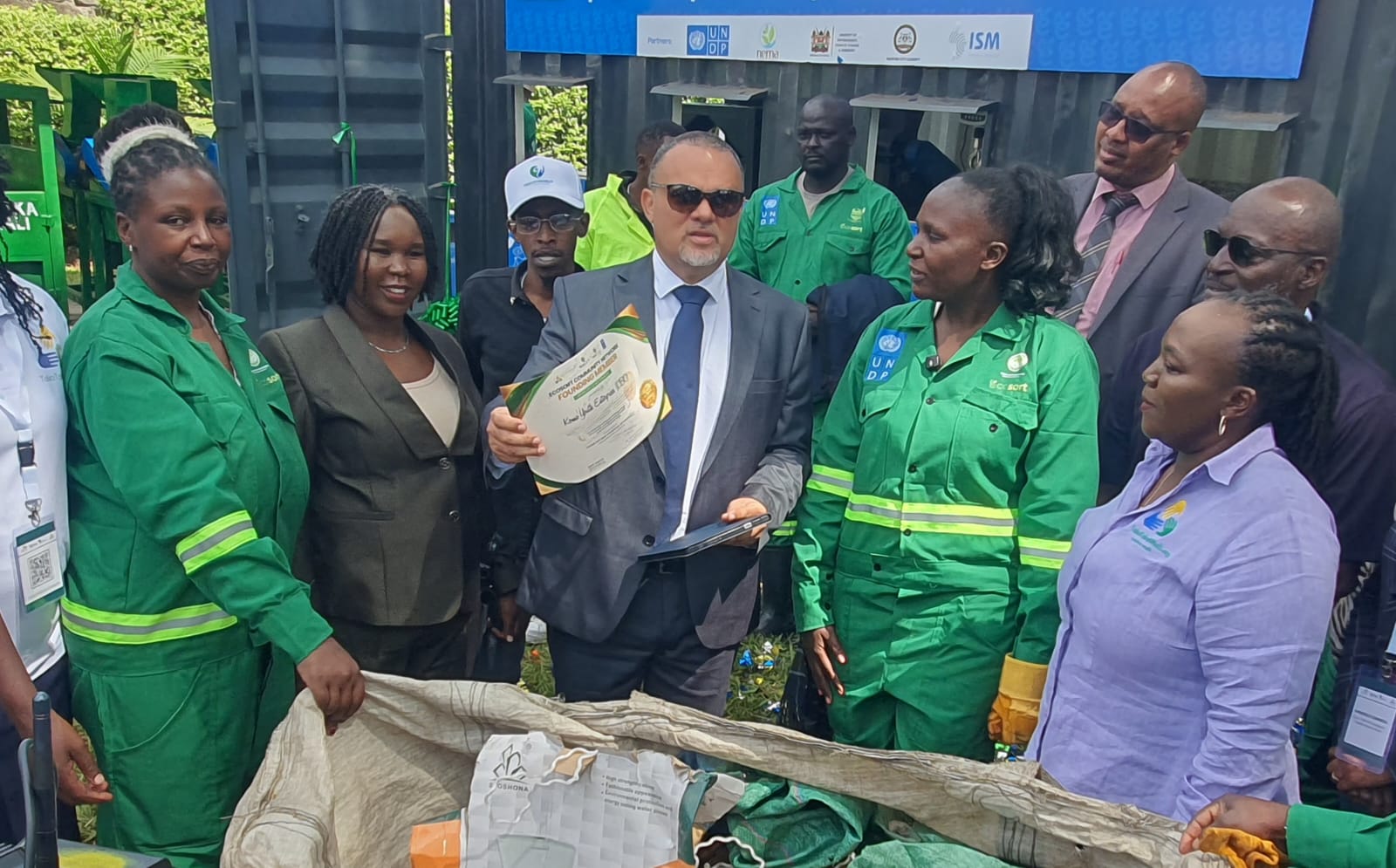
 Council of Governors Chief Executive Officer Mary Mwiti /HANDOUT
Kenya cannot claim economic transformation while millions of citizens remain one failed rainy season away from hunger. Food security is no longer merely an agricultural concern; it is a matter of national stability, public health and sustainable development.
According to National Drought Management Authority (NDMA), over 1.8 million Kenyans currently face acute food insecurity, particularly in the Arid and Semi-Arid Lands (ASALs), with projections warning that this figure could exceed 2.1 million during the next lean season. Behind these numbers are struggling households in Counties such as Turkana, Marsabit, Mandera, Wajir, Kitui, Makueni and Garissa where climate shocks, rising food prices, livestock disease and dilapidated rural infrastructure continue to erode livelihoods.
Yet, this crisis is also an opportunity. Kenya can build a resilient food system if counties are fully empowered and properly financed to drive agricultural transformation.
The Constitution deliberately devolved agriculture to County Governments because food systems are inherently local. Counties understand their soils, rainfall patterns, livestock corridors, irrigation potential, and farmer needs better than distant centralized bureaucracies ever could.
Over the last decade, counties have registered notable progress: expansion of agricultural extension services; investment in livestock vaccination and disease surveillance; development of aggregation and storage facilities; promotion of climate-smart agriculture; rehabilitation of local irrigation schemes; and increased support to farmer cooperatives and value chains.
Recent favourable rains have reinforced this potential. In the Rift Valley and the western maize basket, rainfall during the 2025 long rains season reached up to 40 percent above average, boosting production prospects and demonstrating the resilience of Kenyan farmers when adequately supported.
But counties cannot win this battle alone. Kenya still loses enormous quantities of food after harvest due to poor storage, weak rural roads, and limited agro-processing capacity. In many counties, farmers produce food but still remain poor because they lack reliable markets and value-addition opportunities.
Meanwhile, urban consumers face high prices despite surplus production in some regions. This contradiction exposes a deeper structural flaw: food insecurity in Kenya is not simply about production — it is about systems, coordination and investment.
These three priorities must guide national policy.
First, agriculture must be treated as a strategic economic sector. Agriculture contributes over one-fifth of Kenya's GDP directly and supports millions of livelihoods, particularly in rural counties. Yet, public investment remains below the commitments envisioned under the Malabo Declaration and other continental frameworks. Food security cannot depend on rain-fed farming alone. Counties require sustained investment in irrigation infrastructure, water harvesting, livestock feeds and fodder systems, agricultural mechanization, county laboratories and veterinary services, and climate-resilient seed systems.
Second, intergovernmental coordination must deepen. Disease outbreaks, food reserve management, fertilizer distribution, and agricultural data systems demand stronger collaboration between National and County Governments. Food systems do not respect administrative boundaries. The current fragmentation in national programmes delays implementation and dilutes accountability. Counties should not merely execute centrally designed projects; they must be equal partners in planning, financing, and delivery.
Third, food security must become youth-driven and market-oriented. Kenya's average farmer is ageing. Unless agriculture becomes profitable, technologically sophisticated and attractive to young people, the country risks long-term food insecurity despite immense agricultural potential. Digital agriculture, aggregation centres, agro-processing industries, and county industrial parks can create jobs while strengthening local food systems. Counties are already investing in these models, but stronger financing and policy consistency are essential.
Nutrition must remain central to this agenda. Recent assessments indicate that over 741,000 children under five and more than 109,000 pregnant and lactating women in ASAL counties are acutely malnourished and require urgent support. A hungry nation cannot be productive.
The future of Kenya's food security will not be secured through emergency food aid. It will be secured by empowering farmers, strengthening counties, investing in resilience and building efficient local food economies.
Devolution brought government closer to the people. It must now bring food security closer to the people. All stakeholders including both levels of government, development partners, private sector actors and communities must work together to ensure that no Kenyan sleeps hungry in a country blessed with such enormous agricultural potential.
Food security is not charity. It is sovereignty. It is
dignity. And it is the foundation upon which Kenya's economic future must be
built.