Del Monte Kenya’s journey from a modest fruit canning operation in 1965 to one of the country’s most significant agribusiness players reflects a growth story shaped by Kenya’s own economic and social transformation.
Over 60 years, the company has grown into a major contributor to employment, exports and rural development, while navigating shifts in ownership, policy, land use and sustainability expectations.
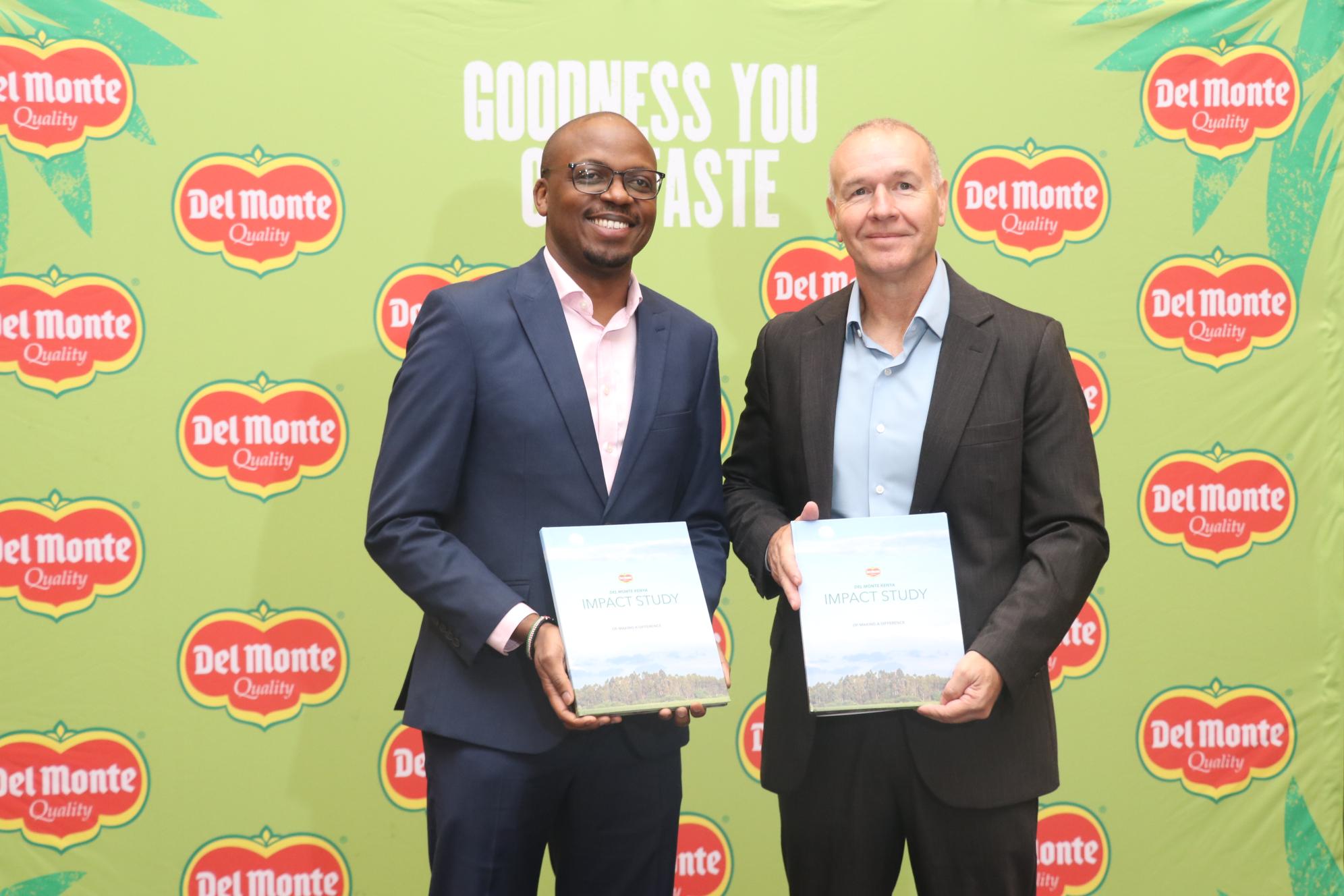
Speaking during the launch of the company’s 60-Year Impact Report in Nairobi on May 5, managing director Wayne Cook described the transformation as both economic and human.
“Sixty years ago, the ground on which Del Monte Kenya sits was just land. Today, it has been transformed into a source of sustainable livelihoods for thousands of Kenyan families and a driver of significant social and economic impact across the country,” Cook said.
The report, independently prepared by Lotus Consulting Limited, provides one of the most detailed assessments of a private agribusiness operation in Kenya.
Drawing on two decades of financial data and broader historical analysis, it maps the company’s contribution to the economy and society.
Del Monte Kenya’s evolution mirrors broader shifts in Kenya’s agricultural sector, where large-scale commercial farming has increasingly been called upon to balance productivity with sustainability, labour standards, and community impact.
Over time, pressure from regulators, markets and global environmental standards has reshaped how agribusinesses operates, placing greater emphasis on responsible land use and climate resilience.
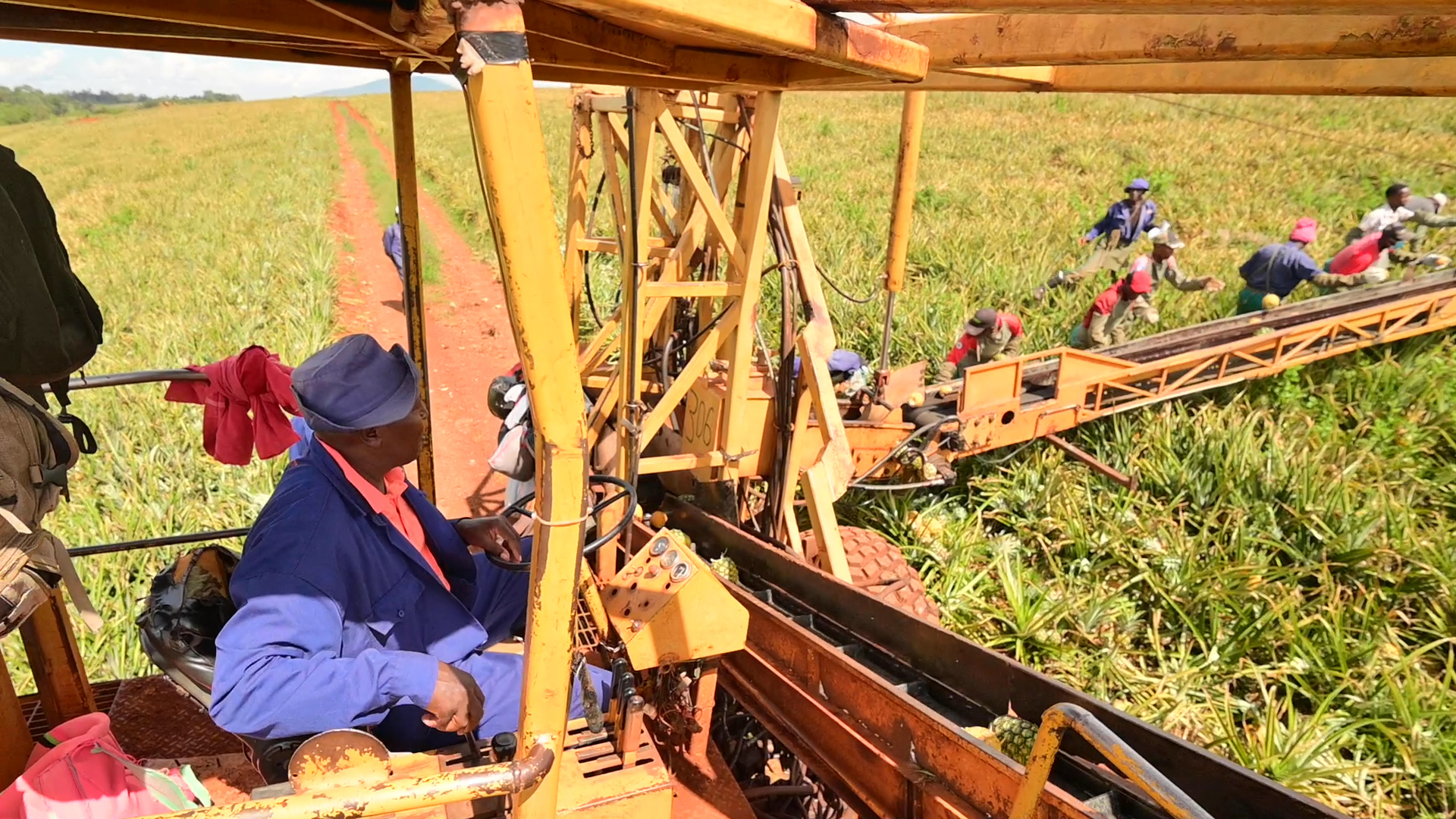
Within this context, the company’s operations in Thika, spanning more than 8,300 hectares, represent one of the most extensive integrated agricultural systems in the country.
The land hosts not only pineapple plantations, but also processing facilities, housing, conservation areas, and social infrastructure, creating what is effectively a self-contained agro-industrial ecosystem.
REINVENTIVE HISTORY
The origins of Del Monte Kenya trace back to the early development of commercial pineapple farming in the country, with formal operations beginning under Kenya Canners Limited.
The business initially relied on an outgrower model, sourcing fruit from smallholder farmers.
However, post-Independence economic realities and the need for consistency in quality and supply prompted a strategic shift.
By the late 1960s, following the entry of Del Monte Corporation, the company began consolidating production within large-scale estates in Thika.
This marked a turning point that enabled greater control over inputs, processing and export standards.
Kamau Wairuri, who led the impact assessment at Lotus Consulting, said the company’s evolution reflects broader shifts in Kenya’s agricultural and economic landscape.
“What we found is a story that unfolds across distinct eras, from colonial agriculture to post-Independence restructuring and eventually to a modern, globally integrated agribusiness,” he said.
“It is not just a company story, it is also a reflection of Kenya’s economic development over time.”
Over the decades, the company navigated periods of ownership changes and global restructuring, including transitions involving multinational investors and eventual reintegration into Fresh Del Monte Produce Inc.
These changes, while complex, coincided with continued investment in production capacity, infrastructure and export markets.
By the 1980s, Del Monte had already established itself as a major employer in Thika and a key exporter, with production and payroll contributing significantly to the local economy.
The early years of pineapple farming in Kenya were marked by experimentation and uncertainty.
By the time Kenya Canners Limited began operations in 1949, the foundations of a formal fruit export industry were beginning to take shape.
However, it was not until the entry of Del Monte in the 1960s that large-scale industrial production gained momentum.
Wairuri said the transition from smallholder-based sourcing to estate farming was driven by operational realities.
“The company faced challenges in ensuring consistent supply and quality through the outgrower model,” he said.
“The move towards
estate-based production allowed for standardisation, which is critical in
export markets.”
This shift coincided with Kenya’s broader push to attract foreign investment following Independence, positioning agriculture as a key driver of economic growth.
ECONOMIC FOOTPRINT
The report estimates that Del Monte Kenya has contributed more than Sh100 billion to the country’s Gross Domestic Product between 2004 and 2024.
This translates to an average annual contribution of about 0.16 per cent of national GDP and 1.5 per cent of the agricultural sector’s output.
Cook said the figures highlight the company’s long-term role in supporting livelihoods and economic growth.
“These are not just numbers. They represent livelihoods, communities and long term partnerships that contribute to our success,” he said.
Employment remains one of the most visible aspects of the company’s impact.
Del Monte directly employs an average of 6,290 workers, with the number rising to nearly 20,000 when indirect and induced jobs across its supply chain are included.
Wairuri said the multiplier effect extends beyond employment into the wider economy.
“For every shilling of direct value created by the company, an additional 59 cents is generated elsewhere in the economy. Similarly, each direct job supports more than two additional jobs, which brings the total number of livelihoods linked to the company to about 79,000,” he said.
The company’s wage structure also stands out in the agricultural sector, with employees earning an average of about 31 per cent more than the sector benchmark.
This has contributed to improved household incomes and greater economic stability in surrounding communities.
In addition to employment, Del Monte has made a notable fiscal contribution.
Since 2017, the company has paid about Sh8.5 billion in taxes, alongside statutory contributions and county levies.
Exports remain another critical pillar of its economic role. In 2024 alone, the company recorded export earnings of about $101 million (Sh13 billion), accounting for a significant share of Kenya’s agricultural exports.
Beyond headline figures, the report highlights the structural role the company plays in Kenya’s agricultural value chain.
This vertical integration has enabled Del Monte to remain competitive in global markets, while maintaining consistent product quality.
Wairuri said such integration is a defining feature of successful agribusiness models.
“When you look at the full value chain, from farm to export, Del Monte has built systems that allow it to control quality, manage costs and respond to market demand efficiently,” he said.
The report also shows that capital investment has remained steady over the years, with the company reinvesting billions of shillings into infrastructure, machinery and technology.
This has supported productivity growth and long-term operational stability.
COMMUNITIES AT THE CENTRE
Beyond macroeconomic indicators, the report places strong emphasis on the company’s social footprint, particularly in host counties such as Kiambu, Murang’a and Machakos.
Cook highlighted individual stories to illustrate the human impact behind the data.
“Behind those numbers are people like Francis, a supervisor in our agriculture department, whose child received life-saving treatment through the company’s medical cover, and Simon, who went through our supported schools and now works in our research department,” he said.
Over the past decade, Del Monte has supported 13 schools serving more than 12,000 learners and implemented health programmes reaching thousands of women through reproductive health services.
The company has also invested in employee housing, medical facilities and infrastructure in its operations, positioning itself as a key socioeconomic anchor in the region.
Wairuri said such investments reflect a broader approach to development beyond core business operations.
“The company’s impact is not limited to production and exports. It extends to community development, workforce welfare and social infrastructure, which are critical components of inclusive growth,” he said.
In the areas surrounding its operations, the company’s presence has contributed to the growth of local economies, with towns such as Thika and neighbouring trading centres benefiting from increased demand for goods and services.
Local businesses, transport providers and suppliers form part of a wider ecosystem that depends on the company’s operations.
Cook said this interconnectedness is central to how the company measures its impact.
“When we look at our footprint, we do not only look at the people we employ directly. We look at the entire ecosystem around us, including suppliers, contractors and the communities that grow alongside our operations,” he said.
SUSTAINABILITY TRANSITION
One of the defining shifts in Del Monte Kenya’s recent trajectory has been its move towards sustainability-driven operations.
The company has significantly reduced water use per tonne of pineapple by more than 90 per cent since 2016 and planted more than 146,000 trees between 2016 and 2023.
It has also diverted nearly all its solid waste from landfills through recycling and reuse initiatives.
Cook said the company
is working towards a circular production model.
“We do not want to see waste from our operations. What we now consider byproducts should feed into the next process, whether in energy, fibre or soil regeneration. That is the direction we are taking,” he said.
Key investments include a biofertiliser facility, expected to reduce reliance on imported fertilisers, and a solar power installation commissioned earlier this year to support energy needs.
The company has also set aside land for conservation, including riparian zones that support biodiversity and protect water resources.
“Sustainability is not optional for us. It is central to how we plan for the future, especially in the face of climate change and resource constraints,” Cook added.
The company’s land use strategy has also evolved significantly over time, moving from a single-crop model to a more diversified and sustainability-focused approach.
The report highlights investments in irrigation systems, soil management and organic waste recovery as key components of this transition.
Cook said sustainability is increasingly shaping operational decisions.
“We have to think about how we use water, how we protect the soil and how we coexist with the environment. These are not future considerations. They are current priorities,” he said.
The company has also set aside hundreds of hectares as conservation zones to protect biodiversity and water sources, aligning its operations with global sustainability frameworks.
CHALLENGES, DISRUPTION
Despite its growth, Del Monte Kenya’s journey has not been without challenges.
The report identifies periods of disruption, including global economic shifts, the Covid-19 pandemic and local land-related issues.
Wairuri noted that the pandemic period between 2019 and 2021 affected productivity and output, reflecting broader economic pressures across sectors.
Land governance has
also been a recurring issue, with the company ceding portions of its leasehold
land to government in line with regulatory requirements.
These transitions, while necessary, have occasionally affected operations and planning.
The company has also faced scrutiny over labour practices and human rights concerns, particularly in 2022.
In response, it undertook what it describes as its most extensive due diligence exercise, leading to the establishment of a Welfare, Diversity and Human Rights Department and a formal grievance mechanism.
Cook said the experience reinforced the importance of accountability and transparency.
“We are not perfect, and we are honest about where we need to improve. What matters is that we take responsibility and act,” he said.
The company has also had to navigate shifting regulatory frameworks, particularly around land ownership and use.
Changes in policy have required compliance adjustments, including the ceding of portions of land to the government for public use.
These transitions have at times affected operational planning, but the report indicates that compliance with legal and regulatory requirements has remained consistent.
Wairuri said
regulatory alignment is a critical aspect of long-term sustainability.
“Operating at this scale requires constant engagement with policy frameworks, from land use to environmental standards. Compliance is not optional, it is foundational,” he said.
NEXT PHASE
As Del Monte Kenya enters its seventh decade, the focus is increasingly on diversification, innovation and long-term resilience.
The company is expanding into new product lines, including fresh fruit exports and Individually Quick Frozen products, while exploring the cultivation of crops such as mangoes and avocados.
A planned outgrower scheme is expected to reintroduce smallholder participation in a modernised framework, supported by improved logistics and agronomy.
Cook said the company’s future strategy is anchored in sustainability and adaptability.
“Agriculture is a long-term business. You have to plan not just for the next year but for the next decades,” he said.
“That means investing in innovation, managing resources sustainably and being flexible to change.”
He added that Del Monte Kenya sees itself as part of a broader national development agenda.
“Even though we are part of a global brand, this is a Kenyan business for the Kenyan people. Our success is tied to the success of the communities and the country,” Cook said.
Wairuri said the company’s experience offers lessons for other investors in the sector.
“It shows that large-scale agribusiness can coexist with community development, environmental stewardship and economic growth, provided there is deliberate planning and long-term commitment,” he said.
Looking ahead, the company is positioning itself to respond to emerging trends in agriculture, including climate change, shifting consumer preferences and the demand for sustainable production.
Cook said the focus remains on long-term resilience.
“We are building for the next 60 years. That means being adaptable, investing in innovation and ensuring that our operations continue to benefit both the economy and the communities around us,” he said.
For many workers, the company’s impact is measured not in figures but in lived experience.
Generations of families have worked within the plantations and factories, with employment providing stability in regions where formal job opportunities are limited.
These individual experiences, reflected in stories shared during the report launch, form part of a broader narrative of how long-term investment in agriculture can shape livelihoods over time.
“I hope Del Monte Kenya is remembered as more than a pineapple producer,” Cook said.
“Our legacy should be that of a company that provided quality products, reliable employment, healthcare, education, environmental progress and national economic contribution. We want to be seen as a long-term development partner for Kenya.”

![[PHOTOS] Obado Leaves court in handcuffs](https://cdn.radioafrica.digital/image/2026/07/efc75d55-2eb9-4019-bb24-937dc4fc4f56.webp)