City Hall has set aside Sh3 billion to settle its pending bills in the next financial year 2020-2021.
The county’s outstanding bills stand at Sh6.56 billion.
At the inauguration of devolution in 2013, the first county government inherited a debt estimated at Sh36.3 billion and by 2017 the debt had swollen to Sh56.52 billion.
As of December 31, 2019, the pending bills reported by the Office of the Auditor General stood at Sh10.67 billion.
After the audit, Sh1.1 billion was paid out to contractors and suppliers and Sh3 billion to Kenya Revenue Authority as pending arrears of unremitted VAT and PAYE .
The Debt Management Strategy Paper is contained in the County Fiscal and Strategy Paper FY 2020-21 that was passed by the assembly on Tuesday.
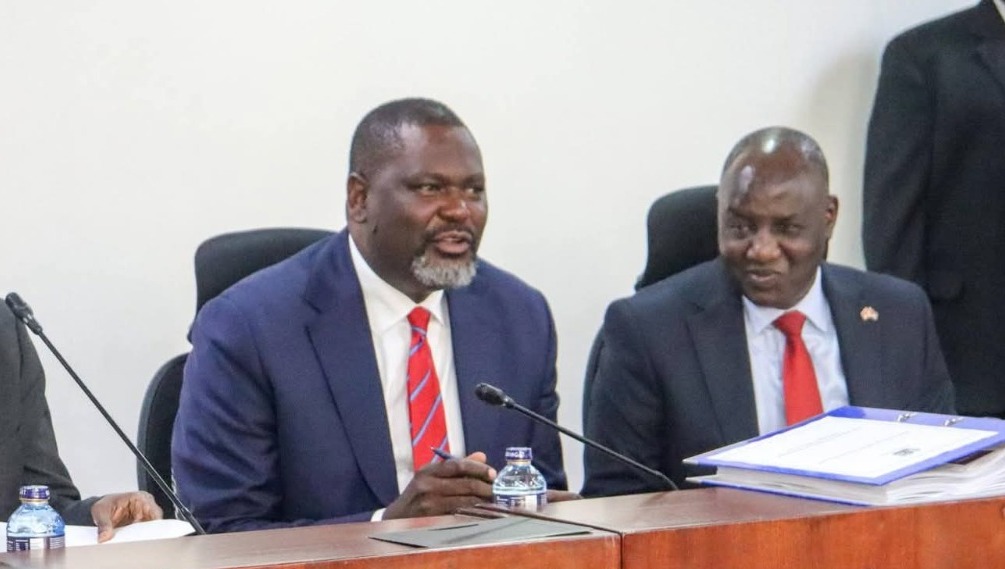
However, the Budget and Appropriations committee led by Robert Mbatia has raised concerns about the increase of county debts since 2013.
“Considered debt management strategy papers attribute this growth to non-remittance of statutory deductions, non-payment of suppliers and legal creditors and related penalties,” Mbatia said.
In March 2018, Governor Mike Sonko gazetted a 10-man committee to review and clear pending debts for goods supplied and services rendered to the administration of former Governor Evans Kidero.
Sonko claimed his administration had inherited Sh60 billion pending bills from the first county government during Kidero’s tenure.
However, the DMSP states that as of December 2018 the unaudited statements were over Sh70 billion.
“This increment implies that the county debt has been steadily on the rise by over Sh30 billion since the inception of the county government and this casts doubt on whether the county is on track towards flattening its debt curve,” Mbatia said.
The Budget committee expressed concerns that the amount of debt owed to the county shows that the track geared towards fiscal consolidation remains a thorny one.
According to the Fourth Quarter County Budget Implementation Report for the financial year 208-2019 submitted by the county treasury, total receivables as at June 30, 2019, stood at Sh466.3 billion.
This represented an increase of Sh168 billion over the two years as total account receivables stood at Sh298.19 billion in June 2017, which was a rise from the Sh208.9 billion in 2016 and Sh147.3 billion in 2015.
“The committee has noted with a lot of concern that neither the County Fiscal Strategy Paper and Debt Management Strategy Paper has provided information on the growth of amounts owed to the county and neither were amounts provided in the 2019 CFSP,” Mbatia said.
City Hall has maintained that the national government is its biggest debtor. Together with parastatals, they owed the city government over Sh400 billion as of December 2019.
“It is evident that the county treasury has not put in place measures to ensure recoverability of the receivables which would ordinarily result into a better trade-off of the county debts in comparison with its receivables hence safeguarding the county’s pivotal assets in the form of accounts receivable,” the paper reads.
The Budget committee has noted that massive growth has been witnessed in pending payments for statutory creditors, suppliers/contractors, legal creditors and utilities.
The Debt Management and Strategy Paper indicates that in the FY 2020-2021 and over the medium term the county shall be focusing on debt rescheduling and debt/asset swaps.
Edited by Henry Makori