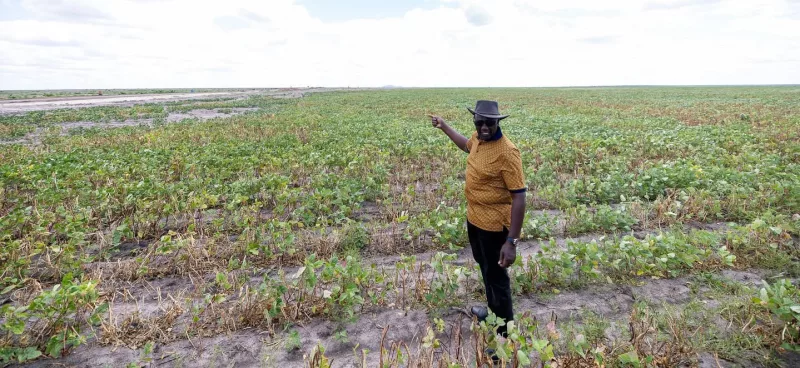
 Hon Saleh Maalim Alio, CECM for Lands, Housing, Physical Planning, Urban Development, Solid Waste Management, Circular Economy and Sanitation, County Government of Mandera/HANDOUT
East Africa stands at a defining moment in its integration journey.
While significant attention has traditionally focused on national governments, regional institutions and Heads of State, a quieter but equally transformative force is emerging: local and county governments.
These are the institutions closest to citizens, responsible for delivering essential services, driving local economic development and responding directly to the realities of climate change, rapid urbanization, population growth and cross-border mobility.
As the East African County and Local Governments Association (EACLGA) formulated its Corporate Strategy in the first quarter of this year, it is timely to reflect on the indispensable role that local governments must play in shaping the future of regional integration.
The strategy comes at a time when the East African Community is expanding in both membership and ambition, demanding stronger governance systems that connect regional aspirations with local implementation.
The importance of EACLGA extends far beyond being a coordination platform for local government associations. It represents the institutional bridge between communities and regional policymaking.
No regional integration agenda can succeed if counties, municipalities and cities remain peripheral actors. Roads, markets, water systems, waste management, environmental conservation, public health, disaster response and urban planning are implemented at the local level.
Consequently, regional integration ultimately succeeds or fails in counties, districts and municipalities—not only in ministerial boardrooms.
Across East Africa, local governments face remarkably similar challenges. Rapid urbanization is stretching infrastructure beyond capacity. Climate change is increasing the frequency of droughts, floods and environmental degradation.
Youth unemployment continues to threaten social cohesion. Informal settlements are expanding faster than governments can provide services. Border communities often experience insecurity, inadequate infrastructure and limited economic opportunities despite being strategically located for regional trade.
These challenges do not recognize political boundaries. Neither should the solutions.
This is precisely where EACLGA becomes strategically important. By creating structured cooperation among local governments, the Association facilitates knowledge sharing, policy harmonization, institutional learning and coordinated responses to common regional challenges.
For counties such as Mandera, situated at the intersection of Kenya, Ethiopia and Somalia, regional cooperation is not an abstract policy concept. It is an everyday reality. Communities share water resources, grazing lands, markets, cultural ties and livelihoods across borders.
Infrastructure development, environmental conservation, peacebuilding and trade require collaborative planning among neighbouring local authorities.
Cross-border cooperation has become one of the defining pillars of modern regional development. Effective management of shared ecosystems, transport corridors and economic zones requires institutions capable of working beyond administrative boundaries. EACLGA provides precisely this platform.
Climate change further reinforces the need for such cooperation. Droughts do not stop at border posts. Floodwaters ignore customs checkpoints. Desertification spreads irrespective of national jurisdictions. Waste pollution affects entire river basins and ecosystems shared by multiple countries.
The EACLGA Corporate Strategy rightly places climate resilience among its central thematic priorities. Local governments are increasingly becoming the frontline institutions responsible for climate adaptation, disaster preparedness, sustainable urban planning and environmental protection.
However, they cannot succeed in isolation. Regional cooperation enables the exchange of technologies, financing models, policy innovations and practical experiences that strengthen resilience across borders.
Equally significant is the strategy's emphasis on digital transformation. Modern governance increasingly depends on digital infrastructure, smart service delivery and data-driven decision-making.
Digital local governments improve transparency, strengthen accountability and enhance citizen participation. More importantly, harmonized digital systems facilitate cross-border trade, land administration, urban planning and public service delivery.
Financial sustainability is another area requiring urgent attention. Local governments across East Africa continue to grapple with inadequate own-source revenues, dependence on intergovernmental transfers and limited access to development finance. Without financially resilient local authorities, aspirations for improved service delivery will remain unattainable.
EACLGA plays a catalytic role by advocating for innovative municipal financing mechanisms, facilitating peer learning and strengthening fiscal decentralisation policies across the region. Strong local economies ultimately contribute to stronger national and regional economies.
The strategy's commitment to governance, institutional strengthening and capacity building is equally significant. Devolution and decentralization are dynamic processes requiring continuous learning. Different East African countries have adopted varying models of local governance, each offering valuable lessons.
Kenya's devolved system, Uganda's local government framework, Tanzania's decentralized administration, Rwanda's governance reforms and the experiences of other Partner States collectively constitute a rich laboratory of institutional innovation.
EACLGA provides the opportunity to transform these individual experiences into regional public goods.
Internationally, the Association occupies an increasingly important position. Around the world, cities and local governments are assuming greater responsibility for advancing the Sustainable Development Goals, implementing the Paris Climate Agreement and contributing to global urban development agendas.
International development partners increasingly recognize that achieving global commitments depends largely on the effectiveness of local governments.
Through EACLGA, East African local authorities have an opportunity to speak with one regional voice in continental and global forums. This enhances visibility, strengthens advocacy and improves access to technical partnerships and international financing opportunities.
However, realizing this vision requires far more than a well-written Corporate Strategy. It demands sustained political commitment at the highest levels.
National governments must fully recognize local governments as strategic partners in regional integration rather than merely administrative units. The East African Community should institutionalise structured engagement with EACLGA within its policymaking architecture.
Development partners should invest directly in strengthening local government institutions, recognizing that resilient communities are built through capable local administrations.
Equally important, member local government associations must take strong ownership of the strategy, ensuring that regional commitments translate into practical actions at the county, district and municipal levels.
Policy support must also be accompanied by sustainable financing. Regional institutions cannot effectively coordinate local governments without predictable financial resources, professional technical capacity and long-term institutional stability.
Investment in EACLGA should therefore be viewed not as an expenditure but as a strategic investment in regional peace, economic growth and sustainable development.
The success of the East African integration agenda will ultimately depend on whether citizens experience tangible improvements in their daily lives. Better roads, cleaner towns, reliable water supplies, climate-resilient infrastructure, efficient markets, safer border communities and improved public services are the true indicators of integration.
These outcomes are delivered by local governments.
The EACLGA Corporate Strategy offers an opportunity to reposition local governments from implementers of national policies to architects of regional transformation. It recognizes that resilient communities build resilient nations, and resilient nations build a stronger East Africa.
The challenge before policymakers is therefore clear: elevate local governments within regional governance frameworks, provide EACLGA with the political and institutional support it deserves, and empower local leaders to become active partners in shaping East Africa's future.
If East Africa is to achieve deeper integration, inclusive prosperity and sustainable development, the journey must begin where government meets the people—at the local level. EACLGA is not merely another regional institution; it is the platform through which the aspirations of millions of East Africans can be translated into practical, people-centred development.
That is why it deserves robust policy backing, stronger institutional recognition and unwavering support from governments, regional bodies and development partners alike.
The writer is the CECM for Lands, Housing, Physical Planning, Urban Development, Solid Waste Management, Circular Economy and Sanitation, County Government of Mandera