MUGA: Kenya's fetish for civic education
It is yet to get us to the point where we will all vote based on our rational interests
21d agoJosephine MayuyaStar-blogs
One policy we could consider is rapid industrialisation, based on the Chinese SEZ model


Audio By Vocalize

There are questions of public policy that can only be answered indirectly, or by shifting focus.
One such problem is that of land ownership here in Kenya.
The basic factors contributing to this challenge are by now well established.
First, we have had many years of rapid population growth, beginning with an abrupt acceleration in the early years of Independence when public health facilities at last spread to all corners of Kenya, leading to fewer deaths in early childhood and longer lives for all.
Then the bulk of our population still lives in those rural parts of the country, which means that their primary source of livelihood is small-scale farming.
Finally, land being a finite resource, with every passing decade, there is less and less viable agricultural land available per head for these rural folks, which in turn diminishes their economic opportunities.
If these factors causing this increase in rural poverty are well known, the reason we must all dread this trend is also well known. This issue of land ownership is the root cause of intra-communal strife and hence a likely source of political instability.
Finding a resolution to what is euphemistically referred to as “Kenya’s land problem” is therefore a central national challenge that has troubled every president, right from Independence.
And the most common solution proposed for it is one that is really no solution at all: leaders on the campaign trail speak of “land reform’, as though we actually have plenty of land and all that is required is to decide on a better way of distributing it.
To offer my own suggestion for addressing these challenges, I would point out that one of the advantages of foreign travel – or even just attending conferences where experts from countries which have successfully addressed the same problems as those we have here – is that you realise that there is really no need to reinvent the wheel.
Somewhere on the face of the earth, in a country more economically advanced than ours, much the same problems will have been adequately resolved.
So, I would suggest that the only serious solution to our land problem lies in three key policies.
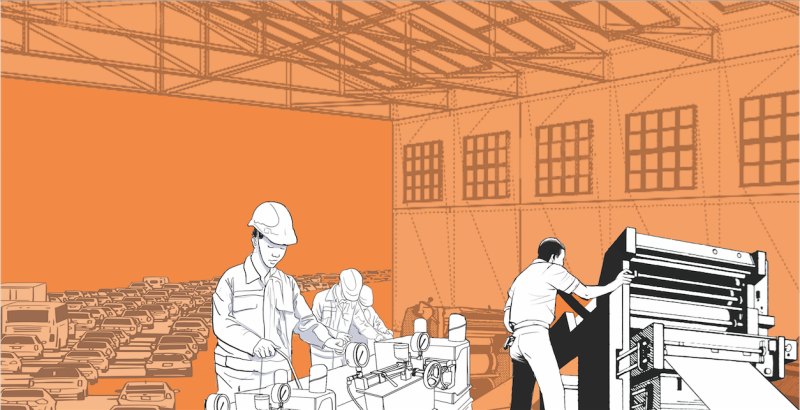
First in rapid industrialisation, based on the Chinese Special Economic Zone (SEZ) model.
Second would be the use of scientific agriculture in order to produce more and more abundant harvests on less and less arable land – this being a field in which The Netherlands excels.
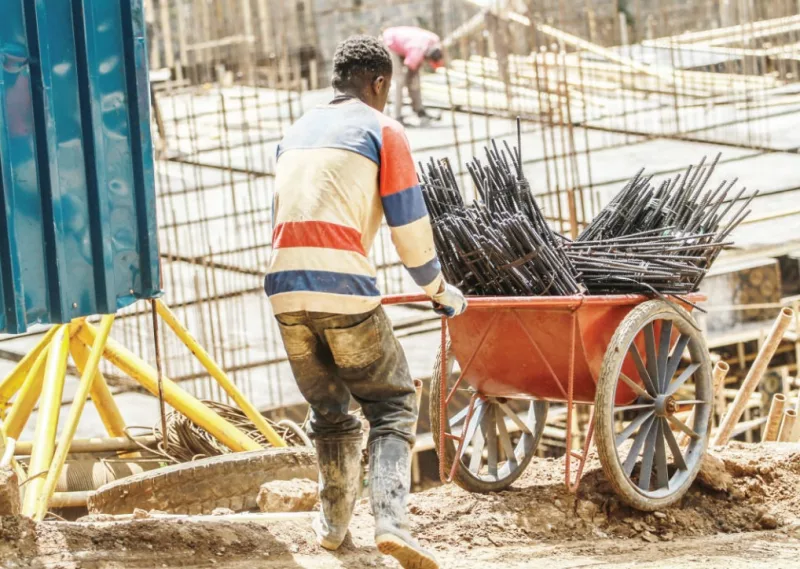
And third, in the mass provision of rental public housing, based on the German model.
To explain further, I would point out that it was just 45 years ago, in 1980, that China set up the first Special Economic Zones (SEZ), which were to prove to be the key to attracting foreign investment in the manufacturing sector.
We are rather late getting into the SEZ game, but the opportunities are still there. And we have at least started, with the ongoing construction of the Dongo Kundu SEZ.
As for scientific agriculture, all I will say is that if the top officials of our Ministry of Agriculture have not already been on an intensive study tour of The Netherlands, to see for themselves just why that country is held to be the global champion in maximising profitability and crop yields on relatively small parcels of land, then they are failing the country.
The Netherlands approach to agriculture is defined by one online source as being “more like high-tech cellular manufacturing” than traditional agriculture.
And finally, the only way to (indirectly) quench the deep Kenyan thirst for land, and the almost mystical love for title deeds, is to provide plenty of state-subsidised rental apartments.
In Germany, homeownership is relatively low, with many who could afford mortgages preferring to rent. Such a preference for renting is founded on strong tenant protections and long-term security for renters.
Kenya actually had just such state-subsidised public housing estates in the early years of Independence.
Such housing was so affordable that even when an urban worker retired, they could continue living in the same house, easily paying their rent even on a greatly diminished income.
It is yet to get us to the point where we will all vote based on our rational interests