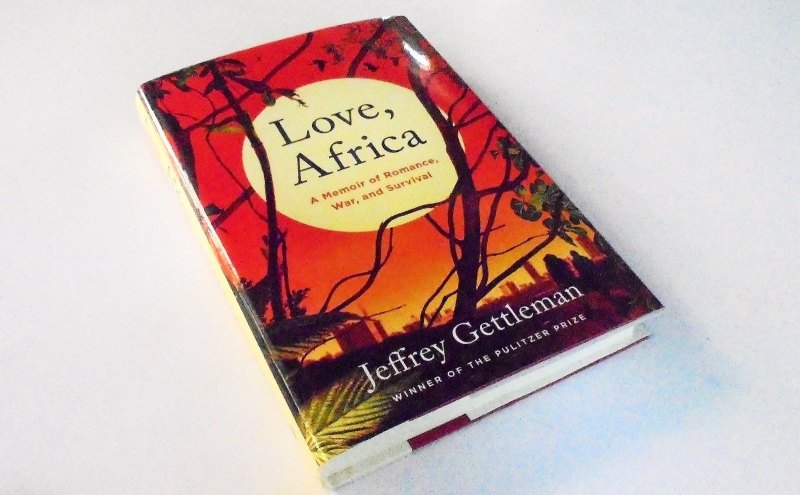
In some of the economically advanced nations, it is quite common for veteran media commentators to publish their collection of Op-Eds and essays as a non-fiction book.
These books often sell very well, as they offer a snapshot of past eras. In Kenya, for example, it would be interesting to be able to read what the prominent columnists of the period coinciding with the middle years of President Mwai Kibaki’s two terms in office – say from 2005 to 2010 – had to say about his achievements as much as his failures.
But in Kenya, that tradition has yet to be established. And what we have instead is self-published memoirs of those who occupied high office during that period.
Such memoirs are unreliable and most qualify to be described as hagiography.
In contrast to this, any columnist worth his or her salt will tend to focus on criticising the country’s leadership and highlighting its many failures and follies.
Thus, any collection of Op-Eds and essays by an established columnist would provide a more accurate snapshot of any historical period than a self-serving memoir.
But journalists, no matter how experienced, can also make mistakes.
I am old enough to remember some of what was written around those middle years of the Kibaki administration: from the descent into the tragic post-election violence, to the long period of profound national sadness and reflection on how and why this tragedy had overtaken us.
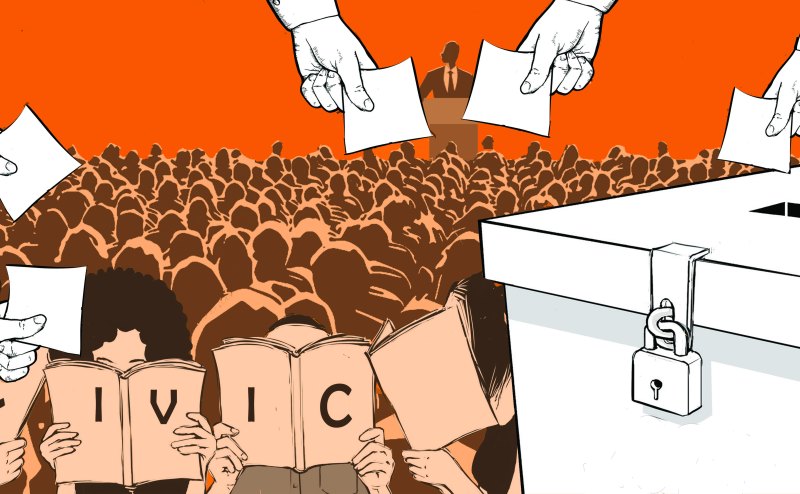
And one thing I remember reading over and over again was that what Kenya needed more than anything else was a robust and extensive programme of “civic education”.
Civic education is a process that is supposed to, in the words of the New York Times Columnist Thomas Edsall, “allow an informed public to make thoughtful decisions”.
And in Kenya, in 2008 and beyond, we had an absolute fetishisation of civic education as the indispensable pillar of our future peace and prosperity.
The foundational logic was that if Kenyans were to be adequately instructed on how to identify what was truly in their interests (whether personal, communal or national), this would lead us to a point where we would have a mature and responsive democracy.
And hence, just about every prominent columnist came out strongly in support of civic education as the desperately needed cure for a body politic dangerously infected with a vicious strain of tribalism.
Along with this, various well-intentioned donors – in particular, some of the Nordic countries – spent lavishly on civic education programmes, being convinced that no cost was too high for anything that could end the toxic regional rivalries, which could potentially reduce the country to a state of utter devastation.
Somehow, it did not quite work out.
I would not go as far as to say that these civic education programmes achieved nothing. But unless you believe that the many presidential aspirants currently crisscrossing the country in full campaign mode do not know what they are doing, it certainly looks like identity politics is alive and well in Kenya, and the path to victory has to take detours into various regional voting blocs.
In other words, far from civic education having got us to the point where we will all vote based on our rational interests, Kenyan voters are still very much addicted to tribally oriented voting.
The only consolation we can take in all this is that the voters in the advanced democracies of North America and Western Europe have ultimately proved to be no different from us.
These are voters whom we had been told cast their ballots over “issues”.
However, recent voting trends in those very countries have provided many examples of the orientation towards tribalism that civic education is supposed to be able to eliminate.
The various identity-driven vote blocs in Europe and North America may not consider themselves to be tribes.
But in their opposition to immigration, for example, they reveal the same psychology we see in Kenyans who believe that their “ancestral lands” should not welcome “outsiders”.
Which was one of the root causes of the post-election violence of 2008.