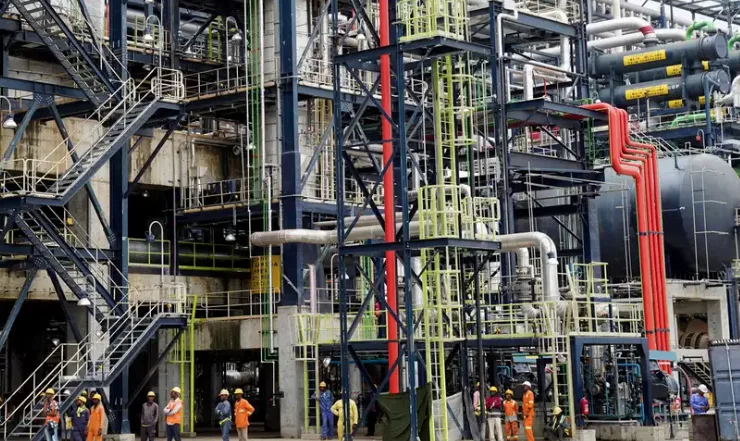
One of the legal cases I once handled involved a construction worker who had been injured while at a site and was seeking compensation.
Generally insurance may cover medical expenses, missed wages, ongoing recovery costs and professional fees related.
When building up the case for my client, the following statistics came to light vis a vis his income and expenditure: domestic expenditure on food, beverages, school fees and personal care made 57 per cent of his income; rent accounted for 25 per cent; transport to and from work cost him 10 per cent; while entertainment and savings & investments made up five per cent and three per cent respectively.
He worked a total of approximately 36 weeks a year earning Sh9,000 a week. Because he only worked the equivalent of nine months a year, his annual average income therefore was Sh27,000 a month, which he received weekly.
Remembering this case got me wondering about the impact of large-scale development on the lives of construction workers like the Mombasa county's Likoni Housing Development Project that has been in the pipeline for over four years. The project aims to develop 3,200 units at an approximate Sh8 billion.
Statistics from practitioners in the building industry indicates a project like the Likoni housing project ensures to a construction worker continuous work for 24 months without interruption. This leads to an annual average income rising from Sh27,000 a month to Sh43,200 for a period of not less than two years.
The additional income estimated as 60 per cent or Sh18,200, research shows shall go first to domestic expenditure, with better diet, healthcare, education and clothing.
This expenditure has the benefit of reducing days lost due to illness for the employed and school-attending household members.
The second item of expenditure shall be savings and investment, in the form of a micro business with low establishment costs. The most prevalent businesses being fresh food & second-hand clothes stalls and off-street eateries. These give the household additional cash flow and provide employment. Transport costs to and from work tend to remain largely unchanged.
A project like the Likoni housing programme requires a minimum of 3,000 artisans in its first phase and an additional 2,000 specialist artisans in finishes and service provisions.
The subcounty however can only readily supply about quarter of the labour required; therefore the other artisans would need to be sourced throughout Mombasa County.
To get an idea of the comparative value impact of this project on Mombasa, lets look at what the equivalent sum paid to the artisan would represent in the county budget.
The budget for projects for Mombasa indicates a total Sh1.15 billion annual recurrent and development expenditure of the Department of Transport and Infrastructure. This entails general administration, road infrastructure development and transport management.
This works out to be only 55 per cent of the total annual amount paid as wages to the 3,000 artisans who would work on the housing project. The same document indicates that total grant amount, which includes project budgets for water and sanitation, informal settlements, primary healthcare and road maintenance levy is the same amount as the wages to artisans should the project take off.
The county has a local revenue source amounting to Sh5.2 billion. This is the amount raised from rates, levies and taxes imposed within the relevant legislation. The estimated budget for artisans working at the proposed housing project is approximately 40 per cent of this sum.
This is all a reminder that although many voters tend to ask those leaders they voted for to help their children get government jobs, the reality is that the private sector can create many more jobs, provided the county governments (as in this case) create an enabling environment that facilitates private sector investments.
A clear development vision that shows consistency and determination is yet to come forth from Mombasa, which has led to ambiguity of priorities affecting resource mobilisation and allocation.
This lacklustre approach may be due to controversy witnessed in previous similar housing projects, the ramifications of which have still not fully subsided.
These suspicions however can be cured by greater stakeholder engagements and accountable governance systems.
With sufficient political will and focus, Mombasa county has the opportunity to change livelihoods and ignite its economy.
Lawyer