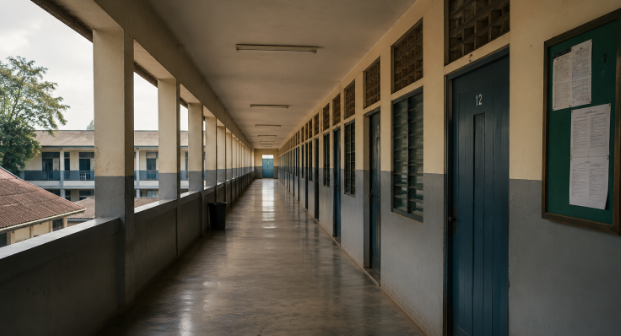
The recent resurgence of student unrest in Kenyan schools should concern all of us. While acts of arson, demonstrations, strikes and destruction of school property often dominate headlines, these incidents are merely symptoms of a deeper challenge affecting our education system and society at large.
Since Kenya attained independence in 1963, student unrest has remained a recurring phenomenon in both secondary schools and institutions of higher learning. Although isolated incidents were reported in the 1960s and 1970s, the frequency and intensity increased significantly from the late 1980s onwards.
Public universities experienced dozens of strikes and closures, while secondary schools witnessed some of the most tragic incidents in the country’s educational history.
Let us reflect on the past. The 1991 tragedy at St. Kizito Mixed Secondary School, the 1997 Bombolulu Girls dormitory fire, the 1999 Nyeri Boys arson attack, and the 2001 Kyanguli Secondary School fire that claimed 67 lives remain painful reminders of the devastating consequences of unresolved student grievances.
More recently, in 2016 alone, over 130 secondary schools across Kenya experienced arson attacks and other forms of unrest, resulting in the destruction of property worth billions of shillings.
These incidents have occurred across nearly all regions of the country—from Nairobi, Kiambu, Nakuru, Nyeri and Meru to Machakos, Kilifi, Kisii, Kericho, Migori and Uasin Gishu. The widespread geographical distribution suggests that student unrest is not a regional issue but rather a national challenge requiring collective solutions. The Utumishi tragedy raises more questions than answers.
The fundamental question therefore is: why do students revolt?
Many explanations have been advanced, including examination pressure, poor living conditions, inadequate communication between school management and students, harsh disciplinary measures, peer influence, substance abuse, social media, and declining parental engagement.
While these factors contribute to the problem, they do not fully explain its persistence. I have taken time to look into this matter. Personally, over several years, I have been giving motivational talks in various schools and have had the opportunity to interact with students.
At a deeper level, student unrest reflects broader societal tensions. Today’s learners are growing up in a rapidly changing world characterised by technological disruption, economic uncertainty, rising social expectations, and mental health challenges. Students are increasingly informed, connected and aware of their rights.
However, many institutions continue to operate under management models that were designed decades ago and which do not adequately accommodate dialogue, participation and engagement.
There is also growing evidence that mental health challenges among young people are increasing globally. Anxiety, depression, stress and feelings of exclusion can manifest in destructive behaviour when appropriate support systems are lacking. Unfortunately, many schools have insufficient counselling services, while teachers are often overwhelmed by administrative and academic responsibilities.
The role of parents in addressing this challenge cannot be overstated. Education begins at home. Parents must move beyond paying school fees and become active partners in the emotional, moral and social development of their children.
Strong family values, regular communication, mentorship and responsible use of technology are critical foundations for disciplined learners. I know families that celebrate when their children are away at school and feel a burden when they are at home.
Teachers and school administrators also carry significant responsibility. Modern educational leadership requires more than enforcing rules. It demands empathy, effective communication, mentorship and the ability to build trust with students. Schools that create platforms for dialogue and student participation often experience fewer incidents of unrest than those that rely solely on punitive approaches. Re-skilling and retooling is needed urgently.
Government, on its part, must continue investing in learner welfare, guidance and counselling programmes, teacher training, school infrastructure and mental health support systems. There is a need to strengthen student leadership structures and establish early warning mechanisms capable of identifying potential unrest before it escalates into violence—prevention through intelligence is required.
I would like to suggest long-term solutions that require a more holistic approach.
First, we must strengthen values-based education. Academic excellence should be accompanied by character formation, leadership development, citizenship and life skills.
Second, we must institutionalise robust counselling and psychosocial support systems in all schools and universities. This is less in government compared with private schools.
Third, student voices should be incorporated into institutional decision-making through effective student councils and consultative forums.
Fourth, schools should embrace more digital platforms for communication and feedback while promoting responsible use of technology.
Fifth, parents, teachers, religious leaders, community organisations and government agencies must work together to create supportive environments for young people—collective responsibility.
I have always echoed that Kenya’s greatest resource is not its minerals, wildlife or infrastructure—it is its young people. Every school that burns represents not only destroyed buildings but also damaged dreams, interrupted learning and lost opportunities. We must safeguard the future of our young generation.
Student unrest should therefore not be viewed merely as a disciplinary problem. It is a national development issue that requires strategic attention, evidence-based interventions and collective responsibility.
As we strive to build a knowledge-based economy driven by science, technology, research and innovation, we must ensure that our schools remain centres of learning, creativity, safety and hope. The future of Kenya depends on how well we nurture, guide and empower the next generation.
The time has come to move from reacting to student unrest to preventing it. In doing so, we will not only protect our educational institutions but also secure the future of our nation.
PS, Science, Research and Innovation.