There is a feeling every Kenyan with a payslip now carries. It arrives at the end of each month, in the gap between what the employer says you earned and what actually lands in your account. PAYE. The Housing Levy. The new health contribution under SHA. NSSF, now larger than before. Add VAT on everything you buy, levies on every litre of fuel, taxes on every airtime top-up, and the working Kenyan can be forgiven for thinking the state has run out of things it will not tax.
That feeling is real. But the numbers tell a stranger story.
For every Sh100 the Kenyan economy produced in 2023, the state collected about Sh16 in tax. That is the OECD's most recent count. The average across the 38 African countries it tracks is also 16. The global average is closer to 17. Wealthy countries collect about 34. The East African Community, of which Kenya is a member, has agreed a target of 25 by 2030, and Treasury's own medium-term plan is built around getting there.
So Kenya collects slightly less than its African peers. Substantially less than the world. About two thirds of what it has promised to collect by the end of this decade. By every honest measure, Kenya is not heavily taxed. It is lightly taxed as a country, and badly served as a citizen.
Why does it not feel that way? Two reasons.
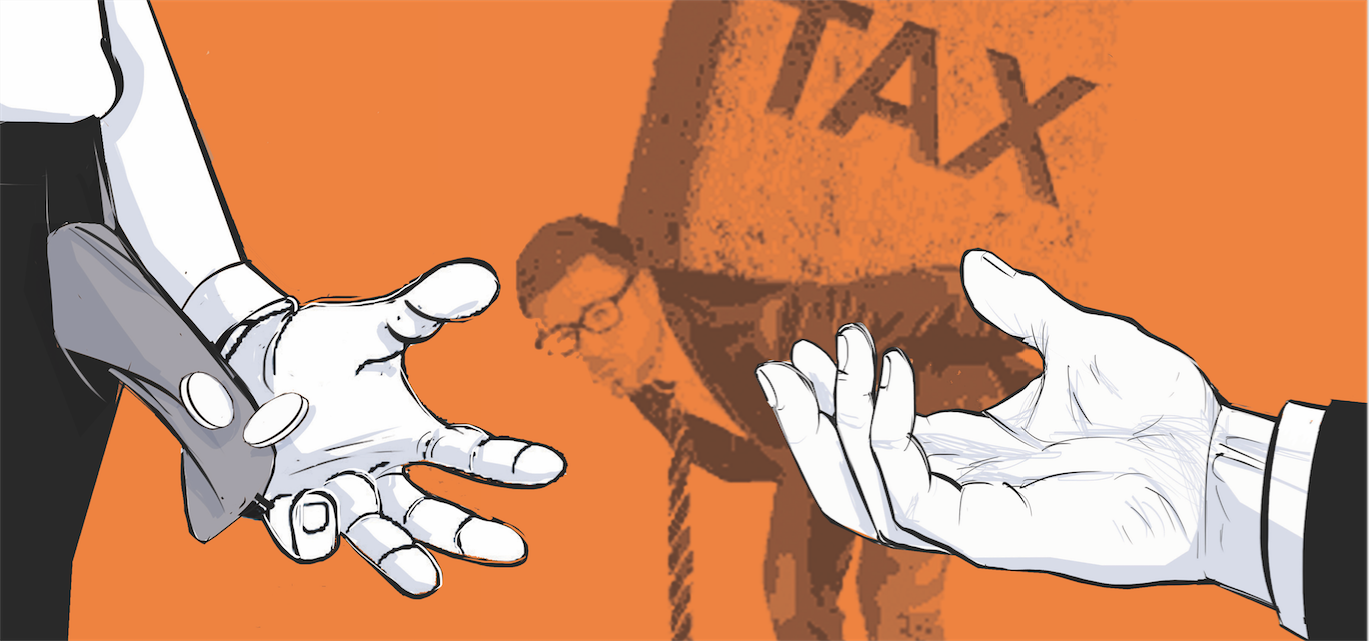
The first is that the burden is unevenly carried. The 16 out of 100 is a national average, but it is collected from a small slice of the population. Kenya's formal sector, the salaried workers and registered businesses, is small. The much larger informal economy, where most Kenyans earn, contributes very little. The visible taxpayer, the one with a payslip and a KRA PIN, carries a burden far heavier than the headline number suggests. The bigger half of the country operates outside the net entirely.
The second is that the deductions have piled up. The Housing Levy. The SHA contribution. The expanded NSSF. New excise taxes every other budget. Each, on its own, is presented as small. Stacked, they have eaten a serious portion of the formal worker's monthly take-home, without ever convincingly explaining what each one would buy. The cumulative weight feels less like a contract and more like a hand in the pocket.
The Finance Bill 2026, now in public participation, sharpens this dynamic rather than easing it.
The Bill raises the excise duty on mobile phones from 10 per cent to 25 per cent, and to enforce it, would require telecommunications companies to verify duty payment with KRA before activating any new phone on their networks.
It removes the VAT exemption on money transfers and payment processing, which raises the cost of every M-Pesa transaction, every card payment, every bank transfer the ordinary Kenyan now relies on.
It introduces withholding tax on card transactions. It grants KRA expanded powers to access citizens' personal data. It sets a minimum penalty floor of Sh100,000, which lands hardest on the small trader for whom that figure is a month's revenue.
And it quietly drops the relief the government itself had earlier promised: the full PAYE exemption for those earning up to Sh30,000 a month, the cut in PAYE from 30 to 25 per cent for those between 30,000 and 50,000, and the rise in monthly personal relief from Sh2,400 to Sh3,000. The relief was advertised. The squeeze was retained.
Civil society coalitions, including Okoa Uchumi and the Kenya Human Rights Commission, have called the Bill punitive. They are using the more accurate word. It takes a country whose digital finance ecosystem is its most genuinely admired innovation and taxes the rails on which it runs. It takes a population that has already absorbed Housing Levy and SHA in two short years and asks it to absorb more, with no corresponding visible benefit.
Here is the uncomfortable truth that sits underneath all
of it. By the only comparison that matters internationally, Kenya is still
under-taxed in the aggregate. The country is not running out of tax base. It is
running out of trust. And no Finance Bill, however aggressive, can fix a trust
problem by taxing the base more heavily.
The taxpayer who feels squeezed is not wrong about the squeeze. They are only wrong about the cause. The problem was never that the state takes too much. The problem is what arrives, or fails to arrive, in exchange. A citizen who could see good roads, working clinics and schools that function would pay 16 out of 100 without complaint, as citizens in far more heavily taxed countries do every day.
The question Kenyans should be asking is not whether they can afford to pay more. By global
standards, the country could. The question is why they should hand over a
single additional shilling before the state can account for what it has already
taken. That is not a tax question. It is a trust question. And on the evidence
of the last three budgets, the state has not earned the answer it keeps
demanding.