


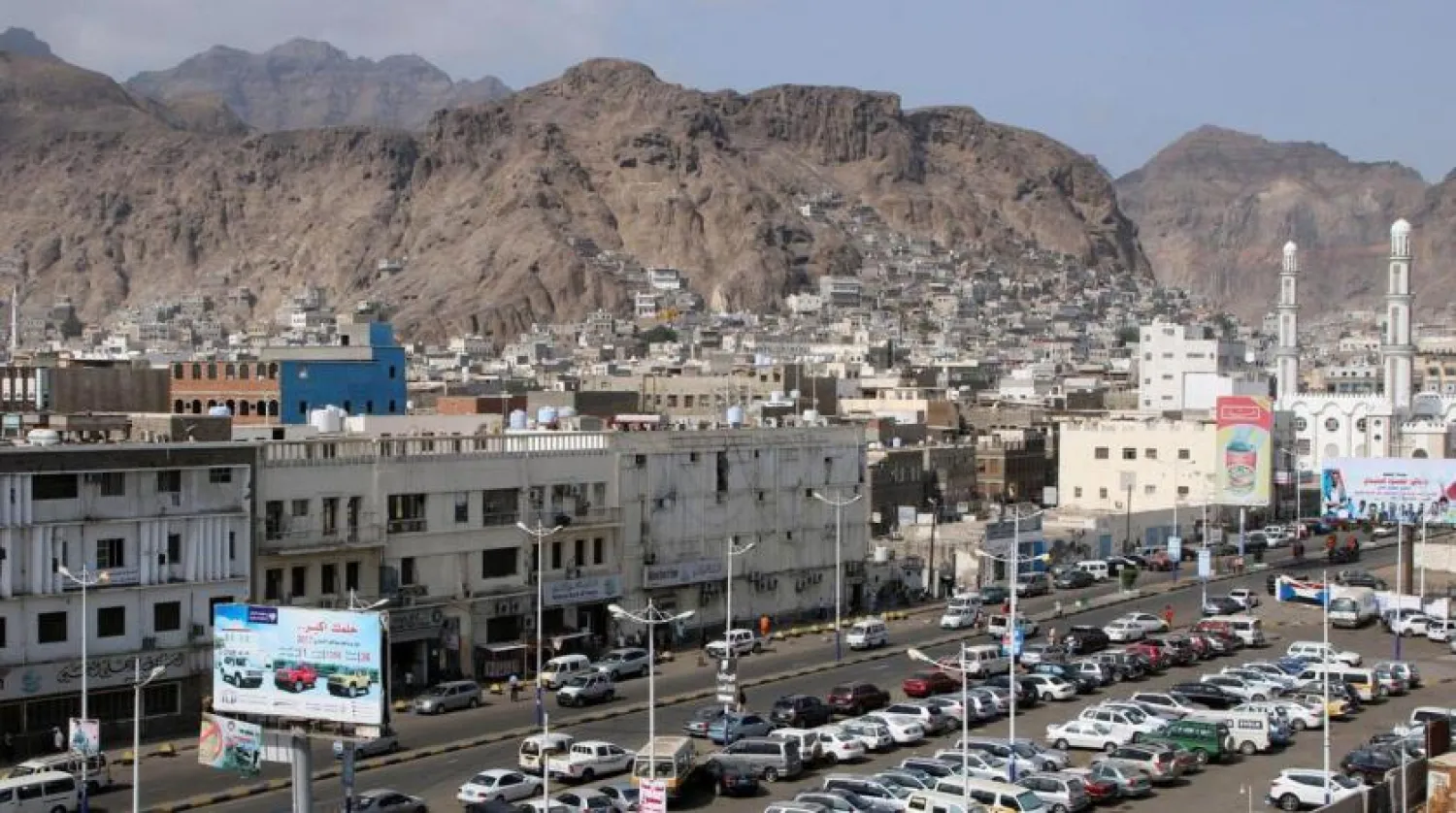
Southern forces in Yemen have launched a new counterterrorism campaign in
Abyan governorate, intensifying efforts to dismantle militant networks and
prevent their re-emergence in the country’s south after years of conflict.
The operation, dubbed “Decisive Action,” was launched as a continuation of
the earlier “Arrows of the East” campaign and is aimed at securing Abyan from
what commanders described as terrorist elements operating in mountainous and
valley terrain.
The campaign is being led by Mohsen Abdullah Al-Wali, commander of the
Security Belt Forces.
Al-Wali said the operation seeks to cut off supply lines used by armed
groups and prevent any attempt at regrouping or reorganization.
“The security of Abyan governorate is a top priority, and we will not allow
threats to citizens’ safety or the destabilization of the province,” he said.
He added that forces would pursue militants across difficult terrain with
the aim of eradicating them completely, describing the campaign as an extension
of security and military gains previously achieved in Hadramawt and Al-Mahra.
According to the commander, the operation reflects accumulated experience
from years of counterterrorism operations in the south.
Southern forces also appealed to local communities to back the campaign,
calling on “the people—foremost among them the sons and tribes of Abyan
governorate in all their social components—to strengthen unity and support for
their brothers and sons in the military and security units participating in the
Decisive Action operation.”
In a statement, the forces said the campaign was a comprehensive and
conclusive operation in which all efforts and energies converge, adding that it
would represent the culmination of all achievements realized in the war on
terrorism and the eradication of its scourge from every inch of our homeland.
The launch of the operation coincided with diplomatic engagement in the
capital, where the U.S. Ambassador to Yemen, Steven Fagin, held talks with Rashad
Al-Alimi, chairman of the Presidential Leadership Council.
According to officials, the discussions focused on the continued importance of
bilateral cooperation in confronting national security threats to both the
United States and the region, including threats posed by the Houthis and
Al-Qaeda.
The campaign comes against the backdrop of a decade-long conflict in
southern Yemen, described by local observers as one of the most complex battles
in the region’s modern history.
According to a report by Hadramawt Newspaper, the war was not only military
in nature but also a struggle over “existence, identity, and regional
security.”
“With the liberation of the capital Aden and the launch of the security
stabilization phase in 2015, the Security Belt Forces and southern security
agencies carried out targeted operations against Al-Qaeda cells,” the report
said.
It added that these efforts dismantled terrorist networks, secured Aden and
Lahj, and prevented what it described as post-war chaos.
The report noted that the 2025 Decisive Action campaign represented the culmination
of a long trajectory, during which remaining hideouts in mountains and ravines
were cleared.
“This phase reinforced the deterrence equation: no safe haven for terrorism
in the south, and no opportunity to reproduce it under any pretext,” it said.
Southern forces have also sought to weaken militant groups beyond direct
combat by dismantling networks and restricting movement.
According to the report, this strategy transformed Al-Qaeda from a force
threatening cities into fugitive remnants confined to limited areas.
The threat posed by militant groups has been particularly acute in
Hadramawt, where Al-Qaeda seized the coastal city of Mukalla in 2015.
During its control, the group carried out executions, targeted journalists,
and seized financial resources from oil revenues and ports.
The city was retaken in 2016 by the Hadrami Elite Forces with support from
the Arab Coalition.
More recently, southern forces launched another operation, “The Promising
Future,” aimed at liberating Wadi Hadramawt from terrorism and cutting off
weapons smuggling routes.
The campaign concluded with full control of the valley and a renewed push
for stability and development across the south.
Engineer Jamal Mohammed Haidera Ali described the operations as part of a
broader reconstruction effort, saying they were designed to restore stability,
security, public and social peace, after years of what he called systematic,
distressing, and repulsive insecurity.