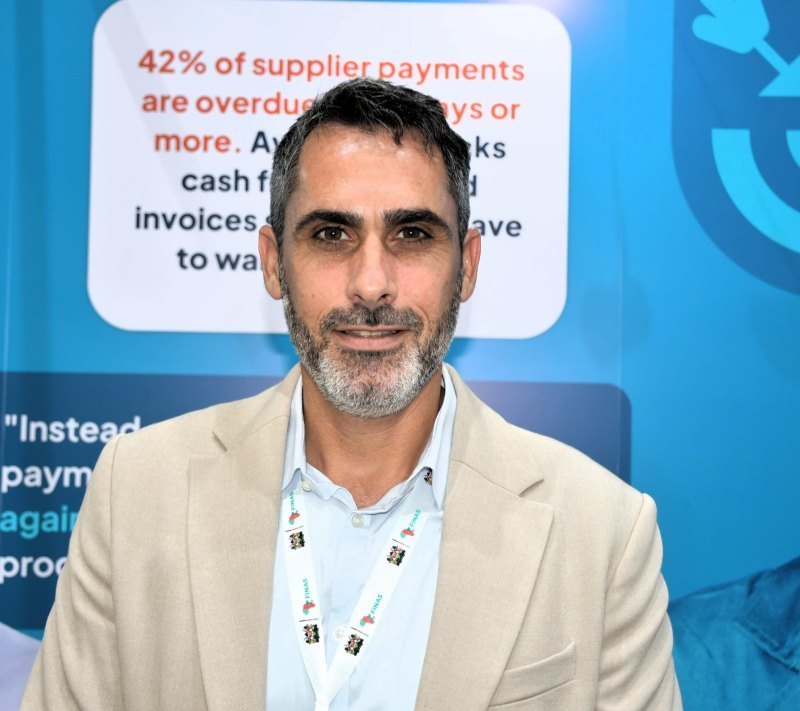
 Avenews Chief Executive Officer Jonathan Tseelon says they make lending decisions based on businesses' transaction history instead of relying primarily on land titles and other securities./AGATHA NGOTHO.
For many Kenyan farmers and agrodealers, accessing credit remains one of the biggest obstacles to growing their businesses.
Most lack land titles or other assets demanded by banks as collateral, while others have little formal credit history despite running profitable enterprises.
As a result, many are unable to stock quality farm inputs before the planting season or wait for delayed payments from buyers, forcing them to scale back operations or borrow from expensive informal lenders.
According to the Central Bank of Kenya, agriculture contributes about a fifth of Kenya's Gross Domestic Product directly and supports millions of livelihoods, yet the sector continues to receive a relatively small share of commercial bank lending because of perceived risks such as erratic weather, pests, diseases and volatile commodity prices.
Speaking during the third Financing Agri-food Systems (FINAS) 2026 Summit in Nairobi, Agriculture Finance Corporation (AFC) Managing Director George Kubai said unlocking affordable financing remains critical to reducing post-harvest losses and improving farmers' incomes.
"Through partnerships such as these, we are able to provide cooperatives with financial resources to invest in post-harvest management infrastructure. This will reduce losses, improve the quality of produce and ultimately increase farmers' incomes," Kubai said.
To bridge the financing gap for businesses that may not qualify for conventional bank loans, fintech firm Avenews is offering transaction-based lending that relies on business cash flows rather than traditional collateral.
Avenews Chief Executive Officer Jonathan Tseelon said the company makes lending decisions based on businesses' transaction history instead of relying primarily on land titles and other securities.
"We serve the entire agri-sector, including small and medium-sized agribusinesses. We provide them with the finance they need to stock up and finance inventory before they sell it. We cover the cash gap between buying and selling," he said.
He explained that the company also finances businesses after they have sold produce but are waiting for payment from buyers.
"If agribusinesses sell to off-takers and have to wait for payments for 30 to 60 days, we come in and close that cash gap by providing advance payments on those invoices," Tseelon said.
He noted that demand for financing is usually highest before the planting season when agrodealers need to stock seeds, fertilisers, animal feeds and other farm inputs.
"These agri-vets and stockists need to stock up before the season, but they may not sell the goods until one or two months later. We provide the financing they need to prepare for the season," he said.
According to Tseelon, the model benefits the entire agricultural value chain because farmers can access inputs when they need them and often at better prices.
"This also goes up the chain. Farmers sell to aggregators who also need financing before they sell to off-takers. We close these cash gaps that are an inherent part of the agri-sector," he said.
Unlike conventional lenders, Avenews assesses applicants using six months of financial transaction records, including M-Pesa, bank or SACCO statements.
"Once we have these, we look at your transactions or sales volumes over the last six months," Tseelon said.
Businesses require a minimum annual turnover of about Sh300,000 to qualify.
"That is a very minimal threshold. As businesses grow, we continuously reassess them and increase their credit limits," he explained.
The company says its financing supports both input suppliers and produce buyers. Better-financed agrodealers can stock more products and negotiate better prices, savings that can be passed on to farmers. At the same time, off-takers can pay farmers faster after purchasing their produce.
"The off-takers we work with are able to purchase goods from farmers, pay them better prices and pay them earlier. That's how the financing reaches the farmers and benefits the entire supply chain," Tseelon said.
He said they have also partnered with cooperatives in the dairy and horticulture sectors to reach more farmers, while using artificial intelligence and machine learning to assess hundreds of data points before approving loans.
Tseelon said this approach particularly benefits young entrepreneurs and new agribusinesses that often struggle to secure bank financing because they lack long credit histories.
"All they need is three to six months of M-Pesa or bank statements. We assess the transaction itself and make sure it is profitable before financing it," he said.
The importance of innovative financing models was also underscored by DanChurchAid Kenya Country Director Karen Poore, who said partnerships between financial institutions and development organisations are helping de-risk agriculture and make lending more accessible.
"By investing in cold storage and strengthening farmer cooperatives, we are creating systems that reduce post-harvest losses and improve the confidence of lenders to finance agricultural businesses. Better infrastructure means better returns for farmers and less risk for financial institutions," Poore said.
Currently, Avenews operates across western Kenya, South Nyanza, Rift Valley, the Mount Kenya region and Nairobi, with field teams supporting farmers and agribusinesses through the loan application process.
"The trend is definitely upward. We spent our first two years understanding the market and developing products that solve real financing challenges. Now we are seeing rapid growth because businesses are using the financing to expand, employ more people and increase trade," Tseelon said.
The growing adoption of alternative lending models signals a shift in how agricultural finance is being delivered in Kenya. By relying on business performance rather than fixed assets, innovators such as Avenews are opening new opportunities for farmers, agrodealers and other agribusinesses that have traditionally been excluded from formal credit, enabling them to invest, grow and contribute to a more resilient food system.