Uncertainty hangs thick in the
air of Parliament as lawmakers find
themselves caught in a tight knot of
legal and political dilemmas.
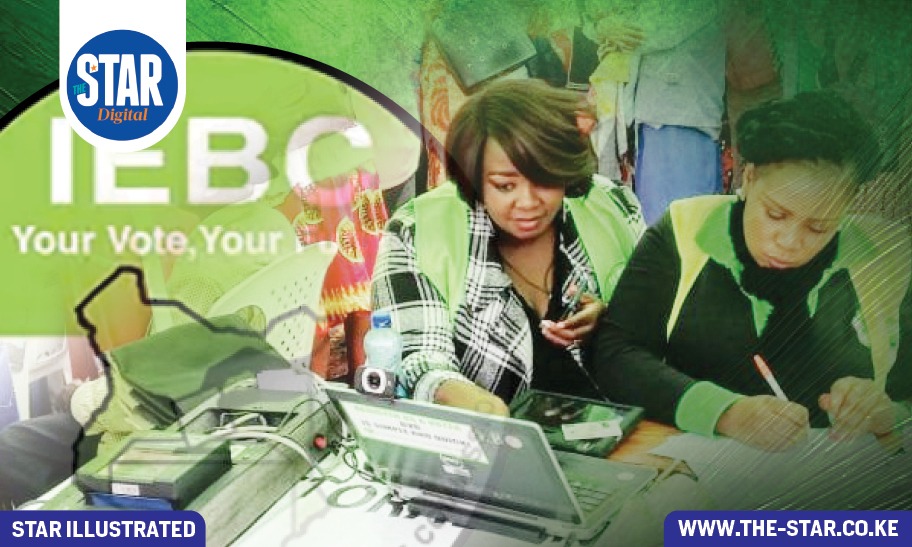
The High Court injunction freezing the vetting of President Ruto’s
IEBC nominees has left the Justice
and Legal Affairs Committee in limbo.
The committee is unable to move
forward and vet the team led by
proposed chairman Erastus Edung,
yet it is acutely aware that time is
slipping away.
Other nominees to the helm of
the electoral management agency
are Registrar of Political Parties
Ann Nderitu, Moses Mukhwana,
Mary Sorobit, Hassan Noor, Francis Odhiambo and Fahima Abdallah.
With each passing day, the IEBC
crisis festers, sending the signal that
Kenyans could go to yet another
election with an unprepared electoral commission.
The wait for the court’s final ruling, expected today, has only deepened the paralysis.
Should MPs defy the injunction
and proceed with the vetting, they
risk plunging the country into a
fresh constitutional crisis, one
where Parliament and the Judiciary stand in open confrontation.
Yet, if they wait indefinitely, the
IEBC, already reeling from the negative implications of the delayed
appointments, will remain leaderless and unprepared for the looming
2027 elections.
In an appeal, the National Assembly stated that since the vetting had
been entrusted to the Justice and
Legal Affairs Committee, the court
lacks authority.
The august House said the court’s
injunction was premature and injurious to the process and the right to
public participation.
Despite the position, the committee chaired by Tharaka MP
Gitonga Murugara did not conduct the vetting as scheduled and
advertised.
The nominees were to face the
committee on Tuesday, after which
the committee was expected to issue
a report for debate in plenary on
Wednesday.
Speaker Moses Wetang’ula’s silence, after promising to give directions on the matter, has only added
to the tension.
Rarieda MP Otiende Amolo had
implored the Speaker to declare the
fate of the vetting process.
Otiende, a member of JLAC,
warned of deeper uncertainty.
“You
may have to give further guidance
to us as to whether, given the wording of that decision, the entire process is suspended until determined,”
Otiende said.
“Whether time stopped running
from the time that order was issued
so that the 14 days are extended and
whether, depending on the decision
made within the time limit, that
process can still be undertaken.”
Wetang’ula’s failure to issue clear
guidance by press time yesterday has left MPs adrift, torn between legal obedience and political urgency.
The delayed reconstitution of the
electoral body has worsened fears
about the country’s preparedness
for the 2027 general elections.
Elections Observation Group
national coordinator Mule Musau
told the Star the delay is a great
concern, especially for the pending
electoral processes.
“It is a big concern to us; we are
very worried as it hurts the electoral processes to be conducted by the
commission,” he said.
Musau faulted the petitioners
for jumping the gun, arguing their
issues could have been handled
during the vetting process.
“However much it is legitimate,
it serves to delay the appointment
process. I think the petitioners
should have waited for the process
in Parliament and lodged their concerns.”
The court’s decision can be
viewed as a setback to the long-delayed process of reconstituting the
Independent Electoral and Boundaries Commission, which has remained incomplete for two years.
A number of constitutional lawyers have weighed in on the matter,
saying the courts cannot stop House
proceedings.
Constitutional lawyer Ekuru
Aukot, while admitting that Parliament cannot be injuncted, said the
courts can only come in depending
on the gravity of injustice.
“Ideally, courts cannot injunct
Parliament, but if there is, for example, an injustice that has been
presented and that depends on evidence – I have not read the affidavits
of the petitioners so, I don’t know
the evidence they have presented to
the court,” Aukot said.
“I think one of the arguments
that can fly is the idea of the state
officer, which does not concern other nominees apart from Anne Nderitu. Nderitu is a state officer by virtue of the fact that the constitution
says that a state officer cannot run
for such an office constitutionally
or even if it is created by an Act of
Parliament.”
Lawyer Abdikadir Mohammed
agreed, stating that courts can only
review the outcome of a parliamentary process.
Abdikadir, who served as adviser
to retired President Uhuru Kenyatta
on constitutional and legal matters,
argued that under the doctrine of
separation of powers no branch of
the government can dictate to the
other on how to conduct its business.
“Courts cannot injunct Parliament. They can decide whether
what Parliament has done is not
right at the end of process. They can
decide if the product is constitutional or not but they cannot stop the
process,” Abdikadir told the Star on
the phone.
“The courts are not superior to
any of the other arms of government.”
In 2014, then National Assembly Speaker Justin Muturi warned
courts of judicial overreach, saying
Parliament cannot be injuncted by
any arm of the government.
“Parliament’s very cardinal role
of oversight is being faced with a
great threat, and I speak without
any fear of contradiction, this threat
comes from the Judiciary,” Muturi
stated.
“The courts, like I said, should
remember that Parliament has its
constitutional mandate and should
be left to perform its functions.”
The IEBC process has been
bogged down by legal bottlenecks
from the setting up of the selection
panel, the shortlisting of applicants,
to now the vetting process of the
nominees.
In the current case, activists Boniface Mwangi and Kelvin Omondi
want the nominations halted on allegations that some of the proposed
names are ineligible.
They allege that the nominations
were made without proper public
participation as outlined in the Nadco report.
The activists allege that some of
the names were added unconstitutionally, citing interference by the
Executive.
The decision to be rendered today
will be crucial in determining how
soon the country will have a fully
constituted electoral body.
Meanwhile, the opposition is
watching with sharpened scrutiny,
ready to pounce on any misstep, as
civil society warns of a deliberate
erosion of electoral integrity.
And beneath it all, the clock ticks.
The longer the standoff drags on,
the more the public’s faith in the
electoral system frays.













![[PHOTOS] Ruto pushes for stronger Kenya-EU economic ties in Brussels](https://cdn.radioafrica.digital/image/2026/06/3aebc395-285b-441c-8aa4-33cb538f8d44.jpg)