Politics, democracy and why a military coup is a tall order
Coups and military matters are never discussed in casual tones or without proper facts
by COLLINS AJUOK
Audio By Vocalize
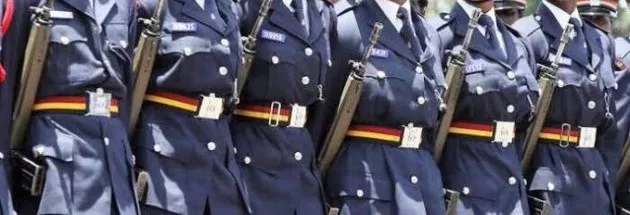
Kenya Defence Forces soldiers patrol the CBD in Nairobi during the Gen Z demos on June 27 last year / FILE
The sensational headline of
a weekend publication last
Sunday attributed a quote to
ODM leader, Raila Odinga,
in which he claimed to have saved
President William Ruto from a military coup at the height of the Gen
Z protests in June last year.
I was
amazed that for such a sensitive
topic, the story itself didn’t actually
reference a specific coup plot but
basically quoted Raila stating that
Ruto’s action of ordering the military onto the streets to assist civil
authorities in restoring law and order during the protests “had set the
country on a dangerous path”.
Coups and military matters are
never discussed in casual tones or
without proper facts. An accusation of a coup, especially one on
which no action has been taken,
suggests that the alleged plotters
remain in service, which in itself is
an inconceivable eventuality.
Worse
still, there exists a moral question
in such allegations made against
military men and women who do
not have the luxury to call a press
conference to clear their names,
a stark reminder of the indignity
suffered by the Gen Ogolla, in the
early days of this regime, when UDA
functionaries consistently accused
him of attempting to overturn the
results of the 2022 general election
at the Bomas of Kenya in August of
that year.
Raila’s words, however, brought
back memories of a rather curious
raft of military changes and appointments made by President Ruto in
July last year, just a few weeks after the Gen Z riots had died down.
First,
the changes were made outside the
traditional periods of the year when
they are usually announced. More
surprisingly, however, was that the
July changes included a promotion
of an officer from lieutenant colonel
to colonel.
Typically, the commander-in-chief, on the advice of the
Defence Council, makes changes
and appointments affecting only the
general ranks of the military (brigadiers to four-star generals).
That
Ruto’s announced changes included a lieutenant colonel was rather
odd. But what truly caught the eye
was the sheer number of colonels
promoted to the rank of brigadier
(one-star general), about 18.
I doubt that such a large number
has ever been promoted at once,
especially because appointments
of new generals have to be accompanied by large-scale retirements,
promotions or sackings in the upper
ranks, which didn’t accompany the
announcement.
The history of Kenya is not entirely
free of coup plots rumours. But the
two well known cases, in 1971 and
1982, provide a tribal background,
mirrored in the country’s public
life, which makes the overall idea
of a coup difficult to implement
within Kenya’s tribal fault lines.
In
1971, when the military chief, Maj
Gen Joseph Ndolo, was caught up
in a rumoured coup plot, his Kamba
community was so dominant in the
military that some estimates suggest
they may have made up over two
thirds of the entire force.
Because of that, President Jomo Kenyatta
had little wiggle room in taking
action against Ndolo, preferring to
quietly let him go without facing a
court martial, before replacing him
with Maj Gen Jackson Mulinge.
The
understanding was that going after Ndolo may have caused trouble
within the ranks, seeing as Ndolo’s
people were the fighting fountain
of the military.
Alive to this, when he took power in 1978, President Moi moved
to establish some presence of his
tribesmen in the military’s general
ranks, starting with the accelerated promotion of Colonel John Sawe
to become lieutenant general and
army commander by the time the
1982 coup attempt happened.
Sawe
directed the crushing of the coup,
which had been conducted by junior
Kenya Air Force servicemen from
the Luo community. Lacking wide
support from within the ranks, the
coup was dead on arrival.
It seems like a lifetime away since
1982. Serious reforms have taken
place within the military, many
of them attributed to the foresight
of former boss, Gen Daudi Tonje.
The conditions and circumstances
in which a coup plot was possible
in 1982 do not exist in today’s environment, where surveillance is
sharp and intelligence gathering
is enhanced.
If the 1982 coup leader,
Hezekiah Ochuka, was able to hold
meetings in the mess to spur the
rebellion, a similar scenario today
is impossible.
In this nation, nearly everything
is mobilised around tribes first, before it becomes a national matter.
A Kamba coup, if not nipped in the
bud in 1971, may well have succeeded, because the community ran the
military. A Luo coup in 1982 couldn’t
succeed because it lacked the widespread support necessary for success.
In both cases, attempts by the
tribesmen of the sitting president
to respond by packing the military
with their kinsmen failed, because
there is only a certain number that
the military can recruit each year.
It is even more difficult in today’s
two-term presidential system, where
one can only be president for two
five-year terms lasting a maximum
of 10 years.
Technically, therefore,
where military tribal numbers
matter, a serving president has no
formula to pack the ranks with his
tribesmen in a mere 10 years. Of
course, there is the regressive option of taking office and “retiring”
generals from the former president’s
community, the way President Kibaki did on taking power in 2003,
but overall, the net effect remains
constant.
Because of the stated reforms
over the years, the Kenyan military,
unlike its police counterpart, is a
reservoir of fine generals, intellectually sound and principled men
and women.
Obviously, images of
rioting citizens stopping their street
fights with the police to enthusiastically welcome military men with
victory chants may go to the head
of a few officers and service members, but I am certain that none is
foolish enough to countenance the
idea of following that up with a coup
attempt.
Indeed, if one was to pick the
conditions most ripe for a military
intervention in recent history, it
would have been at the height of
the 2008 post-election violence,
when Kenyan civilian democracy
had practically gone to the dogs.
By
many accounts, the military mulled
over some form of intervention to
stop the madness and save lives, but
the top ranks must have grappled
with the usual ripple effects of such
interventions and decided against
it.
If they didn’t in 2008, the Gen
Z protests simply didn’t meet the
destruction threshold and law and
order breakdown to persuade military leaders to step in.
The KDF is probably the only
credible institution left in this country. Even though, like everything
Kenyan, it has its own challenges
with tribalism, favouritism and nepotism, in my view, it remains the one
Kenyan institution that upholds the
values and tenets of patriotism and
sovereignty
It is also the safeguard and underwriter of the nation’s democracy, which explains their being on
standby to assist civilian authorities
in maintenance of law and order.
It
may have its own rotten apples, but
its internal remedies against them
are so firm and swift that very few
would ever cross.
It is, therefore, not
the kind of organisation I would believe was on the verge of a coup just
a few months ago. An accusation of
this nature, in fact, erodes the firm
foundation of credibility on which
the force is built.
This is premium content
Subscribe to Continue Reading
Help us continue bringing you unbiased news, in-depth investigations, and diverse perspectives. Your subscription keeps our mission alive and empowers us to provide high-quality, trustworthy journalism. Join us today to make a difference!



 Kenya Defence Forces soldiers patrol the CBD in Nairobi during the Gen Z demos on June 27 last year / FILE