


Rising inflation continues to strain economies across the globe, with several countries recording exceptionally high annual inflation rates in 2025.
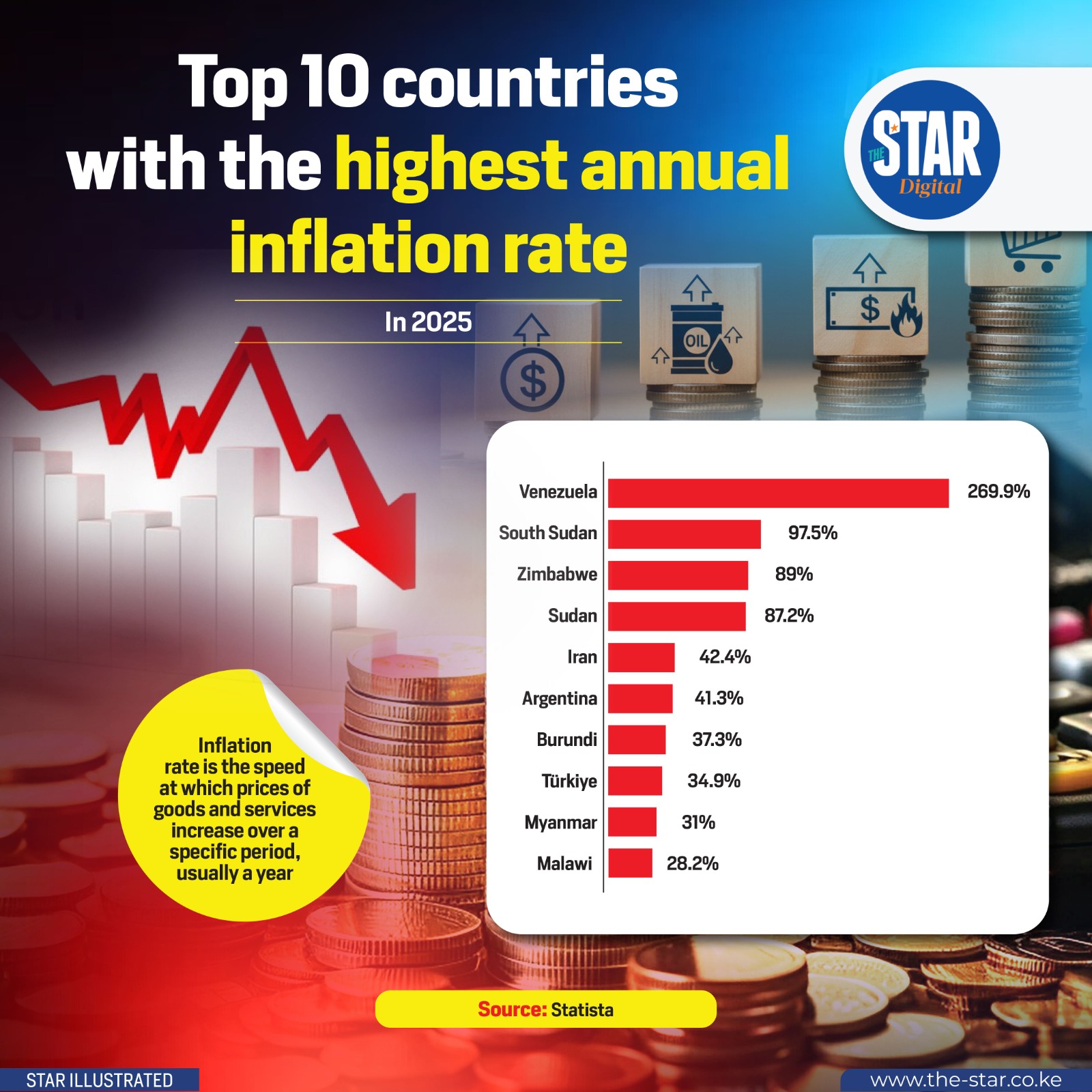
Data from Statista places Venezuela at the top of the list, with inflation soaring to 269.9 per cent, underscoring the country’s prolonged economic instability and currency challenges.
South Sudan follows with an inflation rate of 97.5 per cent, reflecting persistent fiscal pressures, conflict-related disruptions, and supply constraints.
Zimbabwe ranks third at 89 per cent, continuing a long history of inflationary cycles driven by currency volatility and economic reforms.
Sudan (87.2 per cent) and Iran (42.4 per cent) also feature prominently, affected by political instability, sanctions, and weakened domestic currencies.
Argentina records an inflation rate of 41.3 per cent, as rising consumer prices remain a central economic concern despite policy interventions.
Other countries on the list include Burundi (37.3 per cent), Türkiye (34.9 per cent), Myanmar (31 per cent), and Malawi (28.2 per cent).
While the underlying causes vary, common drivers include currency depreciation, high public debt, supply chain disruptions, and limited foreign exchange reserves.
High inflation erodes purchasing power, increases the cost of living, and disproportionately affects low-income households. It also complicates economic planning, discourages investment, and strains public finances.