
 Virginiah Njeri Njuguna/ ABDIMALIK ADOW
The first rays of sunlight are just beginning to light up Nairobi's skyline when matatus start pulling into the Odeon stage.
Conductors call out destinations, passengers hurry to beat the morning rush, and engines roar to life. Amid the familiar chaos, one driver stands out—not because she seeks attention, but because she has earned it.
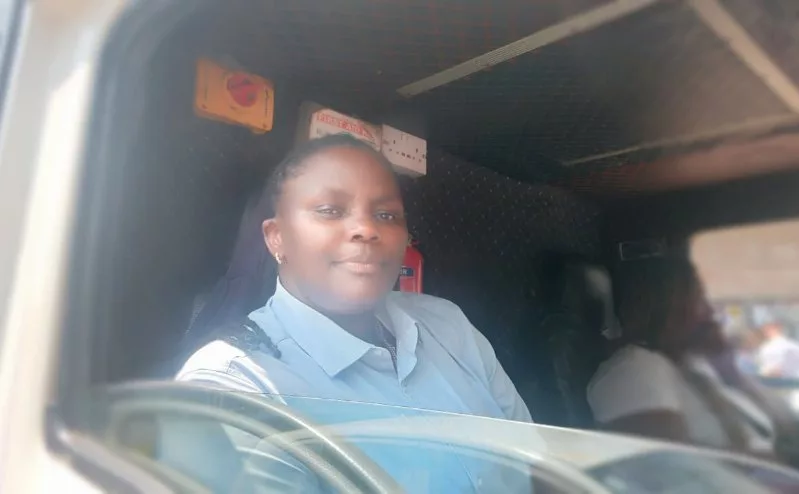
Behind the wheel of a Digital Luxury SACCO matatu operating along the Odeon–Westlands–Kangemi–Gikuyu route is Virginiah Njeri Njuguna.
For the past 11 years, she has navigated Nairobi's busy roads in an industry where women are still a rare sight.
For Njeri, driving a matatu is more than a job. It is a career that has enabled her to raise a family, educate her children and defy stereotypes that have long kept many women away from the transport sector.
"Chenye kilini-inspire ni kuwa hii kazi kama mwanamke huwezi pishana na watu wengi na ni kazi yenye ladies wanaona ikiwa ngumu, lakini ukizoea ni kazi smart," she says.
From conductor to driver
Njeri joined the matatu industry in 2011, beginning as a conductor before qualifying as a driver. Like many new drivers, her first day behind the wheel came with a mixture of excitement and nervousness.
She remembers calling her parents and asking them to become her first passengers, wanting them to witness the milestone she had worked so hard to achieve.
"Siku ya kwanza kuwa driver nilipigia babangu na mom walikuja nikawabeba. Kufika Koja, Nairobi CBD, nikamuuliza mom, 'Hapa hatuta gongwa?' Nilikuwa bado sijazoea, lakini walifurahi sana kuniona nikiwa dereva."
Raising four children alone
While learning the demands of the road, Njeri was also raising four young children as a single mother. Without enough money to hire a house help, balancing work and motherhood became one of the toughest chapters of her life.
Her eldest child would write down school instructions for the younger siblings and leave the note on her favourite cup before bedtime. Every morning before taking the children to school, Njeri would read the messages before reporting to work.
Despite the challenges, she remained determined to create a better future for her family. As her income became more stable, she enrolled her children in boarding school. Today, some have completed Form Four, while others are continuing with their studies.
She says every sacrifice has been worthwhile.
"Mimi ni single mother wa watoto wanne. Niliwajengea wazazi wangu nyumba na ninasomesha watoto wangu kwa kazi hii ya matatu. Hiyo ndiyo inanipa nguvu kila siku."
Winning passengers' trust
Her years on the road have also changed how passengers view female drivers.
During the COVID-19 pandemic, she was assigned to transport passengers to Nyahururu under strict public health measures. One elderly passenger openly questioned whether a woman could safely complete the journey.
"Mzee alisema, 'Huyu madam atatufikisha Nyahururu kweli?' Nikamwambia, 'Hata usilipe.' Tulifika salama, na wakaanza kuniamini."
Since then, she says, passengers have grown to trust her. Today, many board her matatu with confidence, appreciating both her professionalism and calm approach behind the wheel.
Every day, Njeri completes about seven trips along the Odeon–Westlands–Kangemi–Gikuyu route, spending more than 15 hours on the road. Despite the demanding schedule, she says consistency and discipline have helped her build a successful career in the matatu industry.
Staying safe on the road
During her years on the road, Njeri has experienced only one minor accident. She recalls an incident near Museum Hill when a car with failed brakes rammed into the rear of her matatu. No one was seriously injured, and the damage was minimal.
She says the incident reinforced the importance of staying alert and driving defensively, even when other motorists make mistakes.
Samuel Thiong'o, who has worked as Njeri's conductor for the past two years, says her work ethic has earned the respect of both colleagues and passengers.
"Mimi ni conductor wa Njeri. Nimefanya naye kazi kwa miaka miwili sasa. Ako na bidii sana, anajituma na hana mambo mingi. Kwake ni kazi kwanza."
Breaking stereotypes
For commuters, Njeri represents more than reliable transport.
Passenger Nelly says seeing a woman confidently driving a matatu inspires many women to pursue careers without being limited by stereotypes.
"Nimefurahi kuona Njeri akiendesha gari. Sisi wanawake huwa tunapata madharau kila kona, lakini anatuonyesha si lazima tukae chini ndio tukule. Anatuhimiza kutia bidii."
Njeri's day begins at 4:30 a.m. She leaves home before sunrise and reports to the parking yard by around 5:30 a.m. The long hours, she says, require commitment, discipline and honesty.
For women considering joining the matatu industry, her message is straightforward.
"Kazi ni kazi. Kazi ya matatu inalipa na unaweza kufanya vitu mingi kama umejituma. Pia kazi hii inataka mtu honest. Wanawake wasitegemee mtu. Mtu atie bidii. Hakuna pesa tamu ya mtu binafsi kama kujifanyia."
After 11 years behind the wheel, Njeri has done far more than transport passengers between Odeon and Gikuyu. She has built a home for her parents, educated her children and proved that determination—not gender—defines success.
As more women seek opportunities in industries traditionally dominated by men, her story is a reminder that barriers are not always broken through grand declarations. Sometimes, they are broken quietly—one trip at a time—from the driver's seat of a matatu weaving through the streets of Nairobi.