ON a dusty Nakuru street nearly five decades ago, long before boardrooms, export contracts and continental expansion plans, a tailor sat behind a sewing machine, repairing suits for white settlers.
That machine was his office, his workshop and his gamble. Armed with little more than skill, determination and a family trade passed through generations, Jaswinder Bedi’s father, Jarnail Singh Bedi, began stitching together what would eventually become one of East Africa’s most enduring industrial success stories.
Today, that modest tailoring hustle has evolved into Bedi Investments Limited, one of sub-Saharan Africa’s largest fully integrated textile and garment manufacturers, employing more than 2,000 workers in factories and supporting roughly 16,000 cotton farmers across the region.
But the story of Bedi Investments is not just about textiles. It is about survival, reinvention and one family’s stubborn refusal to watch African manufacturing die.
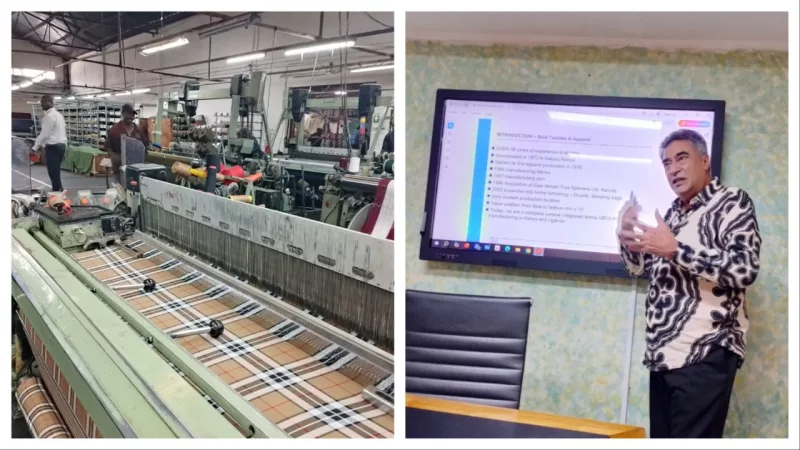
“My father was a tailor. My grandfather was a tailor,” Jaswinder ‘Jas’ Bedi, now the managing director, tells the Star at the company’s Nakuru headquarters, where machinery hums through cavernous factory floors.
“We simply went into the business we knew.” The company’s roots were humble.
Founded by Bedi’s father and formally incorporated in 1972, the business initially operated as a tailor-made suit manufacturer, importing fabrics from the United Kingdom. In 1976, production formally began.
“Fifty years in business is not a small achievement,” Bedi says. “There are not many companies that survive that long.”
Back then, Kenya’s textile industry was thriving.
More than 200 garment manufacturers and over 70 textile mills powered one of East Africa’s strongest industrial sectors. But prosperity would not last.
Cheap imports, second-hand clothing and market dumping would later decimate the industry, wiping out factories across the country.
Most disappeared, but Bedi and a few others survived. Not by chance but by changing course repeatedly.
SURVIVIG MITUMBA
When government restrictions on textile imports tightened in the 1980s, Bedi encountered a problem that would alter his business philosophy forever. He could no longer access the quality fabrics he needed.
“My father sent me to England to study textiles,” he recalls. “He told me to learn the business properly.”
Armed with a textile degree and fresh ideas, the young Bedi returned to Kenya in 1984, convinced that quality could not be outsourced.
“I realised if you don’t make the right yarn, you’ll never make the right fabric,” he says.
That conviction triggered a bold strategy: backward integration.
Rather than rely on suppliers, the company began manufacturing its own yarns and fabrics, a pioneering move in Kenya’s textile sector at the time.
The journey was expensive. Painfully so. Bedi recalls buying a struggling company, running it for years and absorbing initial unprofitability. “I made lots of losses,” he admits matter-of-factly.
Factories were bought, expanded, relocated, redesigned. Some ventures worked but others did not. But quitting was never seriously entertained.
The real threat, he says, came from mitumba, the flood of imported second-hand clothes that reshaped African retail markets and crippled domestic textile producers.
“How do you compete with free things?” he asks.
The question forced another reinvention.
Rather than fight imported fashion head-on, Bedi pivoted into sectors where second-hand competition held little power: uniforms for the police, military, schools and corporate wear.
If you see that uniform worn by employees at your favourite filling station, then it was probably made by Bedi Investments.
“I wanted a business that was fashion-free, recession-free and mitumba-free,” he explains. “There is no mitumba school uniform. There is no second-hand police uniform.”
That strategic pivot became a lifeline.
Today, Bedi Investments supplies uniforms across roughly 11 African countries, serving corporate clients, disciplined forces and multinational brands.
Shell petrol station uniforms across the continent — from mainland Africa to remote island territories — pass through Bedi’s production chain.
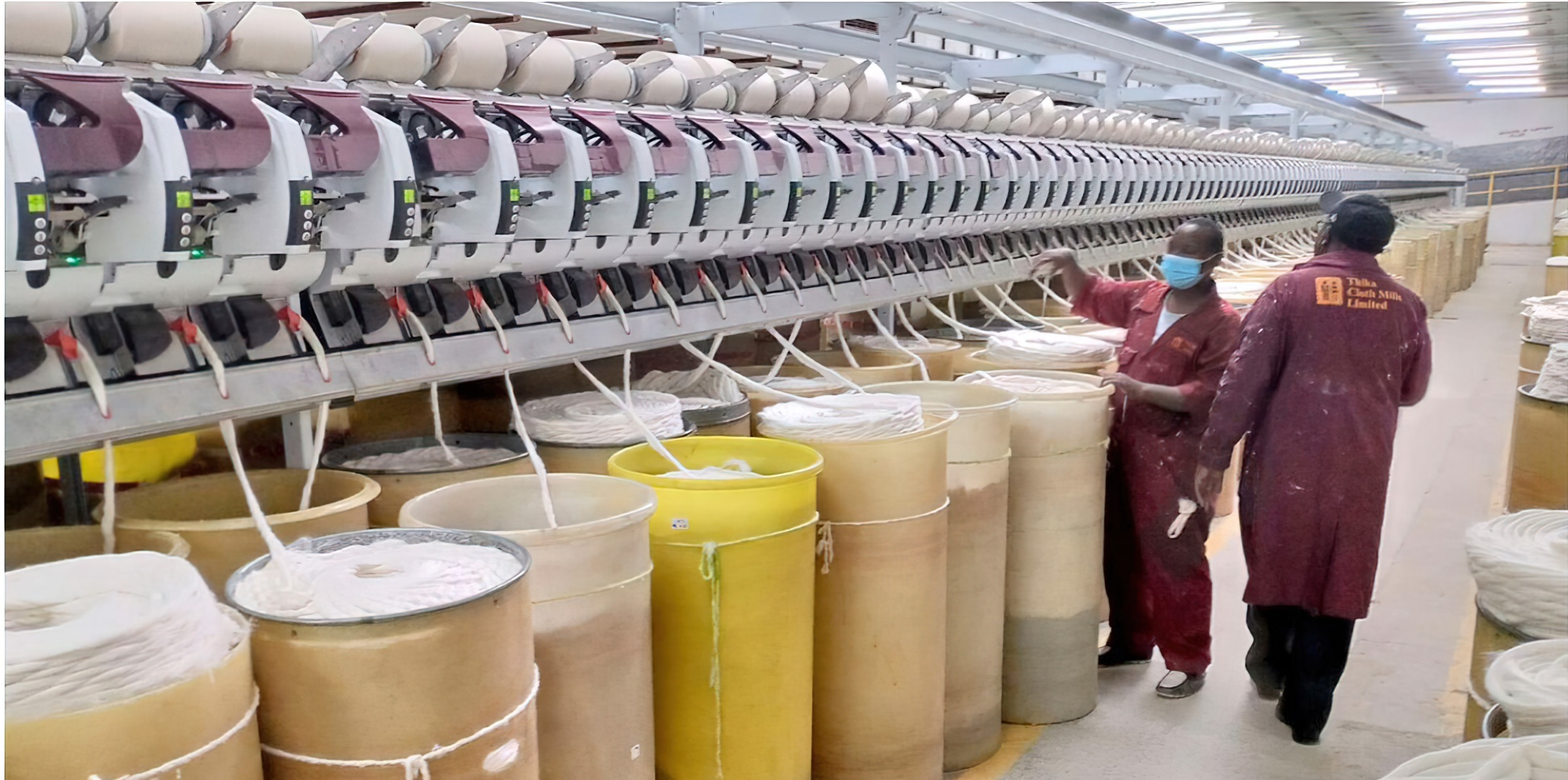
Meanwhile, the company’s manufacturing footprint has expanded into sophisticated spinning, weaving, dyeing, finishing and digital printing technologies.
“We are completely vertical,” Bedi says with visible pride during a tour of the factory.
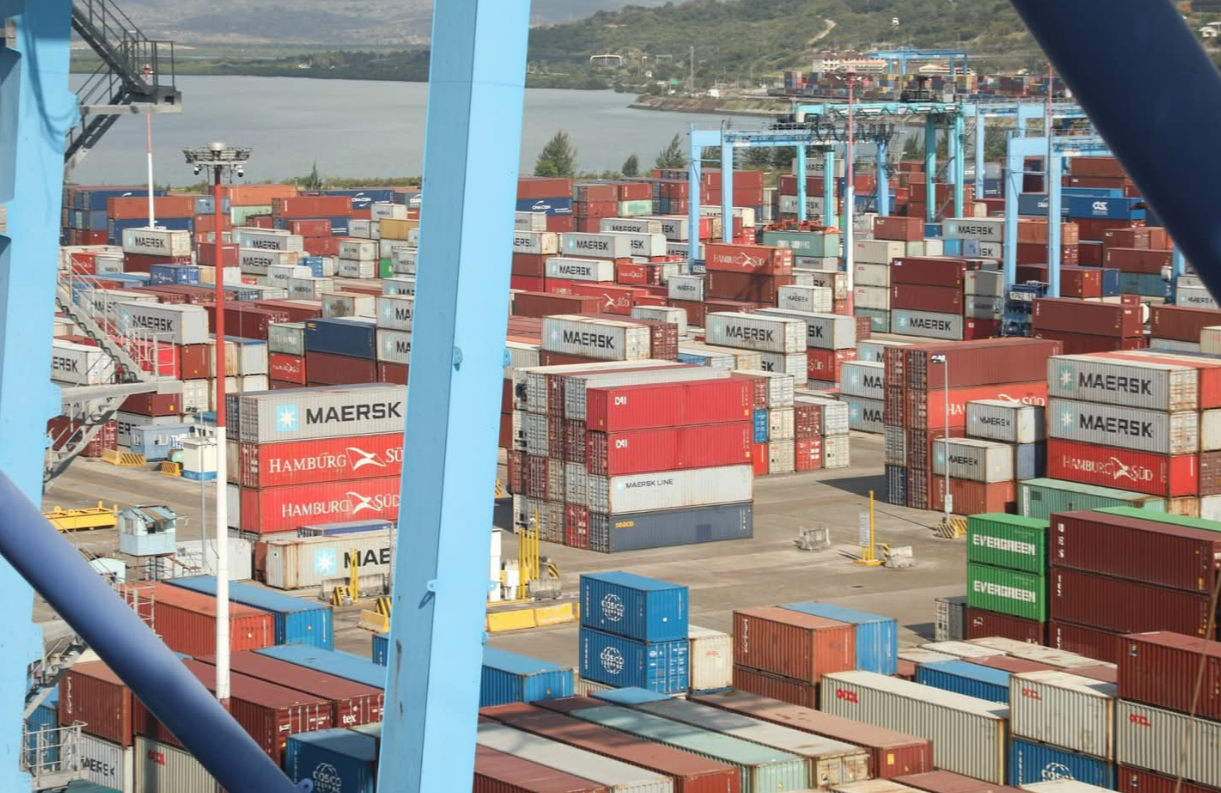
“In Kenya, we run a polyester value chain since synthetic fibres need to be imported and, thereby, the sea port of Mombasa is important.
“In Uganda, we operate a cotton value chain due to ample locally available raw materials.”
The Ugandan chapter (Fine Spinners Uganda Limited) carries its own remarkable story.
Today, his Ugandan business employs thousands and supports tens of thousands of farmers, with plans to expand deeper into cotton-growing regions and refugee-hosting communities.
GIVING BACK
Despite all the machinery, expansion plans and export markets, Bedi remains deeply animated by manufacturing’s human side.
He speaks proudly about building schools, employing people with disabilities and quietly funding school uniforms for vulnerable children.
Following Kenya’s 2007 post-election violence, Nakuru’s displacement crisis left thousands of children unable to return to school.
Bedi approached one of his major British buyers with an unusual proposal.
“For every uniform exported, help us give one to a child in Kenya,” he told them.
The initiative worked. From 2008 to 2018, the programme distributed roughly 200,000 free school uniforms.
“We never advertised it,” he says. “I don’t believe in CSR where companies just throw money at a problem.”
Instead, he champions what he calls Responsible Social Corporate Behaviour.
“It must be in your DNA,” he says.
That same philosophy surfaced again during Covid-19. When global supply chains collapsed and orders evaporated, Bedi transformed his factories to produce Personal Protective Equipment (PPEs).
While companies across the economy cut salaries and laid off workers, Bedi moved in the opposite direction.
“In Kenya I hired more people during Covid,” he says, “Not a single shilling was deducted from workers.”
The company rapidly developed locally manufactured PPE, helping support Kenya’s healthcare response when imports from Asia stalled.
Now, as uncertainty swirls around global trade policies and the future of preferential export frameworks like Agoa, Bedi is once again repositioning.
His eyes are fixed firmly on Africa.
“The last 20 years belonged to the Asian Tigers,” he says “The next 20 years belong to the African Lions.”
His ambition is expansive: a five-country manufacturing footprint by 2030, stretching across East, West, Southern and North Africa, anchored by the African Continental Free Trade Area.
“People are scared,” he says. “But I’m still investing.”
Outside his office, machines continue spinning fibre into yarn, yarn into fabric and fabric into finished products. The transformation feels symbolic.
EXPORT PROCESSING ZONE
A few kilometres away along the Nakuru-Naivasha highway is a building designed for an Export Processing Zone (EPZ), which is set to solely handle exports.
The Bedi family is investing $5 million (about Sh646.8 million at the current exchange rate), with the EPZ mainly targeting the United States and EU markets, with product category set to be workwear, dress pants, woven bottom and cargo shorts.
It is projected to have an initial output capacity of about 150,000 units per month, creating direct jobs in three shifts of up to 2,000 employees.
Bedi says the jobs will help with social security, education, skills enhancement and vocational training, with a medium-term vision for the EPZ being backward integration to localise the supply chain away from imports.
“The global supply chains are reorganising themselves with the ongoing tariff wars and thereby a great opportunity for Kenya to grab, grow and sustain market share,” he said during a site visit to the EPZ.
To support Kenya’s industrialisation and value-addition agenda, Bedi intends to backward-integrate towards investment in the entire value chain from the field to fashion, helping local and regional cotton farmers and creating an ecosystem of domestic demand.
The firm plans to leverage trade frameworks such as AfCFTA, Agoa and the EU trade agreements, which offer preferential terms and duty-free market access, helping Kenya’s overall competitiveness.
The EPZ is expected to be in full production in the fourth quarter of this year (October-December).
“We intend to operate a world-class facility, adopting global best practices in terms of efficiency, productivity, economies of scale and economies of scope,” Bedi told the Star.
The entire production is a dry process with no effluent discharge, thus environment-friendly.
As he invests in an EPZ, which is part of the government’s industrial growth agenda, the biggest risk, Bedi says, would be the failure to extend the Agoa trade preference programme, which currently expires in December this year.
“We remained clear of global uncertainties and geopolitical tensions while building new capacity, hoping sanity will prevail for the reorganisation of global supply chains away from Asia towards Africa,” he said.
What began with one tailor and a street-corner sewing machine has become a sprawling industrial ecosystem linking factories, cotton farms, export markets and livelihoods across borders.
Yet beneath the scale and sophistication lies a remarkably simple inheritance. A family trade.
A belief in making things and an insistence that African manufacturing can still compete.
“You have to be world-class,” Bedi says, “There’s nothing halfway about it. Either you are world-class or you are not.”
A former Kenya Association of Manufacturers chairman, Bedi currently chairs the Kenya Private Sector Alliance and also serves as vice chair of the East African Business Council.
As the government and the private sector work on reforms to deliver a win-win agenda, he believes that the issue of global competitiveness remains crucial.
He says five key drivers of competitiveness need to be addressed: bill of materials (the benchmark global price), financing (cost and tenor), productivity (unit cost of production, utilities (such as power and water) and logistics (both inbound and outbound).
GLOBAL TRADE AMBITIONS
Few business leaders have played a more influential role in shaping Kenya’s export landscape than ‘Jas’ Bedi.
He has dedicated decades to expanding Kenya’s footprint in global markets, while championing value addition and industrial growth.
A textile graduate from Bradford College in the United Kingdom (1984), he further sharpened his leadership skills through executive programmes at Harvard Business School in the United States, IMD Lausanne in Switzerland and IIM Ahmedabad in India.
He has served in boards and leadership of more than 17 companies and key manufacturing and trade associations.
During his tenure as chairman of the Kenya Export Promotion and Branding Agency (Keproba), where he served two consecutive terms from 2019 to 2025, Kenya’s exports recorded significant growth, rising from about $6 billion (Sh776.7 billion) in 2018 to more than $8.3 billion (Sh1.07 trillion) in 2024.
This, as the country expanded market access across Africa, Europe, Asia and the United States.
Exports to Africa alone grew from $2.13 billion (Sh275.7 billion) in 2018 to $3.13 billion (Sh405.2 billion) in 2024, reinforcing Kenya’s position as a regional trade powerhouse.
Bedi has consistently championed the vision of ‘Brand Kenya, Export Kenya and Build Kenya,’ helping open opportunities within the East African Community, Comesa, SADC, the African Continental Free Trade Area (AfCFTA), the European Union, the United Kingdom and the United States.
Beyond Keproba, the Kenya Association of Manufacturers, Kepsa and EABC, he has been president of the International Textile Manufacturers Federation (ITMF) between 2016 and 2018, with members from China, India, Brazil, EU, USA, Turkey among others.
He steered policy framework for the entire global textile industry valued at $1.7 trillion (Sh 219.9 trillion), the largest employing value chain in the world.
Besides this, he was the only African who attended two US congressional hearings for the extension of Agoa for 10 years up to 2025, which he delivered.
His contributions have earned him numerous accolades, including the Moran of the Burning Spear (MBS) in 2012, the Elder of the Burning Spear (EBS) in 2017, Sikh CEO of the Year and an honorary Doctor of Philosophy degree from Desh Bhagat University in India in recognition of his work in expanding export markets.
As managing director of Bedi Investments Limited and a respected voice in international trade, Jas Bedi remains one of Kenya’s foremost champions of industrialisation, export-led growth and Africa’s economic transformation.
His manthra is MAD: ‘Make a Difference’.