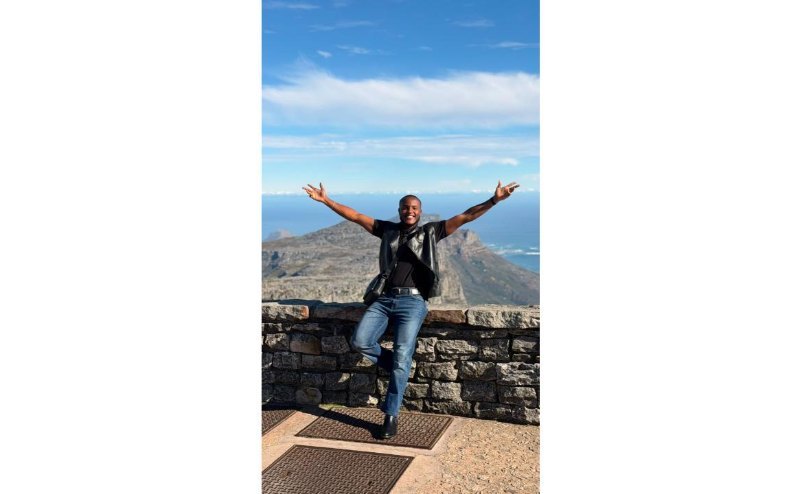
What began as silent stress over academics slowly turned into hallucinations, repeated collapses, isolation and a dangerous dependence on prescription medication.
For months, Mike Macharia suffered quietly. The young student said he feared disappointing his family, feared being viewed as weak and feared speaking openly about the mental struggles that were slowly consuming his life.
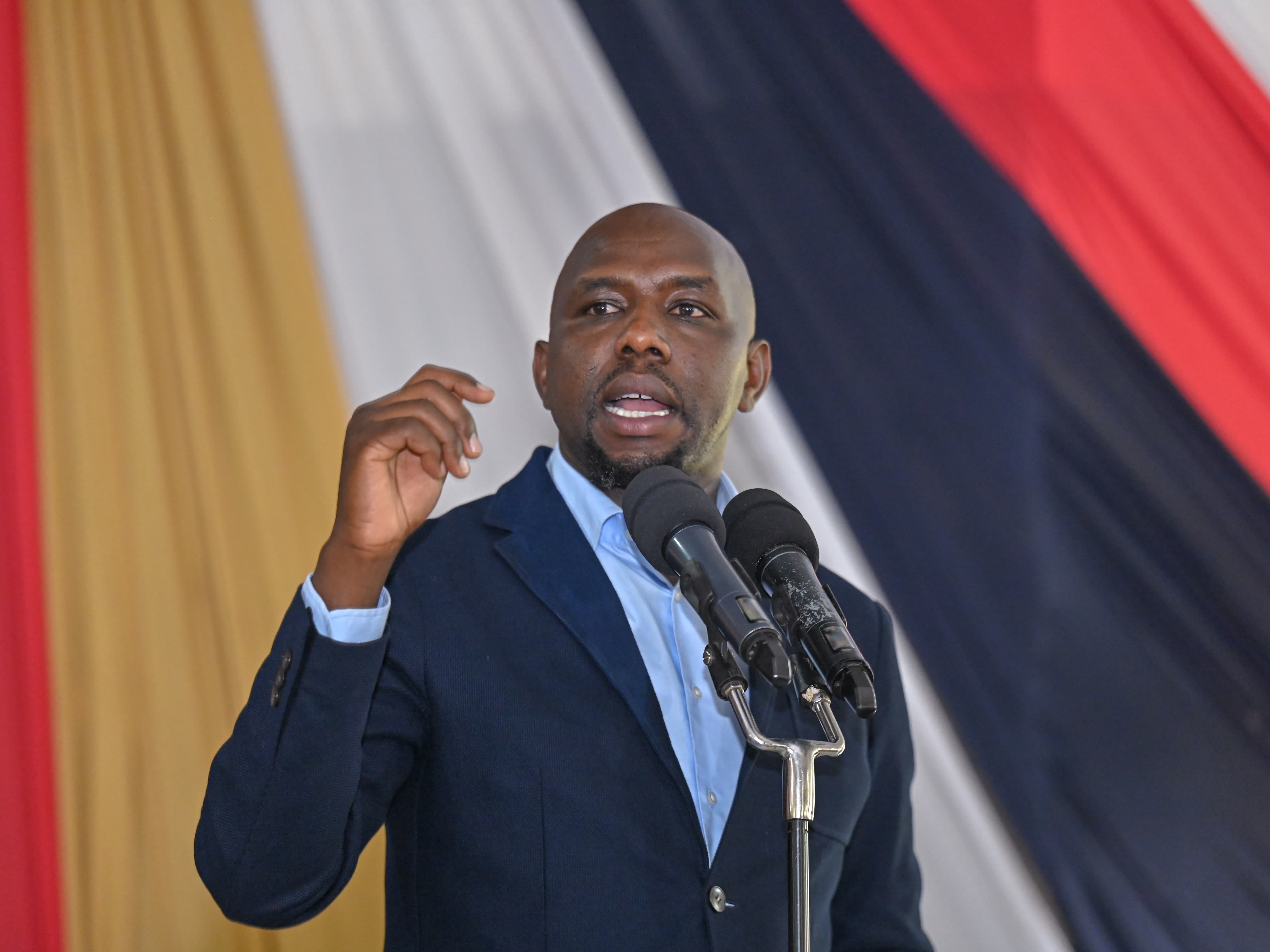
Today, however, the United States International University Africa student is choosing to tell his story publicly in the hope that someone battling similar struggles might realise they are not alone.
“I didn’t want to be seen as a weak person, especially when you are always put on a pedestal,” Macharia said during an emotional interview with the Star.
Macharia, who studies data science and analytics, described 2024 as “a crazy year”, one marked by intense pressure, emotional breakdowns and frightening mental health experiences that eventually forced him into treatment facilities.
HOW IT STARTED
His struggles began during the first quarter of 2024 after a difficult period in his academic journey.
Before joining USIU, he had been pursuing a different course.
“I was a Pharmacy student at the University of Nairobi until I decided to make a transition to data science and analytics,” he said.
However, the transition did not come easily. The pressure of failure, uncertainty and personal expectations slowly pushed him into emotional distress.
What started as stress soon developed into physical symptoms that frightened both him and those around him.
“I started experiencing glitches at some point. You start feeling like you’re going to collapse and feel like you’re floating,” Macharia said.
With time, he noted that the episodes became more intense.
“When there was a lot of pressure, I could feel a shift in something. Very little or a lot of assignments would make me start shaking,” he said.
Despite the alarming symptoms, Macharia chose to remain silent. He feared opening up to people around him and being judged differently as he said he did not want to disappoint the people close to him.
ROAD TO ADMISSION
As the months passed, Macharia’s condition worsened. Between February and May 2024, he began experiencing new symptoms.
“There are things called auditory and visual hallucinations, where you see stuff and hear stuff. It’s bloody crazy,” he recalled.
He also experienced frequent collapses, shaking episodes and moments where even ordinary situations became unbearable.
“Something that is a bit pressuring, or a situation where there is questioning, I could collapse,” he said.
At one point, the student even coughed blood, but he still avoided telling his parents.
Instead, he secretly confided in his sister and begged her not to alert the family.
Macharia recalled being very particular to the sister not to inform the mum or dad and instead keep the issue to herself.
Looking back, Macharia now calls that silence “a Trojan horse”.
Mental health professionals have long warned that suppressing emotional struggles and avoiding support systems can worsen symptoms, especially among young people facing anxiety and depression.
Macharia said some people around him initially suspected he was using illegal drugs due to his repeated collapses and erratic behaviour.
“My dad trusted me a lot and a test was done. Next morning, I was okay and did not have any drug in my system,” he said.
Even after the tests ruled out illegal substance use, however, the symptoms continued, which led to him being admitted in a mental health facility.
The experience was deeply traumatic to Macharia as there were many things going on in the facility.
At one point, he pleaded with his father to move him to another facility.
“I told my dad in the end that if he did not transfer me out of the facility, he would either find me collapsed or having done something that I should not have,” he said.
The student was later transferred to another branch of the mental facility, which he described as “a bit homely”.
MEDICATION ADDICTION
Inside the facility, Macharia was introduced to psychiatric medication.
What began as a treatment, however, slowly became another struggle altogether.
One particular medication, Trihexyphenidyl, gave him a calming sensation that he became dependent on emotionally.
Trihexyphenidyl is used in mental health facilities to reduce side effects caused by antipsychotic medications, such as tremors, stiffness and muscle spasms.
It helps patients better tolerate psychiatric treatment but does not treat mental illness itself.
After leaving the facility, Macharia began abusing the medication heavily.
“I would take even up to 10 pills, yet according to the prescription, I was only supposed to take one pill a day,” he confessed.
The drug gradually affected his concentration, speech and physical functioning.
At times, he could barely see properly in class due to the effects of the medication.
He further warned that prescription medication can become just as dangerous when misused.
The emotional pressure that Macharia carried also continued to weigh heavily on him.
He lived with overwhelming anxiety, stress and depression, while going through so much internal pressure.
His family eventually sought help from a neurologist in Nakuru after his symptoms persisted.
The doctor reportedly diagnosed him with a stress-related neurological condition that caused shaking and collapse episodes.
“When someone is stressed out, you start shaking,” Macharia explained.
He later received new medication that helped stabilise his condition.
However, he said that recovery required more than treatment alone as he also had to do some work from his side to better his condition.
“You as a person also have to realise that I just have to heal, I have to come back and find myself,” Macharia said.
LONELY FIGHT
Throughout the interview, Macharia repeatedly returned to one painful reality, the loneliness that often accompanies mental illness.
“Stress, anxiety and emotional struggles affect your daily life so much, which also leads to isolation,” he said.
At the height of his suffering, he had thoughts of ending his life.
“I have had instances, chances, to want to put myself to sleep forever. It is an attempt,” he said quietly.
Still, Macharia is speaking publicly today simply because he wants people struggling silently to know that recovery is possible. He opened up because there might be some other person suffering in silence.
“Those going through the same might think that people don’t survive whatever they are going through, which is not true because I am here,” he said.
Mental health conversations among young Kenyans have become increasingly visible in recent years, especially in universities, where students face academic pressure, financial challenges and social expectations.
Macharia’s story reflects a growing concern among youth, who silently battle stress, anxiety, depression and substance misuse, while trying to maintain the appearance that everything is fine.
Despite everything he experienced, the young student now hopes to use his story to help others.
His passion for mental health has grown stronger through his own experiences, and he hopes to one day pursue psychology professionally.
“I would really love to help people at a professional level,” he said.
Away from school, Macharia has also ventured into entrepreneurship.
Together with a friend, he co-founded a digital solutions company that develops software platforms for businesses, including restaurants and schools.
However, according to the young man, the biggest victory is not business or academics. It’s all about survival.
His message to others battling silently is clear: speak up, seek help and do not suffer alone.
“You can come out of it! Trust me, you really can,” Macharia said with certainty.