From clinic to pitch: How Odhach is healing lives through football
With a ball at his feet and medicine in his hands, he’s changing futures in Mombasa.
by BRIAN OTIENO
Audio By Vocalize
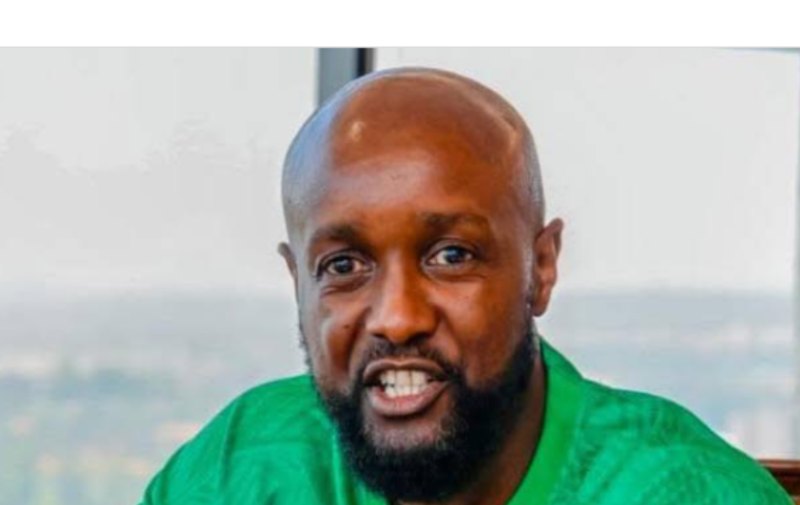
Horace Odhach at his pharmacy in Mtongwe
/BRIAN OTIENO
Seeing him glide past players young enough to be his sons, one would easily liken him to Croatia’s Luka Modric.
Such are his silky touches, deft turns, outrageous passes
and insane vision, all of which defy football logic.
Watching him play, one would quickly get the feeling he is
on the wrong pitch, and perhaps get angry with the football gods for doing him an injustice.
He is supposed to be playing at the Santiago Bernabeu, the
Nou Camp, the Mestalla, or the Ramon Sanchez-Pizjuan, not the sandy pitch,
dubbed Sand Siro(a corruption of world-famous San Siro, the home of AC Milan and Inter Milan), at the Technical University of Mombasa.
That is the feeling he ignites in football lovers. He makes it
look so easy, making one fall in love with the game. And to imagine he plays
just for fun.
Meet Horace Odhach, 37, who claims to be the most caned child in the world, having defied his parents' orders not to play football.
His parents did not know that it was the same football that would
ease their burden after he did his KCPE in 2003 at Thur Gem Primary School in
Kisumu county.
“I went to Thur Gem High School on a full football
sponsorship where I did my KCSE exam in 2007,” he says.
He then travelled to Mombasa, where he enrolled for a diploma
course in Pharmacy for three years, before enrolling at the Kenya Medical
Training College in Mombasa for another three-year diploma course as a clinical
officer in 2013.
All this while, he kept playing football, balancing between
his studies and the game, going round the country where he played for TUM
Dynamos FC up to the Football Kenya Federation’s National Super League level.
“My first job was at the Tudor District Hospital where I
worked for about a year without pay until I could not take it any longer. I
quit in 2014 to start my private practice,” he said.
Odhach opened his clinic in Mtongwe, Likoni, which took five
years before it became stable.
“While at the facility, I would see young boys pass by to and
from a local football ground for practice sessions. This drove me to be
watching their sessions,” he said.
He says at TUM Dynamos FC, under coach Joseph Sihuli,
popularly known as coach Yeboah, he was impressed by the sportsmanship, fighting
spirit, endurance training and the general aura in the team.
“At TUM, I learnt there is no gain without pain and this
helped me put in the work in everything I did. I saw the same traits in some of
the young players in Mtongwe and this encouraged me,” he says.
By this time, he had stopped playing, but an incident in
2018 pricked his mind and aroused the football bug in him once again.
“I was in my clinic advising a patient that he needed to hit
the gym because he was overweight. He had come to buy some drugs which would
help him lose weight. He looked at me, surprised.
“At that time I had not realised how fat I had grown. When I
weighed, I found out I was 96kgs. I was more overweight than him because he was
only 75kgs but had low density fats, which is dangerous for hypertensives,”
Odhach says.
This pushed him to go back to football actively.
He started training with a local team called Juventus, which
only participated in tournaments and not the FKF leagues.
For him to be consistent in training, he knew waiting for
tournaments would be unsustainable and this would derail his training.
“So one day I gathered the team and sold them the idea of
joining one of the FKF leagues. They were doubtful because of the expenses
involved but I committed to take care of everything,” he said.
Before he committed to sponsoring the team, the players were
ill-disciplined, always fighting in training sessions and doing whatever they
wanted because there was no authoritative leader.
“Some of the players used to smoke bhang. They would smoke it
before any training session. Such was the indiscipline in the players,” he
says.
But with slow but sure steps, he started turning things
around.
“Having been an active player, I knew the mentality of a
player, especially the lazy ones, even though most were talented. I knew I
could not just introduce hard training sessions unless players saw the need,”
Odhach said.
So he organised friendlies with top teams in Mombasa,
targeting those that played in the top tiers, where he knew his team would be
walloped.
“I knew the top teams would not grant us friendly matches,
being a side that was not in any league. So I had to entice the coaches to
grant us the friendlies,” Odhach said.
And thus Juventus FC played against Modern Coast FC, getting
whooped 10-0, TUM Dynamos beat them 7-0, Bandari FC beat them 8-1, SS Assad hit
them for six.
With the disappointing results, and not being used to
playing outside their local neighbourhood, the Juventus players saw the sense of
training hard if they were to have a chance of playing in the leagues.
Many stopped using hard drugs and focused on football. Some
stopped going out at night, preferring to sleep and let their bodies rest.
From Juventus, Odhach rebranded the team to Okota Sacco FC
and made a fresh start even though he says sponsoring a team in the local
leagues is expensive.
“If I sit down to calculate, I have cumulatively used more
than Sh1.5 million on the team,” he says.
He sponsored Okota Sacco for five seasons in the various FKF
tiers and the Mombasa County Football Association, where they are playing at
the county level now.
“We started at the FKF regional league, made it to the
Division 2 league, but because at the end there is no reward, I decided we
would better compete in the MCFA county league where there is some reward at
the end of the season,” he said.
To sponsor the team for the whole season, he would spend
between Sh250,000 and Sh300,000 depending on the tier.
“At first I was doing it on my own. But later I had to get
help from friends and even some strangers who just saw my work through our
social media,” he said.
Those who have helped him sponsor the team include some of
his clients at the pharmacy and clinic, Longsan CBO, former teammates, among
others, who have helped him form a women team called Okota Sacco Starlets.
At some point, one of his players broke his leg during a
match and everyone left him, and since his parents were not well off, Odhach
went back to his pocket and used Sh300,000 on the player.
Now, he says, he is glad many of the players who had given
up on life found a new lease through football.
“They changed their perception of football and life. They
saw me as an inspiration. Someone who was well educated but still found time
for them, guiding them and giving them a helping hand in the process,” Odhach said.
Some of the players had completed Form 4 and were just at
home whiling days away.
“I had to advice some of them that there are short courses
that they can do which would be beneficial to them later in life. Many took my
advice and enrolled for short courses.
“And to lead by example, I also got an opportunity to enrol
for a diploma course in electrical engineering, which I am currently pursuing at
the Likoni Vocational Training Institute.”
Through his football connection, he helped seven of his
players also get enrolled at the Likoni Vocational Training Institute, where
they are doing various short courses, including refrigeration, electrical
engineering, among others.
He says parents are only starting to come to terms with the
realities of football and sports in general, after having a negative attitude
towards football for a long time.
They are now realising that football can also be a means out
of poverty and despair, especially after President William Ruto’s motivational
tactics for the Harambee Stars players who ended up giving some of the best
performances at the CHAN 2024.
“Football can change lives. It can create connections which
come in handy in life. Football is health and health is wealth,” Odhach said.
He said about 90 per cent of the people he knows today is
through football. “Most footballers call me seeking medical advice. Some buy
drugs from me. Most teams buy medical products from my facility.”
About 17 of his players have turned their lives around
because of football.
“Four are now in the army, two are officers at the Kenya Forest
Services, three of my players have been taken by Mombasa Stars FC, and some are at
the Kenya Navy,” he said.
Odhach, who is married and has one child, says football has
caused him a lot of trouble in his family life because his wife at first did not
understand his obsession with football and thought he was wasting money.
This is premium content
Subscribe to Continue Reading
Help us continue bringing you unbiased news, in-depth investigations, and diverse perspectives. Your subscription keeps our mission alive and empowers us to provide high-quality, trustworthy journalism. Join us today to make a difference!

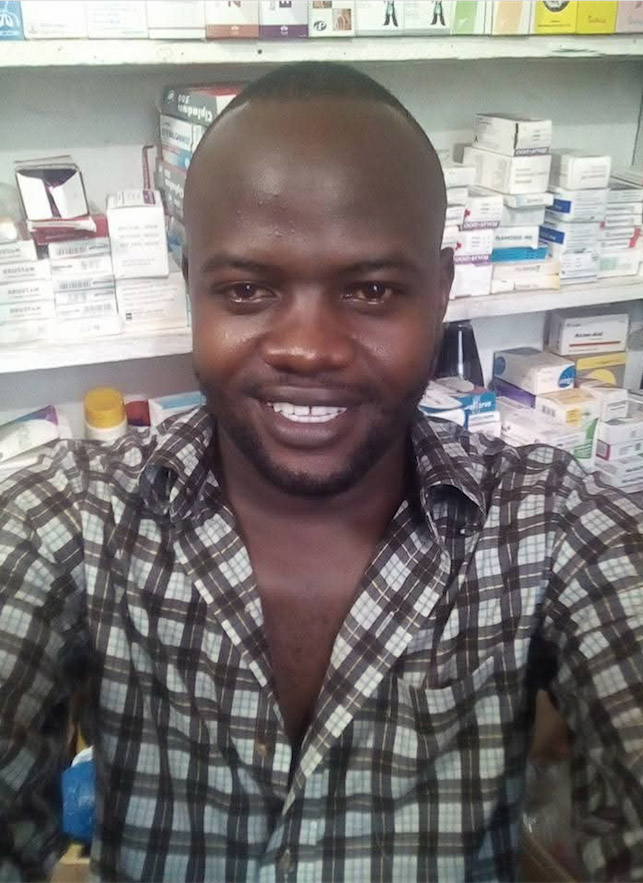 Horace Odhach at his pharmacy in Mtongwe
/BRIAN OTIENO
Horace Odhach at his pharmacy in Mtongwe
/BRIAN OTIENO