Looks can be deceiving.
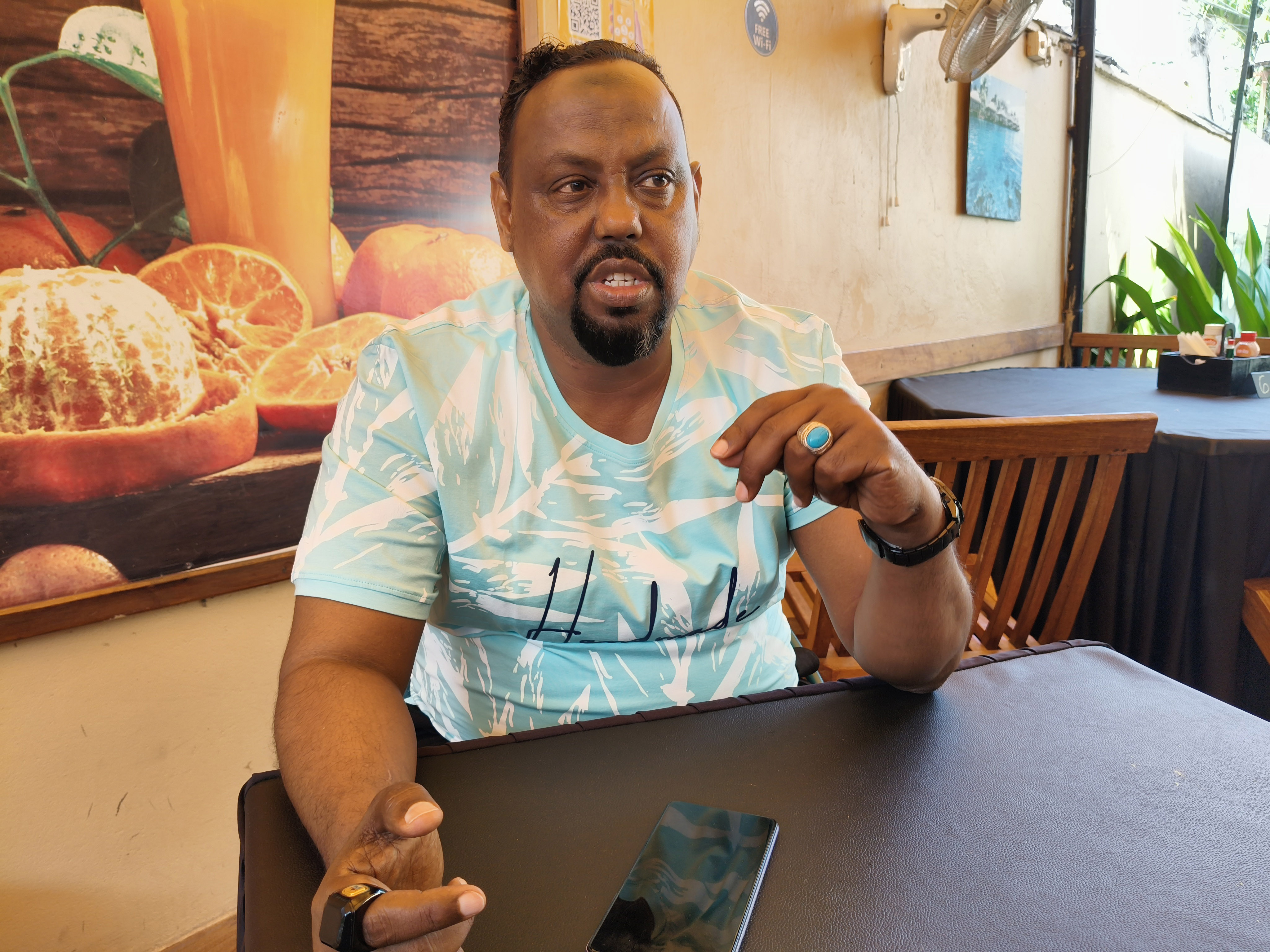
At a glance, Abdikadir
Dekow doesn’t seem like a man who could complete a military-type endurance run
or do 100 push-ups. Wrong.
Or pack a gun, fight Pokot
bandits, handle what his commander cynically called nyama choma, only to find burnt
corpses. Or stop patients from committing a clan massacre in a hospital. But he
did.
At 44, he’s fit as a
fiddle, free of alcohol, cigarettes, or anything many would use to cope with
suffering and hardship that pushed him to the limits. He
was brought up singlehandedly by his mother, who sold tomatoes outside her
iron-sheet single-room house, after his father abandoned them when he was too
young to comprehend such cruelty.
Born in Iftin sublocation
in Garissa county, Dekow was among the pioneers of Iftin Primary, a school
built by village women using old iron sheets and mud so poor children could get
an education.
His determination was clear
early on when, tired of being bitten by bugs at the school, he made his own
chair, while others sat on
the floor during classes. “All the learners sat on the floor. But I
took the initiative and made my own stool using broken timber and nails,” Dekow
told the Star in an interview.
After Class 5, his mother’s
business grew, she sold charcoal and other items and sent him to a better
school, Young Muslim Primary. Dekow did not let his mother down, and in
1995 he scored 525 marks out of 700 in his KCPE exam, emerging the best student
in Garissa and second-best in North Eastern.
He was accepted by Maseno
High and Nairobi School. He despaired for lack of school fees but he received a
full scholarship, thanks to Mikono International, a Japanese organisation
providing educational and medical support. He was among three top KCPE exam
students in North Eastern region to get full scholarships.
He joined Nairobi School in
1996 and this was the first time he ever boarded any vehicle. The
community contributed Sh3,000 for pocket money, asking the bus driver to ensure
Dekow reached Eastleigh, the home of an uncle who worked as a restaurant
watchman. “The next morning, we went to school outfitters at Sarit Centre
where we bought my uniform and necessary items,” he said.
He got a B plain in his
KCSE exam in 1999, but for lack of fees, he had to return to Garissa to hustle. “I
had to help my mother raise my three siblings, so I did odd jobs,” Dekow said.
His first real job was as a
ticket officer at Gentle Bus Service, earning Sh6,000 a month, before he was
promoted to a conductor, where he received an extra Sh200 daily for lunch.
He later became a
storekeeper at a yard where construction company Spencon had a two-year
project to install water infrastructure. He earned Sh8,000 a month and free
ride to and from work by a company car.
He got married at age 21,
and his first-born son is now 20 and in law school.
When the project ended,
Dekow was again jobless. With a family and extra mouths to feed, life again
became a struggle.
In October 2005, he went for police recruitment
and was rejected on grounds of over-qualification in his KCSE exam. "They told
me they don’t take B plain students and said I should go to university,” he
said. “I cried and begged for a chance. One officer interceded and I joined
GSU.”
“But that same week, the
whole exercise was cancelled countrywide on grounds of corruption. I was back
to square one,” Dekow said.
In March 2006, he was
easily admitted and started a nine-month course at the GSU training school. He
became a squad leader. In GSU, he served in many
areas. He battled Pokot bandits in Kainuk in Lodwar, getting a bullet to the
left leg.
One day, while on radio
duties in Turbi, Marsabit, a call came in requesting officers with a
certificate in computer studies and an international language apart from
English to submit their names and service numbers.
Dekow
applied, having taken computer studies at Nairobi School and French at the Alliance Française, where he did a diploma. This application would impact his career
months later.
“Taking
the courses was just to escape from the gruelling life of a GSU officer. These
guys go through a lot. We must give them respect always,” he said
His most harrowing moment
came during the 2007-08 post-election violence when he was serving in Naivasha
police station, in Mirera area. In 2007, he was a horse
rider of the Anti-Stock Theft Unit and his team had to go to Kamahuha and
Kiota.
He encountered a dark PEV
moment.
“Youth armed with machetes were killing Indians in the area, taking advantage of the violence to steal
from innocent people. By that time, we had no food, no water. I went for three
days without eating because there was nowhere to get food,” Dekow said.
Then Naivasha MP-elect John
Mututho brought them soda and bread.
One night, their commanders
came and asked if they wanted nyama choma. Dekow and his colleagues
were excited. “But then we were given
gloves, which surprised us. We were taken to a building where there were burnt
bodies of 22 people. The odour was that of human bodies burning, and we were
ordered to take them to the mortuary,” he said.
Outside, they came across
an abandoned shop with a fridge full of sodas. While the commander looked for
the owner so they could buy sodas, one office crashed the fridge, took the
drinks and gave them to fellow officers.
“I tell Kenyans to cherish
the peace we have. Let us not take peace for granted. War is bad,” he said.
One day, he was walking
through Naivasha with his gun, a weapon he never wanted to touch. He was
stressed and exhausted. A car pulled up alongside him.
“The driver asked for
directions to the nearest hospital. When I peeped in, I saw his left hand was
in the passenger seat next to him. It had been chopped off,” Dekow said.
He took the man to the
hospital, where the management begged him to stay and provide security. He
guarded the hospital for a week.
“The mortuary was full and
bodies had been piled on each other, some on the floor outside the mortuary
door,” Dekow said.
One day, in the ward a
patient spoke in Luo. Immediately, six other patients jumped up, wanting to
attack him. Dekow had to shoot in the air to prevent them from attacking the
patient and causing a massacre.
“I was very angry and
shouted at them. Here we were, all in the ward, suffering different injuries, with
very little help coming and yet they still wanted to act like animals. They
eventually calmed down and later even started talking to each other,” Dekow
said.
That very act of preventing
a hospital massacre earned him his first promotion.
He was later assigned to
Nakuru’s St Mary’s Hospital for 18 days, during which President Mwai Kibaki and
ODM leader Raila Odinga shook hands.
When he got back to the
police camp, it was filled with Internally Displaced Persons.
One day while on day guard
duty, a radio call came in asking for six men to report to CID headquarters for
interviews. “Remember the application I made using the computer certificate? Well,
my name was sixth on the list,” he said.
An MP gave him a lift in a
chopper to Wilson Airport and then gave him Sh2,000 for a taxi to CID headquarters. He
came second out of 55 applicants. They only needed six men.
Dekow was transferred from
the Anti-Stock Theft Unit to the CID, and that week, he was sent for orientation
at Interpol. There he learnt I-24/7, the secure global communications system linking law
enforcement agencies for sharing urgent and sensitive information. It involved
tracking the world’s most wanted people.
“We were the pioneers of
the Interpol Mombasa office,” he said. There, he and others brought wanted
criminals to book and largely ended the theft of high-end cars.
He rose to a very senior position at
Interpol, and one day, he quit.
But not before enrolling at
the University of Nairobi for a diploma course in project management; he then
enrolled for a higher course in project management, and then a master's.
Now, he is undertaking his
PhD in project management, majoring in monitoring and evaluation. “I am soon graduating with
a PhD from the UoN and I’m happy my dream of becoming a scholar was not
shattered, although at one point I almost dropped out,” Dekow said.
While studying for his
master's, he again went broke and couldn’t raise the fees.
He approached prominent
businessman and philanthropist Abu Joho who paid for a whole year for his
degree.
“That generous guy made me
promise myself that I would help needy people get an education. Now I am
sponsoring an orphan girl at secondary school in Kadzandani,” he said.
Today, he is a happy family man with a wife and six children. He loves football and is a huge Arsenal fan. His
past is always with him, but he looks to the future and knows he can handle what
it throws at him.