In Baringo County, rural women are
facing the compounded challenges
of climate change, gender-based violence and a lack of access to critical
resources.
Amid these struggles, one local
activist is leading a transformative
movement to empower women and
build resilience to overcome the climate crisis.
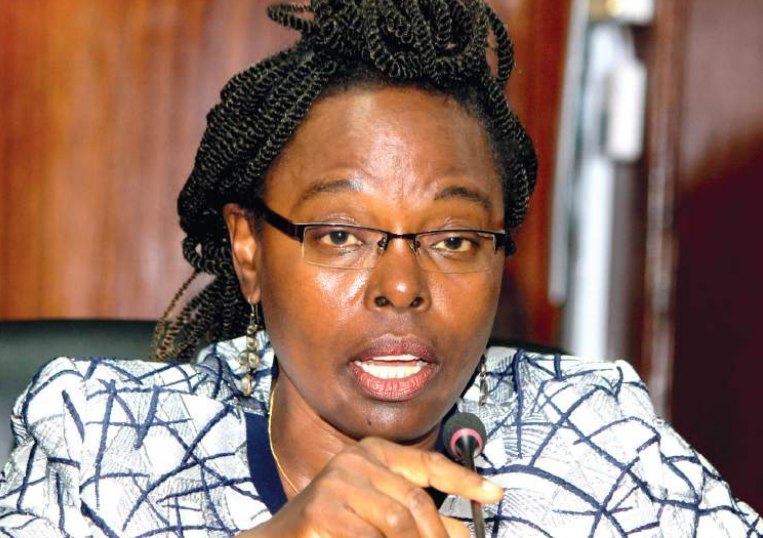
Benadine Kochei, a human rights
defender and advocate for rural women, is spearheading efforts to uplift
her community.
Through her organisation, the Koimugul Indigenous Women Network
(KIWN), Kochei advocates not only
for the preservation of indigenous
crops but also for the broader socio-economic issues that affect women in the area.
This initiative is being supported
by Hivos, under the Rural Women
Cultivating Change project.
We met Kochei at the 2nd Eastern
Africa Agroecology Conference last
week.
Passionate about empowering
rural women in Baringo, she is determined to help them navigate the
climate crisis that threatens their very
existence.
The activist comes from the Endorois community, an indigenous and
marginalised group in Baringo whose
culture and customs set them apart.
“We are a minority and are often
overlooked in most development
projects,” Kochei says. “Because we
are few in number, our needs are not prioritised and we face marginalisation.”
As an activist, Kochei strives to ensure rural women’s voices are heard
and their needs addressed, especially
in building resilience against the impacts of climate change.
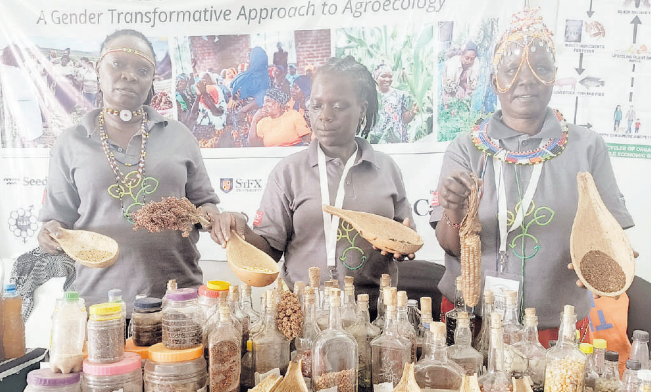
Founded in 2020, KIWN, promotes
sustainable agricultural practices,
particularly the revitalisation of indigenous crops.
“Our indigenous crops are vital
for food security in our community,”
Kochei says.
“In the past, we would plant maize,
sell it to companies and end up with
no food for ourselves. Now, we are
learning the importance of cultivating
these crops for our own consumption.”
However, the challenges remain
severe. Kochei’s community, living
near the Lake Baringo landscape, has witnessed firsthand the devastating
effects of rising water levels.
“Lake
Baringo has submerged many houses
in our area, forcing people to migrate
to unfamiliar places,” she says.
“As a result, many women are
exposed to greater risks, including
gender-based violence and early
marriages. In the displaced areas, we
also see an increase in female genital
mutilation.”
As families are displaced, many
women are left behind or forced into
vulnerable situations.
“In our community, when climate
change displaces people, men often
marry women from wealthier towns,
leaving behind women and children
without support,” Kochei said.
This situation leaves many women
vulnerable, particularly those with
disabilities or young children, who
are often neglected during these crises.
Another devastating effect of displacement is the rise in HIV/AIDS.
Many displaced people are forced
to live in overcrowded, unsanitary
conditions with no privacy, creating
a breeding ground for the spread of
HIV.
“Living in tents with no privacy
is a perfect storm for the spread of
the disease,” Kochei says.
In addition to these challenges, the
Endorois community struggles with
a loss of identity.
“As we intermingle with others during migration, we
sometimes lose our sense of who we
are. With so few of us left, it’s difficult
to preserve our culture.”
Despite these overwhelming difficulties, Kochei remains hopeful and
continues to advocate for women’s inclusion in county development plans.
“We used to believe that men were
the only ones who could prioritise
our issues. But now, we are actively
involved in the county’s budget processes, ensuring that women’s needs
are addressed in the County Integrated Development Plan and the Annual
Development Plan.”
Her advocacy is starting to bear
fruit. “Our participation in the county’s budget processes has made a difference,” she says.
“We now have resources allocated
for women empowerment, such as
rainwater harvesting tanks for their
homes, smart agriculture training and
better access to education for their
children.”
Kochei believes that empowering
women is key to building community
resilience.
“When you empower a woman, you
empower the entire world,” she says.
“Group farming is one of the best
ways to empower women in our community. By working together, they can
improve their lives and create sustainable livelihoods.”
Chebet Chirchir, programme officer,
Rural Women Cultivating Change,
Hivos East Africa, explains that the
project is designed to empower rural
women across Kenya, Tanzania and
Ethiopia by addressing cultural and
structural barriers that limit their
opportunities.
The project targets smallholder
farmers, female heads of households and survivors of Sexual and
Gender-Based Violence.
“The aim is to enhance leadership
roles, promote gender equality and
build climate resilience,” says Chirchir.
The RWCC project is implemented in Kenya by GROOTS Kenya,
Hivos East Africa, and Seed Savers
Network, with funding from Global
Affairs Canada through SeedChange.
The project’s sites in Kenya include
Baringo, Laikipia, Kitui and Nakuru
counties.
Chirchir points out that climate
change is posing significant challenges to rural livelihoods, particularly for
women saying, “Women in Baringo,
Laikipia, Kitui and Nakuru counties
face climate change impacts that affect food security, water availability,
financial stability, cultural barriers
and livestock challenges.”
A recent assessment of the climate
change effects on rural women’s livelihoods in these counties showed that
droughts and floods have led to crop
failures and shortages, rivers and
boreholes are drying up, making it
difficult to access water.
It also showed that women struggle
to cultivate and sell crops, earning
minimal income, there is limited access to land and farming rights which
restricts women’s ability to sustain
their livelihoods.
Also, drought, floods and diseases
are threatening economic stability,
causing forced migration.