The debate on climate change and the imperative of the energy transition in the theatre of global challenges gathered momentum during the United Nations Climate Change Convention (COP28) in Dubai last December.
It’s a fast-evolving debate that will decide the fate of our planet and the well-being of generations yet unborn. Scientists say it’s a debate that demands bold voices and even bolder action.
Due to this increasing boldness, COP28 resulted in an unprecedented recognition and momentum for linking efforts to address the three main interlinked environmental crises facing humanity today: the climate, biodiversity loss and pollution crises.
In a historic milestone, the 197 countries signatories to the Convention constituting near universal membership, closed COP28 with an agreement signalling the “beginning of the end of the fossil fuels era”.
The agreement inclined towards a swift, just, orderly and equitable energy transition, underpinned by deep emissions cuts and scaled-up finance.
It also recognises that the energy transition needs to be grounded in energy security (adequate and reasonably priced supplies) to ensure public support and avoid economic dislocations, with the dangerous political consequences that can follow.
That agreement pointed to the direction of the energy transition at a scale and pace of change that can’t be stopped or reversed. It also placed the energy mix on the front burner of the heated debate on the energy transition.
To meet its energy needs, each country uses the types of energy available to it in differing proportions (the energy mix), with final energy consumption in a given geographical region broken down by primary source.
While figures vary from country to country, fossil fuels (oil, natural gas, coal) and nuclear energy dominate the energy mix at the global level, accounting for 85 per cent of the total.
Renewable energy (solar, water, geothermal, wind and biomass) account for the rest. In Kenya, electricity accounts for 30 per cent of the energy mix, while 60 per cent is sourced from oil and gas.
The energy transition, energy security and development nexus creates an intriguing narrative with far-reaching geopolitical and socioeconomic implications, including extreme poverty that the Sustainable Development Goals (SDGs) seek to eradicate.
A North-South divide reflects disagreement over climate and energy transition policies, their impact on development, who is responsible for cumulative and new emissions, and who pays.
For developing countries, the emphasis on reducing emissions needs to be balanced against other urgent priorities: health, poverty and economic growth.
According to the World Bank, 700 million people around the world live in extreme poverty. More than half of these people live in sub-Saharan Africa.
Energy is crucial for achieving almost all the SDGs, from its role in curbing poverty through advancements in health, education, water supply and industrialisation, to combating climate change.
Bound by a great sense of urgency, humanity wants to change the energy mix, economies, global trade patterns, cities, technology and social equity. The demand for change is happening in the background of a non-stationary environment, divisive geopolitical rhetoric and deep economic uncertainty.
Success or failure in achieving this massive task largely rests on the shoulders of infrastructure, which is central to the energy transition and achieving climate adaptation goals.
Infrastructure catalyses economic growth and facilitates trade, supports urban renewal, is the foundation of digital transformation and, if done well, can help embed social equity, including poverty reduction.
Debate on the triple global crises heightened during discussions at the recent Geo-East African Conference and Expo.
Organised by the umbrella association of geologists — the Geological Society of Kenya — and the Geological Registration Board, the discussions brought out the potential clash of values and priorities raised in the debate.
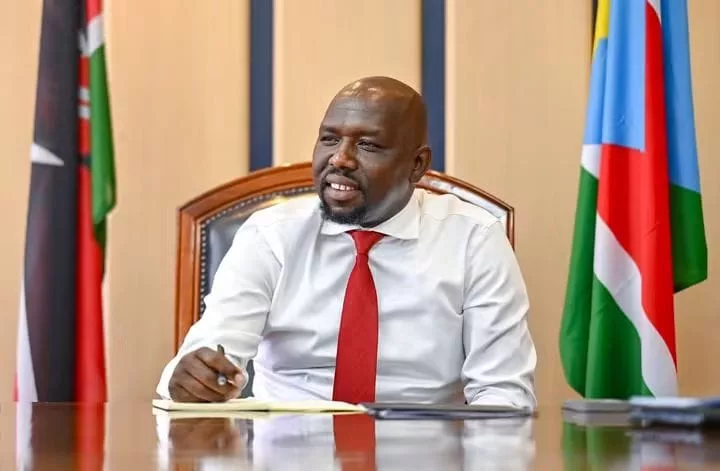
National Oil Corporation of Kenya chair Kiraitu Murungi sought to know the geologists’ role in the energy transition and sustainable economic development.
Geologists play a major role in the exploration and exploitation of natural resources in the oil and gas, mining, water, mining, geothermal and construction sectors.
Murungi said Kenya must develop its fossil fuel resources to tackle the country’s fundamental development challenge of public debt. It is consuming 40 per cent of national revenue, which has forced the government to impose heavy taxation, leading to a high cost of living.
Rising public debt is constraining growth and limiting the country’s ability to cope with future crises or invest in development.
“It is impossible to repay foreign debts with revenues generated from renewable energy,” Murungi said.
“We can’t depend on foreigners all the time to develop ourselves. Hydrocarbons are still important for development within the confines of the energy transition.”
He called for a more aggressive approach and bold decisions in exploiting the oil discovered in Turkana.
“We are going to be here for 50 years. Why should our citizens suffer when we have all these natural resources to pay debt, educate our children and buy medicine for our hospitals?” he asked.
“Amid perpetual debts, poverty and backwardness, Africa has huge and unexploited resources to transform our societies and economy as we develop clean energy. Let’s integrate the element of renewable energy but drive it away from energy activism.”
The Nock chair agreed with the global call to action on rapid decarbonisation of energy systems, mandating states to institute measures to protect the environment from the impacts of climate change.
World leaders at the UN General Assembly Summit last September learned that halfway in the journey to achieving the SDGs by 2030, “a mere 12 per cent of the SDGs are on track, with progress a stagnation in the face of multiple crises”.
The summit provided high-level political guidance on transformative and accelerated actions to achieve the SDGs by 2030. SDGs Goal 13 is specific to climate change and a mandate to protect the planet from its impacts.
While Kenya’s contribution to greenhouse gas emissions is low, energy transition scenarios need to be developed, and environmental risks and social justice concerns assessed.
Legislators are obliged to frame the mitigation of climate change. Article 42 of the Constitution states that every person has the right to a clean environment, while Article 71 refers to the exploitation of any natural resource in Kenya, including mining, and all types of available energy (the energy mix).
The energy transition fits within the matrix of this legal framework and the regional context of pollution, geopolitics, conflict and violence in the scramble for natural resources amid extreme poverty and underdevelopment.
Energy will play a key role in attaining the objectives of national economic development. That is why the extraction and exploitation of natural resources and the energy mix feature in the debate on climate change and the energy transition.
The term energy mix should not be confused with the power generation mix (also known as the electricity mix) which describes the breakdown of energy sources used specifically to generate electricity.
According to the Energy and Petroleum Regulatory Authority (EPRA), Kenya is steadily pursuing renewable energy sources, with a focus on geothermal energy, wind and interconnected solar photovoltaic (PV) systems.
Geothermal (891.8 megawatts) and hydro (826.23MW) accounted for 51.66 per cent of the current total installed grid-connected capacity of 3,311.1MW, which increased by 275MW in 2023. Solar generation at 170MW and wind generation at 436MW increased to 22.87 per cent of the total installed capacity.
The Geothermal Development Corporation targets to develop 1,065MW of geothermal resources by 2030, part of the national plan to instal 5,000MW of electricity in the country by 2030.
EPRA states that captive generation (commercial and industrial consumers' own-use generation) increased to 402.3MW, accounting for 10.83 per cent of installed capacity.
Solar PV generation was most preferred ahead of bioenergy (biomass, bagasse and biogas) and waste heat recovery generation. Devki Steel Mills’ 55MW waste heat recovery plant in Kwale county is the largest captive generation plant.
Sustainable Energy for All CEO Damilola Ogunbiyi has highlighted the social justice component of the energy sector debate in the climate change and the energy transition debate.
“It is estimated that energy accounts for more than two-thirds of total greenhouse gas emissions globally. Therefore, to tackle the climate change crisis, we must address the issue of decarbonisation of energy systems,” she said.
“An energy transition away from fossil fuels to energy sources that emit less carbon dioxide, such as wind and solar, is more than vital. But the energy transition must also be just.”
Ogunbiyi is also the Special Representative of the UN Secretary-General and co-chair of UN-Energy.
Currently, at least 775 million people, many in Africa, still lack electricity, and almost a quarter of the world (2.4 billion) still cook with highly toxic fuels, which has a direct impact on their health and quality of life.
The twin challenges of energy access and decarbonisation must, therefore, be tackled at the same time as social justice, equity and inclusion.



![[PHOTOS] Elderly brave cold to vote in Ol Kalou](https://cdn.radioafrica.digital/image/2026/07/d2345b9e-578f-45ff-9bb0-d7819671c165.webp)

![[PHOTOS] Ol Kalou residents turn out in large numbers to vote](https://cdn.radioafrica.digital/image/2026/07/fe42d51c-7f79-466e-94e8-59561f77bbe7.webp)