

Terrorists and other criminal elements target road infrastructure in Northeastern because they fear they will be forced out of business once complete, a Cabinet Secretary has said.
There is massive infrastructural development in Northeastern, which, once complete, will open up the area to business and investment.
Transport CS Kipchumba Murkomen recently told the National Assembly Regional Integration Committee the insecurity incidents will end with the completion of roadworks.
“Those criminals are targeting the roads because once they are tarmacked, they cannot plant IEDs (Improvised Explosive Devices) below the tarmacked roads,” Murkomen said.
He said the criminal elements benefit from the poor road infrastructure because apart from planting IEDs, they know that the rough terrain makes it hard for security agents to respond and give chase.
He said the roads are going to be a solution to the insecurity incidents.
He said the government will tarmac all highways in all parts of the country.
“We cannot continue having murram roads being highways,” the CS told the committee chaired by Kipipiri MP Wanjiku Muhia.
Murkomen said the Lamu-Ijara road, which was a murram road, will be redone.
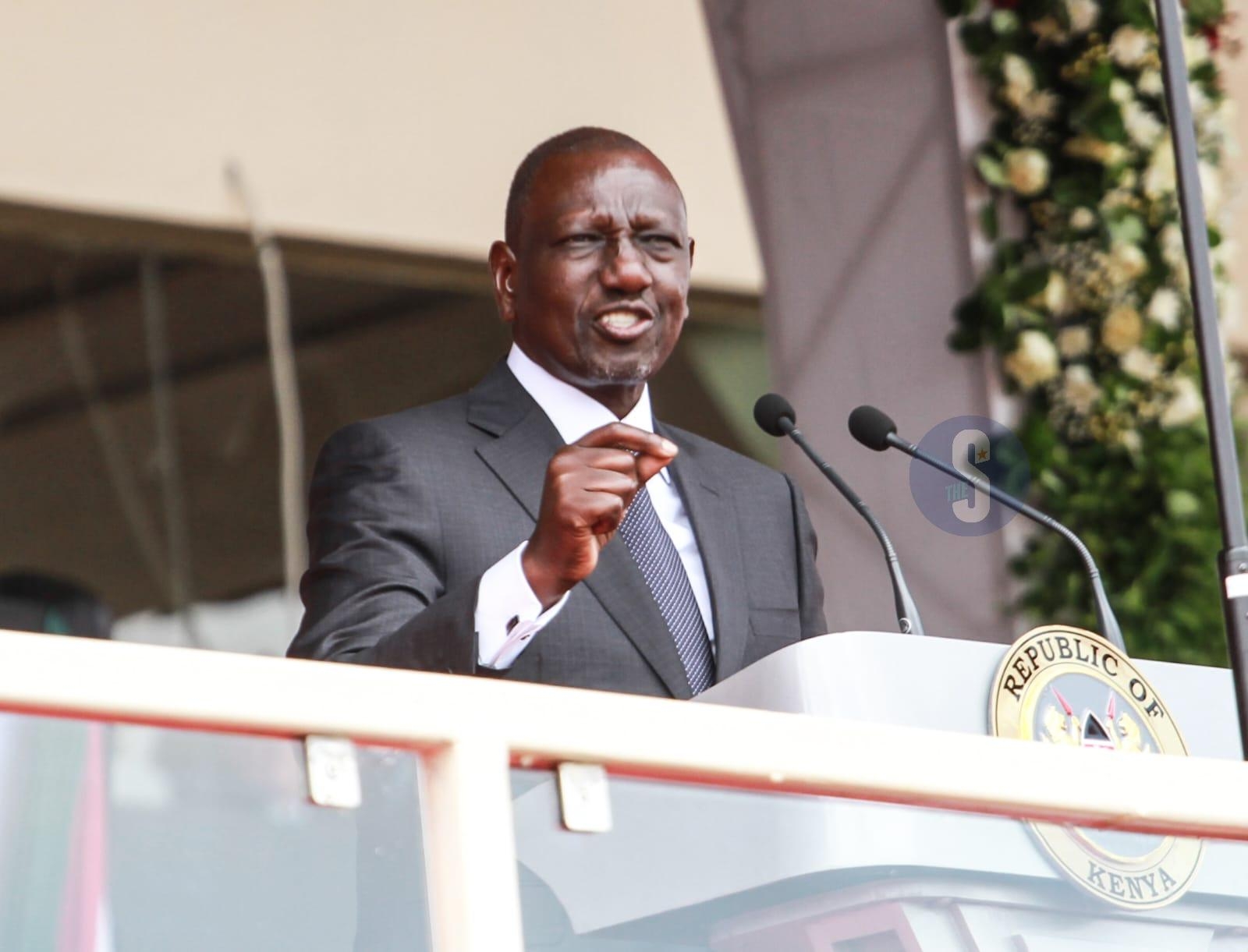
President William Ruto, when he came to power, said such an important road cannot be made of only murram and that it should be tarmacked.
The CS said the money that was being spent on the road was too high for a murram road, and that the price can be reasonable enough for a tarmac road.
“So, now we are doing two things. We are dealing with the quality of the murram, which is there. We are correcting the previous unsupervised work that was not properly done,” Murkomen said.
“Our supervisors are going back there to test and establish the strength of the road first. We are in agreement with the contractor that we have to redo some parts of the road to achieve certain standards.”
He said the contractor had cited security issues and wanted to quickly get out of the area.
The CS, however, said the Defence ministry has assured them they will provide adequate security so the contractor can complete the road without fear of attacks.
He said the Garissa-Isiolo road is currently being tarmacked, and this will be extended to Moyale.
“Later, we will look for ways of going through the valley to Lokichar,” Murkomen said.
The government plans to have an Internal Container Deport in Moyale so that goods can be cleared from there and have the town grow eventually.
However, he said this is dependent on the Lamu port functioning more.
“The reason you are not seeing what the former government promised is until we make the Lamu port function well, then there is nothing to transport along the corridor,” Murkomen said.
He said livestock is being exported through the Lamu port once in every three months, but there are still only a few goods being imported through the Lamu port because the corridor is not yet cleared.
“We are working concurrently to get a strategic investor to come and develop Lamu port and the Special Economic Zone as we do the roads,” Murkomen said.
He said Kenyans will not go into another election without having seen an investor in the Lamu port and a tarmac road.
He said the Northeastern part of the country is the new development frontier for the country.
“That part of the country will be the most lucrative route in the world,” he promised.
He said the insecurity issues around Nakadok and Nadapak at the border of Kenya and South Sudan posed a challenge.
The contractor of the 11km road threatened to leave, having stayed for too long without having to do any work.
The project is funded by the World Bank, which has already released the funds.
“We have told our friends in South Sudan, let’s separate this discussion about where exactly the one border passed. The one border post can wait. Let’s complete the road, the bridge and the fibre optic to go through,” Murkomen said.
“Because the contractor is on site and has been on site for far too long. He is almost leaving the site. And the money is there because it’s a World Bank-funded project.”