Today I will start with my conclusion. And this is that after witnessing the deeply disturbing events of the last few weeks, I remain convinced that the right path for Kenyan youths who want to make a real difference to their country, is the path of parliamentary and county assembly representation.
And that at the end of the day, peaceful demonstration must be converted into the power of the democratic voting process.
Having said that, let me explain that in my column last week I put a case for youth transition from protests to political power, by entry into competitive politics. I have however been challenged by some of my readers that the path I prescribe is not viable due to the funds required in competitive politics which the vast majority of youth do not have access to.
Let us look deeper into this valid assertion.
One of the first things required upon entry into competitive politics is letting as large a number of the voting population as possible be aware of the bid. For this to be successful, the candidate needs to have a branded or associative image that attractively states what they stand for.
Secondly, there is a need for an organisational capacity for events and activities that allow the candidate to connect with the voters and provide visual proof of popularity. This aspect is greatly dependent on the campaign staff who develop and execute strategies, field activities and analysis of poll data, where available.
The third important capacity is logistics and transportation, as this shall determine ground coverage by candidate, distribution of campaign material, mobilisation of voters for events and management of security where foray is in hostile territories.
All these three functions require funds for implementation.
The report 'Cost of politics in Kenya by the Netherlands Institute of Multiparty Democracy - 2021' had interesting estimates on funds candidates require to mount their respective campaigns.
The average expenditure of candidates for MCA, MP, woman representative and Senate is Sh3.1 million, Sh18.2 million, Sh22.8 million and Sh35.5 million respectively.
Governors’ seats, which were not included in the study, political pundits estimate expenditure at four times that of the Senate post, putting it at Sh142 million.
The amount spent on campaigns is enormous if you bear in mind there are always more than two candidates for the 1,432 MCA, 290 MP, 47 woman representative, 47 senator and 47 governor slots.
How then can the youth compete with hope of success? Let us consider the following
The number of eligible voters under 35 years of age can potentially be 67 per cent of registered voters; this gives the youth as a group a generational head start.
There are 66.04 million mobile phone connections in the country with an estimated 39.9 million being smartphones, thus compatible with social media applications: the growing source of consumed broadcast content.
These statistics indicate that a candidate can technically reach over 50 per cent of their voters. The impact however shall depend on the quality of the branding and messaging, which in turn would form the connection required with the voter.
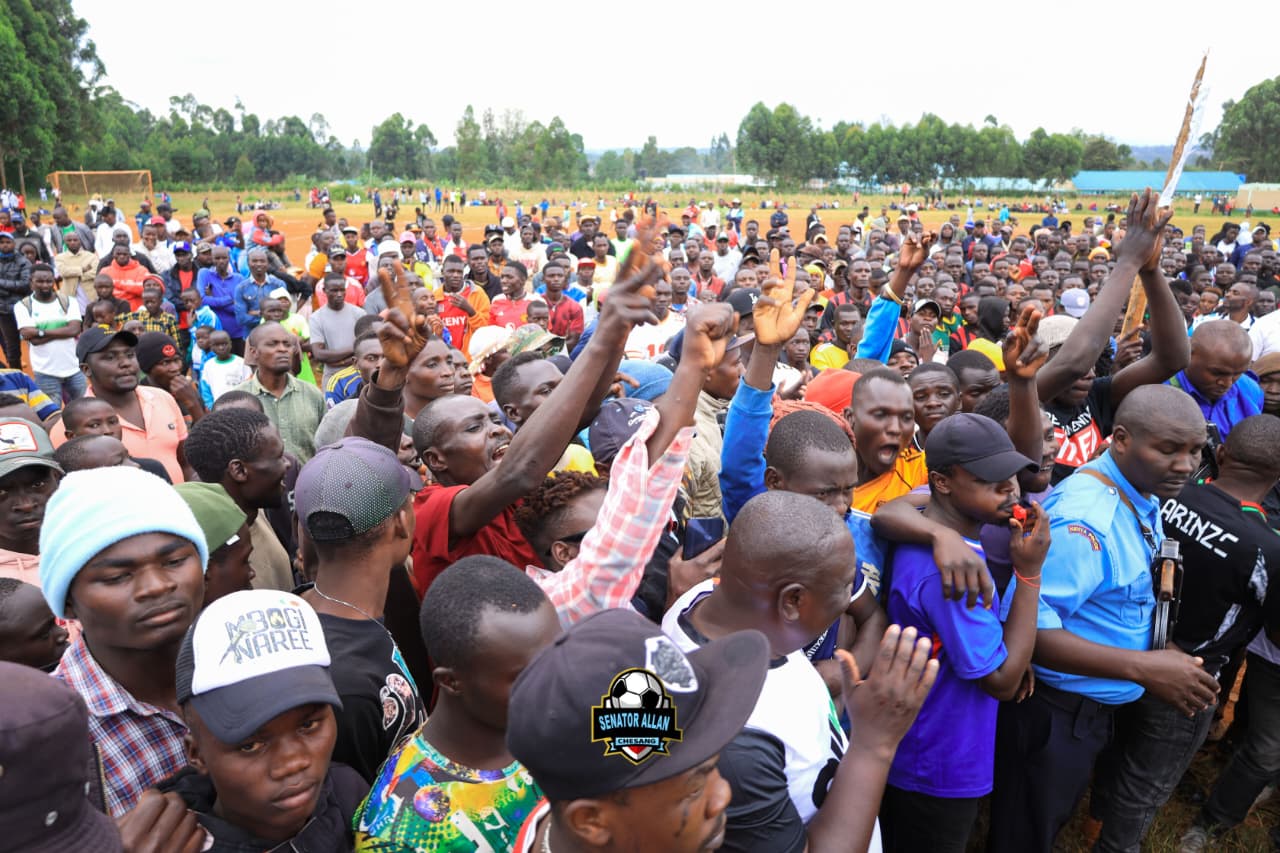
One of the things the protests of the last weeks have shown us is that once there is a connection with the voter and there are competent organisational skills, events and functions can be very well attended without the cost traditionally associated and considered mandatory.
Sequencing of ground coverage, messaging, managing media content, political strategies and field operations, including poll day safeguard, are but a few critical areas that need informed and specialised talents.
Once again, the protests have another lesson for us in crowdfunding. It is reported that a target Sh10 million to be raised online was surpassed, with the total amounting to Sh21.8 million in a matter of days. This can be achieved by a platform giving real-time, interactive, transparent updates of receipts and expenditures.
The youth who come forward with compelling messaging giving clear verifiable personal narratives and unambiguous objectives with substantial impact may yet be formidable candidates.
I believe out of the potential 14.8 million youth registered to vote, there shall be found 1,862 worthy candidates to vie for all the elective posts credibly.