For more than two decades, no president in Kenya's history has initiated more radical and controversial policies than Ruto in a spirited and tenacious bid to uplift the country's fortunes.
However, the reforms have triggered a hue and cry, especially among the working class as the government raids their payslips to fund the ambitious economic blueprint.
Just before the ink dries on the Finance Act 2023 that introduced the 1.5 per cent housing levy, Ruto has initiated yet other changes at NHIF requiring workers to about 2.75 per cent of their salary for health cover.
Analysts say the implementation of these policies would be a make or break for Ruto as the clock ticks towards the 2027 polls.
“If the reforms succeed, they will make re-election of the President very easy as they are all having an impact on the lives of the majority,” political observer Martin Andati said.
“However, if they fail, then the opposition will have cannon fodder to hit the President with and make his re-election bid a mountain to climb,” the analyst said.
Dan Mulemi, A US-based economist, for instance, believes Kenya will be a great nation if funds collected are well utilised.
"That is what most European countries are doing. Taxes are working for them. In Kenya, however, clear systems and processes must be followed to ensure the housing levy tackles the high housing deficit, higher NSSF gives pensioners better retirement and higher NHIF contributions result in quality healthcare. If this is not realised and money is squandered, Ruto's regime will go down in history as the most painful for Kenyans,'' Mulemi told the Star.
He added, however, that the Kenya Kwanza government should strike a balance between raising taxes and giving incentives to both firms and individuals to increase production.
His sentiments were echoed by financial risk analyst and economist Mihr Thakar who says higher payroll taxes increase the burden on employers and decrease the spending power of employees.
Coupled with the six-month stream of contraction in the country's Purchasing Managers Index (PMI), this could lead more employers to decide on layoffs and restructuring.
Thakar said the tax revenue to GDP ratio in Kenya of less than 18 per cent is lower than the OECD average of around 34 per cent.
"This is due to, inter alia, [the number of] informal workers being five times higher than in the formal [sector]. The idea of overburdening these formal workers, rather than solely focusing on boosting trade and investment could lead to higher informality. Moreover, employers may consider shifting staff to contract workers and consultants. Higher payroll deductions are also negative to motivation,'' Mihr said.
He said the pressure on President Ruto to restore creditor’s confidence, as well as achieving the immense task of achieving his campaign manifesto during a period of fiscal consolidation has led to a tendency to make unpopular decisions.
"Failure to yield fruits could result in souring sentiment among swathes of the voting population,” the analyst said.
Apart from the health and the housing sector, Ruto has also abolished fuel and food subsidies and introduced a 16 per cent VAT on petroleum products.
These policies have hit hard the poor and the middle class but an unapologetic President says the tough decisions are necessary to end reckless borrowing and stabilise the economy.
In his latest move, Ruto is seeking to again raid Kenyans’ pockets to fund his ambitious social health insurance plan to implement universal health coverage and revamp the health sector.
The President plans to deduct as much as 2.75 per cent of the salary of every employed Kenyan for a social health insurance fund.
“We are changing the funding system so we can allow the vulnerable to access NHIF free of charge and those who are in the lower category to pay less and those who earn more like me to pay more,” Ruto said in Western early this week.
Currently, Kenyans pay between Sh150 and Sh1,700.
The deduction, which has already triggered an uproar among Kenyans, is among the reforms the government seeks to institute in a proposed National Health Insurance Fund and the entire sector to improve services.
Unions are already up in arms against the proposed increased charges.
“It’s the responsibility of the government to provide social health protection for all Kenyans. It cannot be the responsibility of the worker. I will not be in government to support things that kill workers,” Kenya National Union of Nurses secretary general Seth Panyako said.
In the intended reforms in the Social Health Insurance Bill, 2023, Ruto wants to replace the corruption-ridden NHIF with a Social Health Insurance Fund and reform its operations.
NHIF has been on the spot for poor services despite the monthly collections, something that has forced many able Kenyans to seek the services of private health issuance firms and condemned the poor to suffering.
Already, the government has increased contributions towards a National Social Health Insurance Fund (NSSF) to at least Sh2,000 from Sh200.
The envisioned reforms come hot on the heels of the operation of the controversial Finance Act, 2023.
The Act introduced, among other measures, a mandatory deduction of 1.5 per cent of workers’ salary as a housing levy which is matched by the employer.
Ruto plans to use the revenue generated from the new levy to roll out ambitious housing projects he hopes will create jobs, bridge housing shortage and boost manufacturing.
The Act also doubled the VAT on fuel to 16 per cent and imposed a minimum tax of three per cent on small businesses making between Sh500,000 – an average of Sh1,300 a day – and Sh25 million.
The taxes have been vigorously opposed by the general public – civil servants, the opposition and other groups – as insensitive at a time when Kenyans are struggling with the high cost of living.
“It is even more shocking that a regime that rode to office promising to lessen the burden on the so-called hustlers, mama mboga, watu wa mjengo, can turn its back so soon on the people,” opposition chief Raila Odinga said of the taxes.
Raila accused President Ruto of betraying the hustlers who elected him.
Political risk analyst Dismus Mokua said Ruto’s reforms have a high probability of succeeding as the President has directly engaged the public, partners and Parliament in the formulation of his programmes and policies.
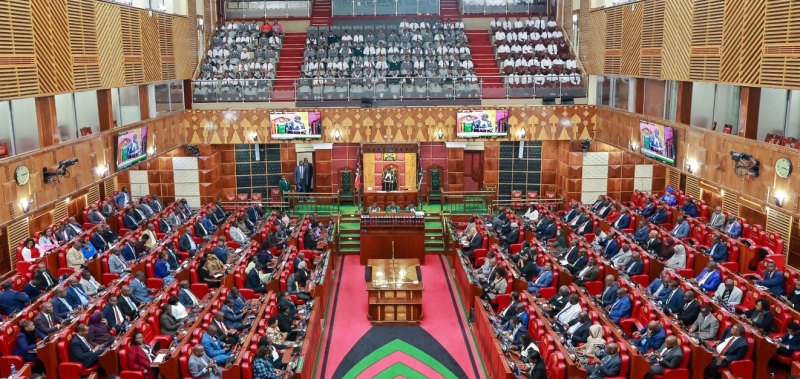
“President Ruto’s reforms have received Legislature support. Ruto has offered leadership by asking Parliament to allocate resources and he has put together a team to deliver on the Kenya Kwanza manifesto,” he said.
Mokua said that the “minimal opposition” from the NGO elites will not frustrate the President’s reform agenda, as most of them are anchored in law.
“Kenya Kwanza’s reforms and agenda are now part of the legal framework as captured in budget statement and relevant acts of Parliament,” he said.
Last week, the president vowed to crush the sugar cartels that have wrecked sugar factories in Western region. Revival of the factories had been the economic hope for residents.
State-owned companies led by the once-giant Mumia sugar have been on their deathbeds in virtual destruction the President attributes to cartels.
A blunt and forceful Ruto on Sunday demanded that two investors fighting for control of Mumias Sugar Company must cease, pack up and move out.
“We have told those people to move out. Mumias belongs to the people and we shall plan for the revival of the sugar mill afresh,” he said.
“This time around, we must get it right. We can’t play another poker game here of bringing Kenyans' money and it gets lost,” he said.
Already, tycoon businessman Jaswant Rai has withdrawn cases against Mumias after the President told him to do so, go to jail, leave Kenya or be taken to heaven, a euphemism for death.
“The corrupt, the thieves, the people who steal the future of our children. They must leave Kenya or they will go to jail or they have the option of going to heaven,” the President pledged.
Deputy President Rigathi Gachagua has been leading government initiatives to institute reforms in tea and coffee sectors.