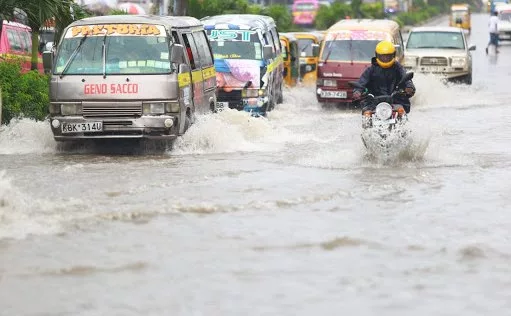
Counties with high risk have been challenged to activate their
anticipatory mechanisms ahead of the impending El Nino.
El Niño is a natural climate pattern that starts far away in the Pacific Ocean, but its effects are strongly felt in Kenya.
Kenya Meteorological Service Authority Head Public Weather Services Hannah Kimani said this year’s El Nino is likely to be very strong with an 81 per cent probability.
This means that the impending prolonged rains could reach the 1997 threshold.
Kimani said the Indian Ocean Dipole (IOD) is likely to be positive.
“The 2015 was a very strong El Nino, close to 1997 but because the IOD was weakly positive, we did not experience as much rainfall as was experienced in 1997. The outcome of the season will majorly depend on the strength of the IOD.”
Kimani said some areas have been affected by drought, compromising food security in the nation.
She was one of the presenters during a webinar ‘El Nino 2026: Evolution, forecast and potential impacts'.
Other presenters included principal climate scientist Dr Joyce Kimutai and Zachary Misiani, Disaster Risk Management and Anticipatory Action expert.
Kimani said there is a 97 per cent chance that El Nino will persist into early next year.
She said depressed rainfall is expected over the Western half of the country in August and September.
“Above average rainfall is expected over most parts in October and November,” she added.
During
August-September-October, depressed rainfall is expected over western half of
the country while above average rains will be expected over most parts in
September-October-November.
Kimutai said El Nino will affect those in the informal settlements, floodplain communities, Asal communities, and those in riparian and wetlands.
Crops, livestock, roads,
water systems, markets and health facilities will also be affected.
Kimutai said floods become disasters because of weak drainage, poor sanitation, poor housing and weak infrastructure.
She said the most vulnerable such as children, older persons, pregnant women, people living with disabilities, low-income households, those with chronic diseases, pastoralists, and informal settlements will be affected the most.
Kimutai said there is a need for early warnings.
Misiani said the 2023-24
floods had widespread flooding, displacement, infrastructure damage, disease
outbreaks, loss of livelihoods and economic disruptions.
He said some roads are likely to be cut off, a move that will disrupt transport.
The potential impacts of the impending El Nino include prolonged rains that leads to rapid surface runoff that are likely to cause loss of lives, damage to homes, schools, markets, roads among other infrastructure.
Riverine flooding in places such as Tana, Athi, Ewaso Nyiro, Rift Valley and Victoria basin could lead to overflowing rivers, bridge wash out, and infrastructure damage.
In water reservoirs, high inflows, spillway releases, down-stream flooding, farm destruction are likely to occur.
High risk areas in Rift valley such as West Pokot, Elgeyo Marakwet, Nakuru, Murang’a are likely to experience landslides and mud slides.
Misiani said diseases such
as cholera, typhoid, malaria, are likely to occur with health care access being
disrupted.
He said there is a need for anticipatory action mechanism for El Nino.
It happens when ocean waters in the central and eastern Pacific become warmer than usual, changing wind and rainfall patterns across the world.
These changes can lead to heavy rains and floods in some places, while others experience drought and heat.
In Kenya, El Niño is most commonly linked to heavy rainfall during the October to December short rains season.
But the impact is not always the same because other climate systems, especially IOD, also influence weather patterns.
When El Niño occurs together with a positive IOD, Kenya often experiences stronger-than-normal rainfall.
Recent events show how powerful this combination can be.
In 2023, El Niño and a positive IOD brought unusually heavy rains across Kenya.
While some areas benefited from improved water supply after drought, many others suffered floods, displacement of families, damaged roads, and destroyed homes.
In contrast, the 2015 El Niño contributed to reduced rainfall in some seasons, worsening drought conditions in parts of the country and leading to food shortages.