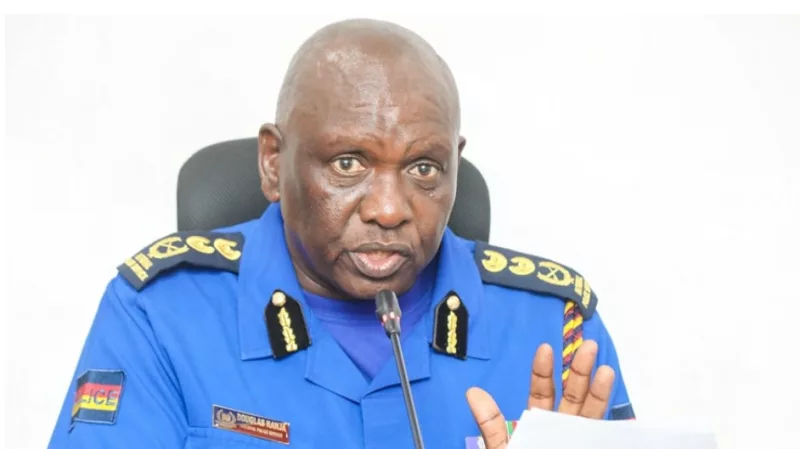
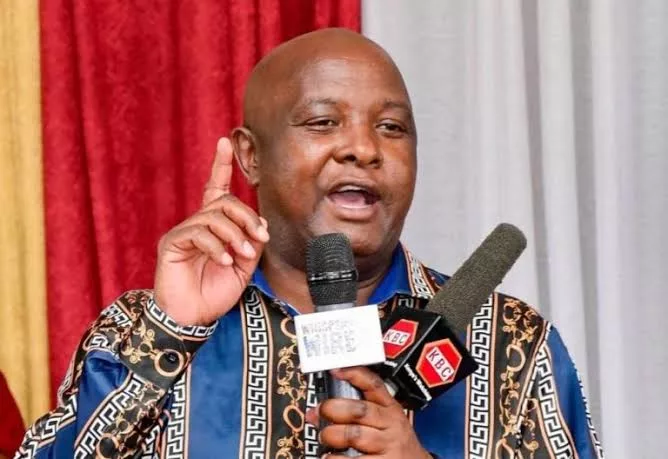
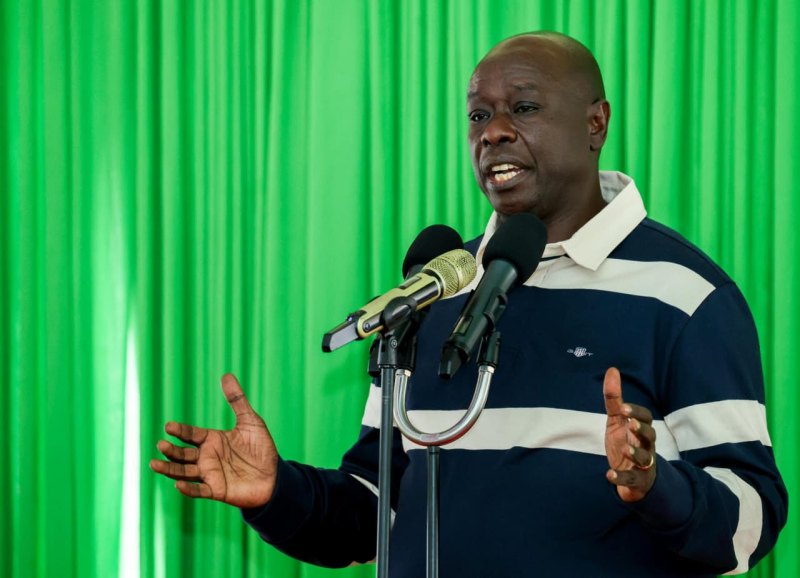
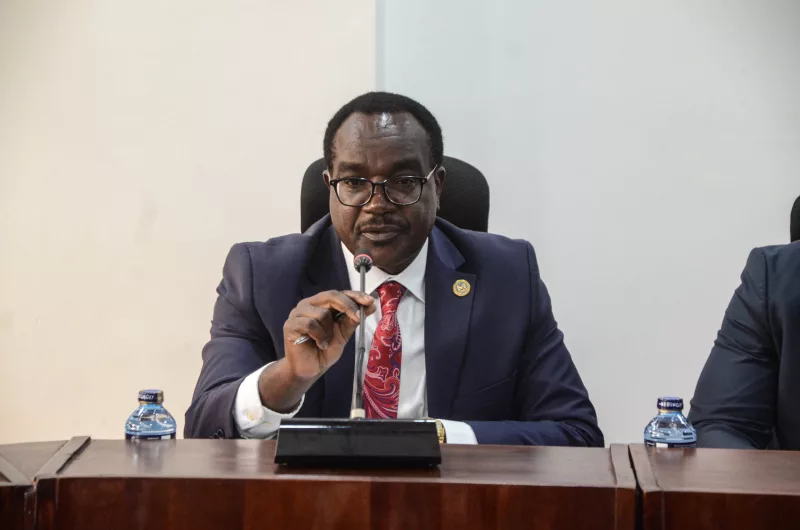
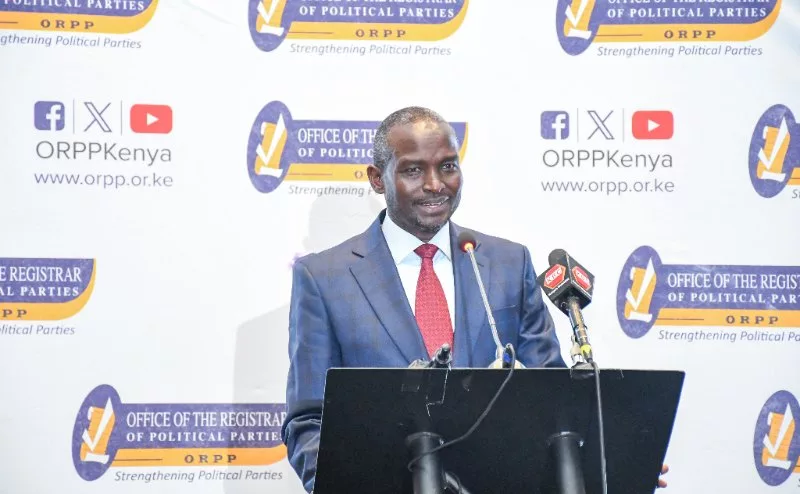
 Registrar of Political Parties John Lorionokou during the launch of the strategic plan/COURTESY
The Office of the Registrar of Political Parties (ORPP) has unveiled its 2025-2028 Strategic Plan, setting out an ambitious roadmap to strengthen regulation, improve accountability and entrench internal democracy within political parties as the country prepares for the 2027 General Election.
The strategy, launched in Nairobi on Thursday, seeks to align political party regulation with Kenya Vision 2030, the Bottom-Up Economic Transformation Agenda (BETA), the Constitution and international governance frameworks, while responding to lessons from the 2022 elections.
Speaking during the launch, Registrar of Political Parties John Lorionokou said the new strategy marks a shift from compliance-driven regulation to building stronger institutions capable of sustaining Kenya's multi-party democracy.
"For us as an institution, planning is not just an exercise for compliance; it is our compass. Political parties are the lifeblood of our democracy. Their health, their conduct and their internal governance directly dictate the quality of our nation's leadership and democracy," Lorionokou said.
He said the office intends to move Kenya's political system away from personality-centred politics towards issue-based leadership that is accountable to citizens.
"Our aim is to foster a political ecosystem that is not merely functional, but transformational, moving away from personality-driven politics towards issue-based, results-oriented leadership that is accountable to the citizens," he said.
The strategic plan identifies six key priorities for the next three years: improving the integrity of party registration, strengthening regulation and compliance, enhancing electoral participation, accelerating digital transformation, deepening stakeholder engagement and strengthening institutional capacity.
Among the flagship initiatives is the expansion of the Integrated Political Parties Management System (IPPMS), which is expected to digitise more services and eliminate manual processes in party registration and compliance.
Lorionokou said the office had incorporated recommendations arising from the 2022 post-election evaluation and would focus on early dispute resolution, stronger compliance mechanisms and transparent political party operations.
"We have processed the feedback from citizens, the political class and our partners, and we are now moving toward interventions that address the root causes of electoral challenges," he said.
He pledged that the ORPP would remain impartial in regulating all political parties.
"We pledge to remain an independent arbiter that treats every political entity with fairness, ensuring that the rules of the game are applied uniformly to all," he said.
Deputy Auditor General Moses Mulonzia challenged political parties receiving public funding to uphold the highest standards of financial accountability, warning that weak governance within parties undermines public confidence in democracy.
"Political parties are not mere private associations. They are public institutions that receive Exchequer funding. Consequently, they bear a fiduciary duty to account for every shilling entrusted to them by the taxpayer," Mulonzia said.
He said audits conducted by the Office of the Auditor-General had consistently exposed weaknesses in financial management among political parties, including poor internal controls, inadequate record-keeping and delayed submission of financial reports.
"Our audits over recent years have consistently revealed three major challenges: weak internal controls, inadequate record-keeping, and persistent delays in submitting financial reports," he said.
Mulonzia urged political parties to use the newly launched strategy as a blueprint for reform, saying the document should rest on three pillars: strong internal controls, effective risk management and timely financial reporting.
"Adherence to submission timelines is non-negotiable. Non-compliance does not just undermine transparency; it erodes the very public trust that our democracy depends on," he said.
He also called on party leaders, treasurers and administrators to embrace the strategy and align their financial operations with principles of accountability.
"The Office of the Auditor General does not seek to be an adversary. We are partners in building a robust democratic ecosystem. Our audits are diagnostic tools, not merely fault-finding missions," Mulonzia added.
The strategic plan also seeks to improve compliance with legal frameworks governing political parties, institutionalise political parties, enhance participation of special interest groups, improve service delivery and strengthen partnerships with stakeholders.
It further recognises emerging challenges that could affect the country's democratic process, including misinformation on social media, cybersecurity threats, artificial intelligence, youth unemployment, political violence and weak institutional capacity.
The document notes that increasing political awareness at the grassroots will require the ORPP to expand its presence beyond the current county offices while investing more in civic education and stakeholder engagement.
The office also intends to strengthen oversight of political party finances, encourage inclusive participation of women, youth and persons with disabilities, and improve transparency in party nominations and internal elections.
According to the strategic plan, ORPP plans to build on achievements made during the previous planning period, including automation of party registration processes, rollout of services on the eCitizen platform, expansion of county offices, strengthening compliance systems and development of financial management manuals for political parties.
However, the office acknowledges that inadequate funding, understaffing, limited field offices and frequent legal disputes involving political parties continue to hamper effective regulation.
As preparations for the August 2027 General Election gather pace, officials said successful implementation of the strategy would require collaboration among political parties, oversight institutions, development partners and other stakeholders to build a transparent, accountable and credible multiparty system.
Quoting the late Archbishop Desmond Tutu, Mulonzia reminded political actors that strengthening democracy depends on everyday acts of integrity.
"In this world do your little bit of good where you are; it is those little bits of good put together that overwhelm the world," he said, urging all stakeholders to "walk the path of integrity with courage and discipline."