The government has dismissed reports that Kenyans are abandoning the Affordable Housing Programme (AHP) by withdrawing funds from the Boma Yangu voluntary savings scheme, insisting that the programme continues to register strong growth in both membership and savings.
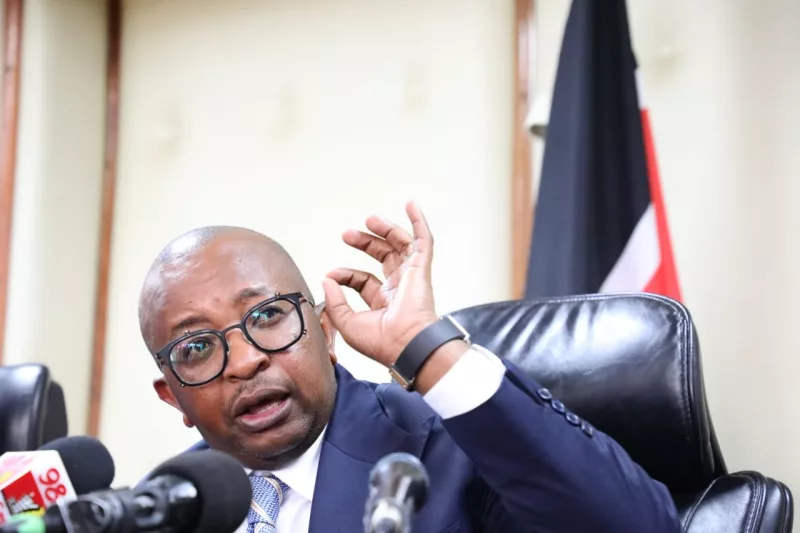
Speaking during a press briefing, State Department for Housing and Urban Development Principal Secretary Charles Hinga termed the reports misleading, saying official data paints a markedly different picture.
According to Hinga, cumulative savings on the Boma Yangu platform have more than doubled since the audit cut-off of May 2025, rising from Sh2.47 billion to Sh5.47 billion.
During the same period, the number of registered users increased from 1.02 million to 1.26 million, while about 30 per cent of registered users are actively saving towards purchasing homes.
"Since the audit cut-off of May 2025, cumulative savings on the platform have more than doubled, from Sh2.47 billion to Sh5.47 billion; registered users have grown from 1.02 million to 1.26 million Kenyans; and at any given time about 30 per cent of registered users are actively saving toward units they wish to own," Hinga said.
The PS also clarified figures that have been interpreted as evidence of widespread withdrawals from the scheme. He explained that of the approximately Sh1.77 billion increase recorded under the "refunds" category, about Sh1.76 billion represented deposits applied towards the purchase of completed homes rather than cash withdrawals by savers.
Actual cash refunds, he said, increased by only Sh15.1
million over the period, rising from Sh788.2 million to Sh803.3 million.
"The overwhelming share of the growth the article reports as Kenyans 'pulling out' is, in fact, Kenyans completing the purchase of homes. A scheme Kenyans were abandoning would not be adding a quarter of a million registered users, doubling its savings base, and converting Sh1.76 billion of savings into home purchases in fourteen months," Hinga said.
He noted that voluntary savings on the Boma Yangu platform
are primarily deposits made by prospective homeowners to raise the minimum five
per cent down payment required to purchase a unit under the Affordable Housing
Programme.
Hinga also announced that the government expects to complete 45,000 affordable housing units by the end of this year, with a further 15,000 units scheduled for completion between January and June next year.
He acknowledged that demand for the units continues to outstrip supply, citing the Mukuru affordable housing project in Nairobi as an example.
According to the PS, the project has attracted about 24,000 applicants despite offering only 13,000 housing units.
"We are expecting similar levels of demand in other areas as more projects are completed across the country," he said.
The PS urged Kenyans to ignore political criticism directed
at the programme, arguing that misinformation risks undermining a housing
initiative aimed at addressing the country's housing deficit while expanding opportunities
for home ownership.
He reiterated that reports suggesting Kenyans are withdrawing from the programme are inaccurate, pointing to the continued growth in registrations and savings.
"We have 1.26 million Kenyans who are registered on the Boma Yangu platform, and they have begun the journey to home ownership," Hinga said.
The Affordable Housing Programme remains one of the government's flagship initiatives under its housing agenda.
Officials maintain
that it is designed not only to reduce Kenya's housing deficit but also to
stimulate economic growth through job creation and investment in the
construction sector.