They were typically associated with disrupting opponents' meetings,
'escorting' politicians, intimidating rival supporters or triggering chaos at
campaign events before disappearing once the political season ends.
While their presence has long been acknowledged, it was often viewed as
an unfortunate but episodic aspect of the country's fiercely competitive
politics.
In recent months, however, the role of these groups appears to have
evolved.
Reports of organised gangs disrupting public events, attacking
demonstrators and targeting perceived government critics have become more
frequent, raising concerns among political observers, religious leaders and
human rights organisations that political violence is no longer confined to
election periods.
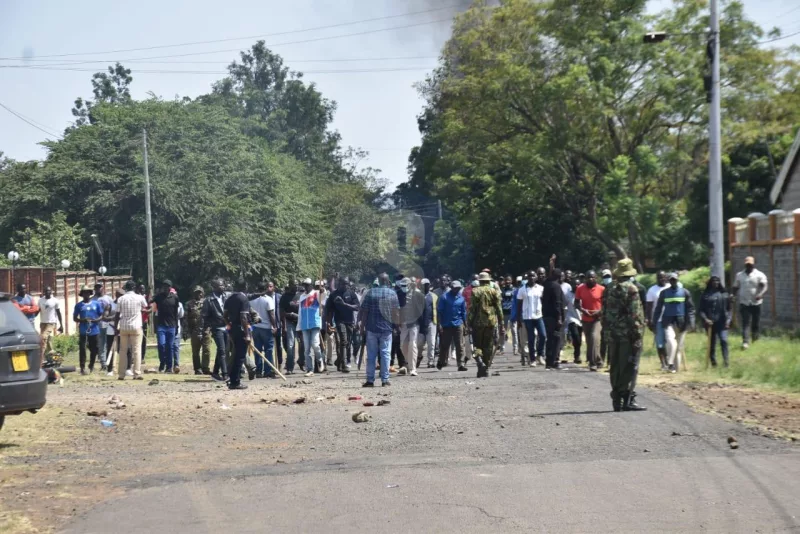
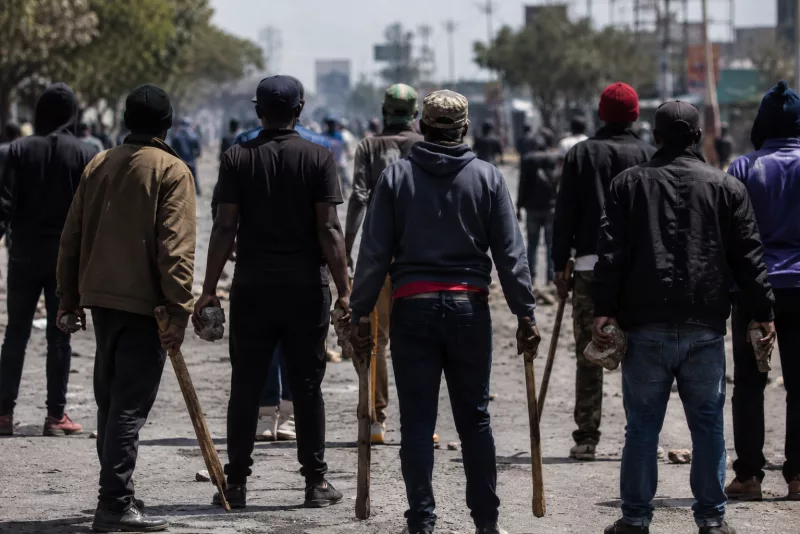
The issue has attracted renewed national attention following a series of
violent incidents in which unidentified groups armed with crude weapons have
confronted protesters, disrupted public gatherings and clashed with civilians.
Some of the encounters have resulted in deaths, injuries and destruction
of property, prompting renewed debate over who finances the groups, who deploys
them and why they often appear at politically sensitive events.
What has particularly alarmed many Kenyans is the apparent expansion of
the spaces where such gangs operate.
Whereas political violence was once largely confined to campaign
rallies, hired gangs are now increasingly being reported at peaceful
demonstrations, public participation forums, official government events and
even church services.
A string of recent incidents has brought the issue into sharper focus.
In June, former Deputy President Rigathi Gachagua's church service in
Nyeri was disrupted after groups of youths allegedly attempted to force their
way into the venue, sparking confrontations that heightened political tensions.
Days later, a public participation forum on the national budget at All
Saints Cathedral in Nairobi descended into chaos when suspected goons stormed
the meeting, forcing organisers, clergy and participants to flee as security
officers struggled to restore order.
Only days ago, East African Legislative Assembly member Kanini Kega was
also attacked by a group of youths during a political function, adding to a
growing list of leaders who have been targeted at public events.
The incidents have reinforced concerns that organised violence is
increasingly being used as a tool to intimidate political opponents, silence
critics and discourage citizens from participating in democratic processes
guaranteed under the constitution.
Human rights activist and Vocal Africa executive director Hussein Khalid
believes the growing reliance on hired gangs poses one of the greatest threats
to Kenya's democratic space.
"Goons are hired to disrupt peaceful demonstrations, instill fear
and ultimately deter Kenyans from protesting," Khalid said.
He warned that the increasing use of such groups has contributed to a
shrinking civic space, where violence or even the threat of violence
discourages citizens from exercising their constitutional rights.
"The use of goons to attack peaceful protesters is an assault on
the constitution. Every Kenyan has the
right to assemble, demonstrate and picket peacefully without fear of
violence," he said.
Khalid argued that the growing normalisation of political violence risks
eroding the rule of law.
"When criminal gangs are allowed to police public spaces or silence
dissent, the rule of law is replaced by the rule of fear. That is dangerous for
any democracy."
Although the recent attacks have renewed public outrage, analysts say
the emergence of political goonism is not a recent phenomenon.
Its roots stretch back to the era of one-party rule in the 1990s when
politicians increasingly relied on organised youth groups to mobilise
supporters, intimidate rivals and influence political outcomes.
The practice gained national prominence during the period of the Youth
for Kanu '92, a political mobilisation outfit that became synonymous with
aggressive campaigning, patronage politics and allegations of voter
manipulation.
Over the years, the tactic gradually evolved into an informal political
economy where unemployed youth could be mobilised at short notice to provide
security, disrupt rival meetings or intimidate perceived opponents in exchange
for cash payments.
Today, Kenya's persistently high youth unemployment has made the problem
even more complex.
Thousands of young people leave schools and colleges every year to find
a labour market with limited employment opportunities.
In many informal settlements, political mobilisation has become a source
of income for desperate youth willing to accept small payments to participate
in demonstrations or disrupt public gatherings.
Security analysts say many of the groups begin as neighbourhood youth
associations before being co-opted by political actors seeking loyal foot
soldiers.
Recruitment is often done through trusted intermediaries rather than
digital platforms, with members instructed to assemble at designated locations,
wear similar clothing, conceal their identities and receive cash payments after
assignments.
Religious leaders say the trend threatens not only democracy but also
the sanctity of institutions traditionally viewed as neutral spaces.
Bishop Hudson Ndeda, the national chairman of the
Church and Clergy Association of Kenya, condemned the growing use of hired
gangs to disrupt public gatherings and intimidate citizens.
He said churches, peaceful demonstrations and public participation
forums should remain safe spaces where Kenyans can express themselves without
fear.
"We cannot build a just and peaceful nation when violence becomes
an acceptable way of settling political differences.
“Every Kenyan has the constitutional right to
worship, assemble and express their views peacefully without being threatened
by goons," Ndeda told the Star.
The bishop urged political leaders across the divide to reject violence
as a political strategy.
"Leadership is about persuasion, not intimidation. Those who
finance or mobilise young people to attack fellow citizens are planting seeds
of hatred whose consequences will be felt long after today's political contests
are over."
He warned that normalising political violence undermines public
confidence in democratic institutions and weakens national unity.
Youth leaders have also appealed directly to young people not to allow
themselves to be exploited.
UDA national youth leader Kariuki Ngunjiri acknowledged that goonism has
become an increasingly visible problem and urged young people to reject
recruitment into political violence.
"Short-term financial rewards are not worth the long-term
consequences of criminal activity," he said.
Ngunjiri said politicians who hire youths to attack opponents expose
them to arrest, injury and sometimes death while those financing the violence
escape responsibility.
"Our message to every young Kenyan is simple; do not allow yourself
to be used as a goon. No amount of money is worth sacrificing your future, your
freedom or your life. Those who pay you to cause chaos will go home safely, but
you will be left to face the law and live with the consequences."
He encouraged young people to pursue education, entrepreneurship,
innovation and community service instead of accepting handouts to participate
in violence.
"When someone offers you some money to throw stones, intimidate
fellow citizens or disrupt a peaceful gathering, ask yourself what happens
after the money is spent.
“The people financing violence will move on, but
your criminal record, injuries or lost opportunities may remain with you for
years."
Interestingly, several politicians have publicly admitted that the use
of goons cuts across the political divide.
Kimilili MP Didmus Barasa sparked controversy after claiming virtually
every politician has goons.
"Let nobody cheat you. There is no politician in Kenya who doesn't
have goons. Every celebrity, including you, has some goons somewhere, maybe
one, two or three," Barasa said during an interview on Obinna Show Live.
While defending what he described as organised security teams, Barasa
argued they should not automatically be viewed as criminal gangs.
"Goons are not bad people. Their role is crowd control and personal
protection. Nobody can survive without such kind of people."
He nevertheless acknowledged that politicians often condemn violence
only when they become victims.
Belgut MP Nelson Koech has similarly argued that the problem is
widespread and should not be politicised.
"We are all protected by goons, and that is why I am saying we must
also agree as leaders that we must also drop this thing of goons," Koech
said during a television interview on Monday.
According to security experts, political gangs remain most active in
Nairobi, particularly informal settlements, as well as Mombasa, Kisumu, Nakuru,
Kakamega and Kilifi, where they are often linked to political mobilisation,
extortion and violent confrontations.
The Interior ministry has also spoken against
the growing culture of political violence.
Interior Principal Secretary Raymond Omollo has repeatedly warned
politicians against exploiting unemployed youth for political gain, describing
the practice as a long-standing national challenge.
Speaking during a consultative meeting with boda boda operators and
sector leaders in Vihiga county, Omollo appealed directly
to young people to reject involvement in politically sponsored violence.
"No political interest is worth risking your life, your livelihood
or your future. If there is a leader you support, support them peacefully.
“If there is a leader you do not support, continue
with your work and your daily activities. Do not allow yourself to be used to
commit acts of violence," he said.
As Kenya moves closer to the 2027 general election, concerns are growing
that unless political leaders collectively reject the use of hired gangs and
law enforcement agencies consistently hold organisers and financiers
accountable, goonism could become even more entrenched in the country's
political culture.