Developing countries including Kenya could soon gain greater access to artificial intelligence technologies after world leaders agreed to establish the first international organisation dedicated exclusively to AI cooperation and governance.
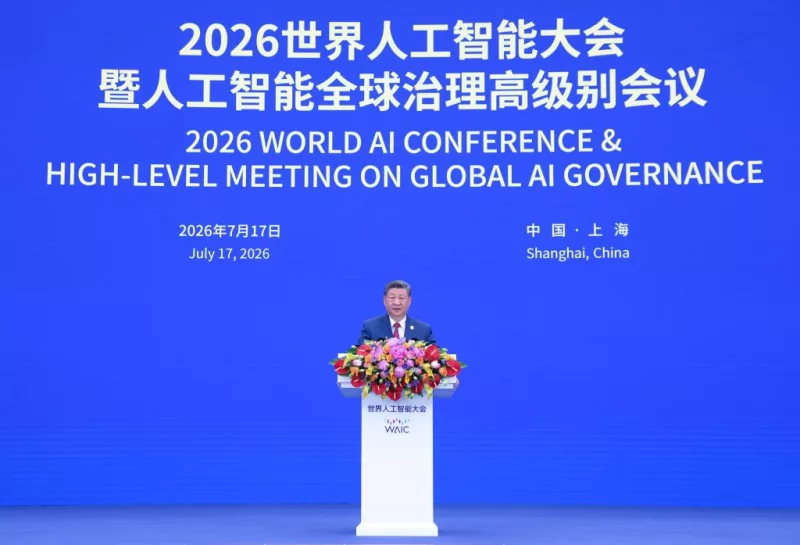
The decision was made at the 2026 World Artificial Intelligence Conference (WAIC) in Shanghai, China, where delegates from more than 100 countries warned that Africa and other developing regions risk being locked out of the technology that is expected to define the global economy for decades.
The conference ended with the signing of an agreement establishing the World Artificial Intelligence Cooperation Organization (WAICO), the world's first intergovernmental body focused entirely on artificial intelligence.
The organisation, which will be headquartered in Shanghai, says its primary mission will be helping countries in the Global South bridge the growing AI divide through technology transfer, training, innovation support and governance frameworks.
For countries such as Kenya, which are increasingly embracing digital services but remain heavily dependent on foreign technology, the move could provide a pathway into the rapidly expanding AI economy.
Artificial intelligence is already transforming sectors such as healthcare, education, agriculture, finance and public administration.
However, the infrastructure, computing power and investments needed to build advanced AI systems remain concentrated in a handful of wealthy nations and global technology firms.
Delegates at the conference warned that unless deliberate interventions are made, AI could widen global inequalities and leave developing countries as consumers rather than creators of new technologies.
Chinese President Xi Jinping, who opened the summit, called for stronger international cooperation to ensure AI development benefits all countries rather than a select few.
He said that China will provide developing countries with 5,000 opportunities for artificial intelligence (AI) training and seminars over the next five years. kenya stands to benefit too.
United Nations Secretary-General António Guterres joined leaders from Asia, Europe, Africa and Latin America in backing a more inclusive approach to AI governance.
The conference adopted what participants described as a "people-centred" AI model that balances innovation with safety, ethics and inclusivity.
A key focus of the discussions was capacity building in developing countries.
Delegates called for investments in digital skills, AI education and research partnerships aimed at enabling emerging economies to participate meaningfully in the new technology revolution.
For Kenya, which has positioned itself as East Africa's technology hub, access to AI skills and infrastructure is becoming increasingly important.
This follows the fact that businesses and government agencies are increasingly integrating automation and machine learning into operations.
The conference also pushed for wider adoption of open-source AI technologies, arguing that expensive proprietary systems could deepen the technological gap between rich and poor countries.
Participants encouraged the sharing of research findings and technical expertise while safeguarding intellectual property rights.
Data governance emerged as another key issue for the Global South countries.
Countries were urged to develop laws protecting personal information while creating frameworks that allow data to be shared safely and efficiently to support innovation.
Delegates also acknowledged growing concerns over the impact of artificial intelligence on jobs.
They called for governments to invest in retraining workers and equipping young people with digital skills needed in an increasingly automated economy.
The conference further raised concerns over the misuse of AI technologies by criminal organisations, cyber attackers and extremist groups.
Participants backed stronger regulations, early warning systems and emergency response mechanisms to guard against malicious use of advanced technologies.
Special concern was raised over the vulnerability of critical infrastructure such as power systems, telecommunications networks, financial institutions and transport systems to AI-enabled cyber attacks.
Global technology companies developing frontier AI systems were urged to incorporate stronger safeguards and ensure advanced models remain under human control.
Delegates further supported the development of common international standards to govern AI safety, ethics and industrial development.
The conference reaffirmed the central role of the United Nations in global AI governance and warned against the emergence of fragmented regulatory regimes.
The launch of WAICO marks China's latest attempt to position itself as a leader in shaping global technology rules while offering developing countries an alternative voice in a field long dominated by the United States and major Western technology firms.
For Kenya and much of Africa, the challenge now will be translating the promises of inclusion into investment, skills and infrastructure capable of ensuring the continent is not left watching the AI revolution from the sidelines.