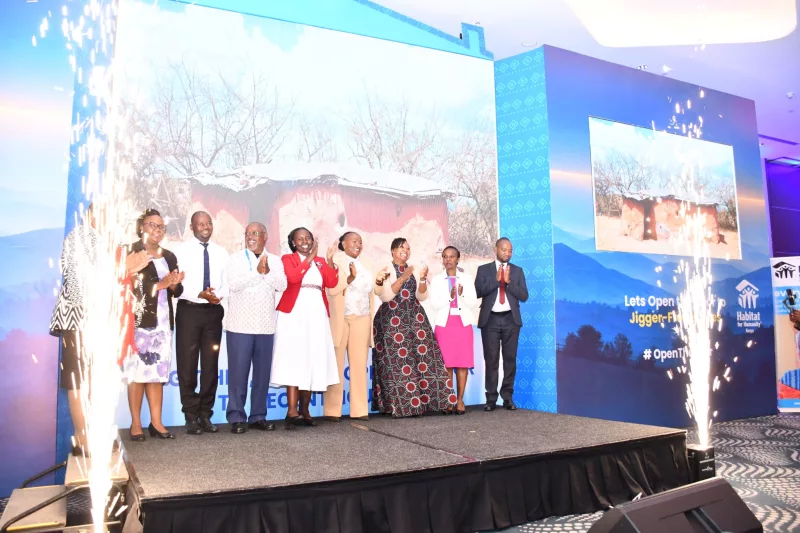
 Machakos Governor Wavinya Ndeti (fourth right) with Habitat Africa vice president Abi Riak and other senior officials during the launch of "Let's Open the Door" campaign in Nairobi on July 16, 2026/COURTESY
Habitat for Humanity Kenya has launched a new campaign aimed at pushing housing to the centre of national development, saying access to decent homes is key to improving health, education, economic opportunities and climate resilience.
The initiative, dubbed "Let's Open the Door", is part of a global campaign being rolled out in more than 60 countries as the organisation marks 50 years of providing safe and affordable housing worldwide.
The campaign comes against the backdrop of a growing housing crisis, with Kenya facing a housing deficit of about two million units and annual demand exceeding supply by roughly 200,000 homes.
Across Sub-Saharan Africa, more than half of the urban population lives in slums or informal settlements, while the regional housing shortage is estimated at 56 million units.
Speaking during the launch, Habitat for Humanity Africa vice president Abi Riak said housing should no longer be viewed merely as shelter but as a catalyst for broader social and economic transformation.
"Today in Sub-Saharan Africa, one in three individuals do not wake up in a safe home," Riak said.
"In Africa, 53 per cent of the urban population lives in informal settlements, while the region has a housing deficit of 56 million units. Housing remains one of the most significant and yet one of the most overlooked development challenges."
She said Kenya's annual housing shortage presents an opportunity for collaboration between government, financial institutions, communities and development partners.
"When we open the door to housing, we open the door to better health, better education, economic opportunities and resilience to climate shocks. That is why we launched this campaign. It is more than a campaign; it is a movement calling on all of us to place housing at the centre of the development agenda," Riak said.
She noted that Habitat for Humanity has reached more than 65 million people globally over the last five decades but stressed that partnerships will be critical in addressing Africa's growing housing needs.
The Kenya chapter used the launch to unveil two flagship initiatives designed to demonstrate how housing interventions can tackle multiple development challenges simultaneously.
The first initiative, Opening the Door to Women Building Resilient Manyattas, seeks to empower Maasai women to strengthen traditional manyattas using climate-resilient housing solutions while preserving cultural heritage, improving health and creating new economic opportunities.
The second programme, Opening the Door to Jigger-Free Homes, is a five-year project targeting the improvement of 10,000 household floors in jigger-endemic communities.
The programme is expected to directly benefit about 50,000 people by replacing unsafe mud floors with healthier and more durable alternatives.
Riak said Habitat is also partnering with researchers to develop healthier housing technologies capable of reducing indoor temperatures and limiting disease transmission.
"Our pilot studies have shown that these housing innovations can reduce malaria-causing mosquitoes inside homes by up to 70 per cent. That means fewer illnesses, more children in school, more productive families and healthier communities," she said.
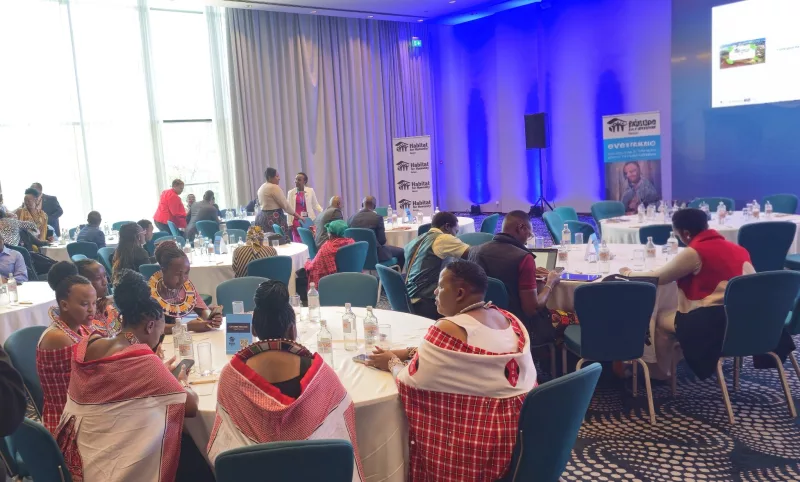
Habitat for Humanity Kenya national director Eileen Mokaya said the two projects illustrate how housing interventions can address multiple Sustainable Development Goals beyond providing shelter.
"The Kenya launch demonstrates how housing can address multiple challenges," Mokaya said.
"Through these initiatives, we are not simply improving houses. We are strengthening women's livelihoods, improving health and learning outcomes for vulnerable families, preserving cultural heritage and building resilience to future challenges."
She noted that jigger infestation remains closely linked to poor housing conditions, particularly homes with earthen floors, making improved housing a critical public health intervention capable of breaking cycles of poverty and disease.
Habitat for Humanity Kenya board chairperson Rose Sang, on her part challenged stakeholders to embrace innovation and partnerships to transform the country's housing sector.
"Kenya is recognised globally for financial inclusion. Imagine if Kenya became the nation that transformed housing in the same way it transformed finance," Sang said.
She described decent housing as the foundation for stronger communities.
"Decent housing is the starting point for better health, better education, stronger local businesses and climate resilience. Bring your ideas, your expertise, your investment and your leadership. Let us build a movement that places housing where it belongs, at the heart of national development and human dignity," she said.
Machakos Governor Wavinya Ndeti, who was present during the launch in Nairobi, praised the organisation's partnership with the county, saying it had transformed lives through housing, water and digital education projects.
"Your campaign is a bold declaration that a home is more than four walls and a roof. It is the very foundation of health, resilience and human dignity," Ndeti said.
She said the partnership had delivered decent housing to vulnerable families, drilled boreholes, expanded water infrastructure and equipped public schools with computers in the three sub counties of Masinga, Matungu and Mavoko.
"The transformation we have witnessed is tangible and real, but the need is still enormous. Let us scale up this collaboration so that thousands more families can have their doors opened to dignity, safety and opportunity," the governor said.
Habitat for Humanity said the campaign seeks to mobilise governments, private investors and development partners to place housing at the heart of policy discussions, arguing that safe and affordable homes are essential to achieving sustainable development across Africa.
Kajiado First Lady Edna Lenku said Maasai women continue to face significant challenges in accessing traditional construction materials needed to build manyattas, making decent housing difficult to achieve.
Lenku said she experienced the challenge firsthand when she built her own four-room manyatta, describing the search for locally available building materials as one of the biggest hurdles.
"I went through the same difficult experience. Getting the local materials was one of the biggest challenges, and that pushed me to start looking for solutions," she said.
She said the experience inspired her to research alternative housing approaches and mobilise resources to help women in her community access safer and more durable homes.
According to Lenku, the community has since embraced interlocking blocks, which are easier to transport and can be moved whenever pastoralist families migrate.