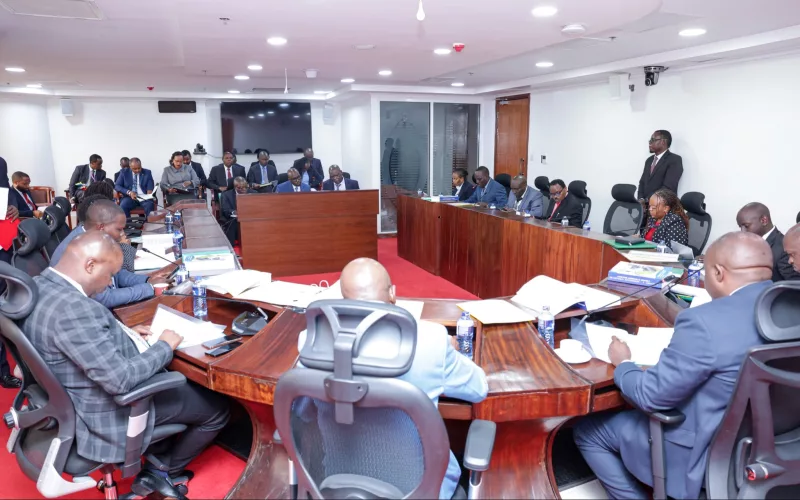
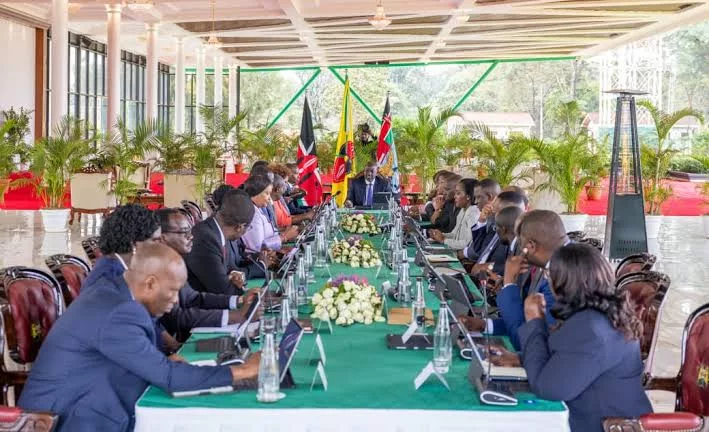
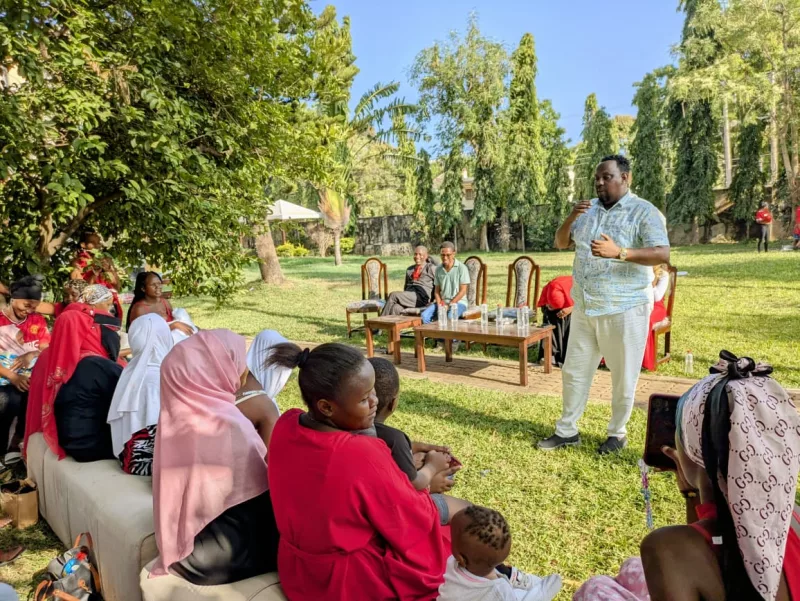
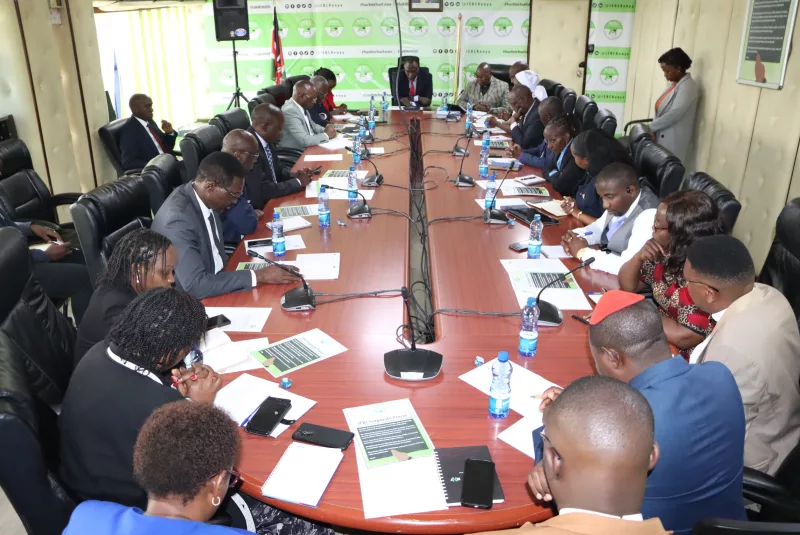
 IEBC holds a consultative meeting with the NCCK on the implementation of the Election Campaigning Financing Act and other election-related issues, July 9, 2026. /NCCK
The National Council of Churches of Kenya (NCCK) has urged the Independent Electoral and Boundaries Commission (IEBC) to take action against political actors accused of voter bribery and economic coercion ahead of the July 16 Ol Kalou parliamentary by-election.
The appeal was made during a consultative meeting between church leaders and IEBC commissioners led by chairperson Erastus Ethekon and vice chairperson Fahima Araphat on Thursday.
The Ol Kalou by-election has attracted attention amid allegations of cash handouts and inducements to voters, with the NCCK calling on the electoral agency to enforce laws governing elections.
The council accused politicians of engaging in voter bribery and economic coercion "with abject impunity", warning that such practices could undermine confidence in the electoral process.
"There is even a political leader captured announcing the amount of money they were given to distribute and confirming they were taking away the identity cards of those who received the tokens. When will the IEBC take action against such individuals and their political parties for these election offences?" the council posed during the meeting.
The clergy cited findings from its Study on the Influence of Money and Religion on Democratic Outcomes in Kenya, which found that more than 90 per cent of respondents believe money is a major factor in determining who contests elections, who wins and whose interests are ultimately served.
According to the NCCK, elections have increasingly been treated as financial investments that politicians seek to recover after winning office, contributing to electoral malpractice.
"Campaigns are therefore treated as investments that are to be recouped after the elections, driving high stakes in the polls. This has led to adoption of coercive practices that include voter bribery, intimidation, mobilisation of goons, misuse of state and security machinery, and capture of state institutions to undermine free participation," the council said.
The church leaders also criticised the continued non-implementation of the Election Campaign Financing Act, saying the law has remained largely dormant since the 2013 General Election.
The NCCK argued that failure to enforce campaign finance laws has contributed to a perception that elections are won by the highest spenders.
The council welcomed the new IEBC commission's commitment to enforce campaign financing rules through the proposed Election Campaign Financing Regulations, 2026 and the Determination of the Election Campaign Finance Spending Limits for the 2027 General Election.
However, it expressed concern that although the draft documents have been published on the IEBC website, the commission has not started a formal public participation process.
"We strongly recommend that the regulations are urgently subjected to nationwide public participation and the process be completed before August 10, 2026. On our part, we commit to mobilise the congregants in our churches to actively participate in that process," the NCCK said.
Responding to the concerns, Ethekon thanked the council for its proposals and reaffirmed the commission's commitment to delivering free, fair and credible elections.
"The commissioners have gained a lot of learning as we have conducted 32 by-elections, which has prepared us for the 2027 General Election," he said.
He added that Parliament is still processing several electoral reform bills aimed at strengthening the country's electoral framework before the next General Election.
On allegations of voter bribery in Ol Kalou, Ethekon reiterated the commission's warning that it would not hesitate to postpone or cancel the by-election if widespread violations of the electoral code persist.
Speaking earlier during the launch of the 2022 Pre-Election Dispute Resolution Committee report, the IEBC chairperson cited alleged breaches of the electoral code, including voter bribery and illegal night campaigns.
"If we find that the environment is not conducive enough for us to conclude the by-election in Ol Kalou, we will be left with no choice other than to take the unfortunate and drastic step of postponing the election. If that is not enough, we will cancel it altogether," Ethekon warned.
The Ol Kalou by-election has attracted national attention following allegations that resources are being used to influence voters.
The council reminded the commission that the Elections Offences Act prohibits the use of public resources for campaign purposes and bars public officers from participating in partisan political activities.
"We strongly recommend that you consider issuing binding public resources and public officers election protocols under which individuals will be held personally liable for breaches. The commission should also consider having a unit that will collate evidence to facilitate prosecution of offenders for there to be a visible deterrent," the council said.