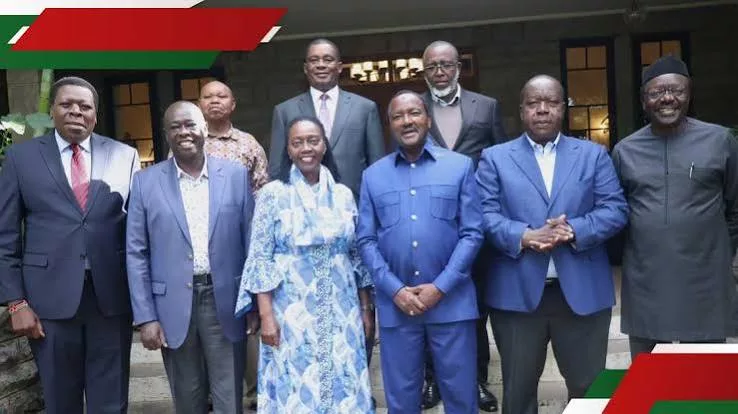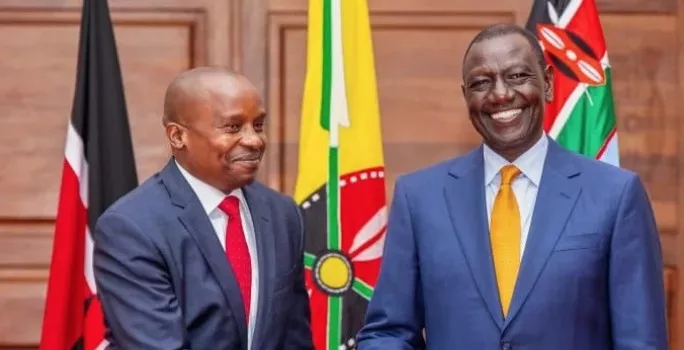
President William Ruto has appointed Deputy President Kithure Kindiki to chair a government committee that will work with private investors and employers on the proposed East African oil refinery project, describing it as one of the largest investments Kenya is set to undertake.
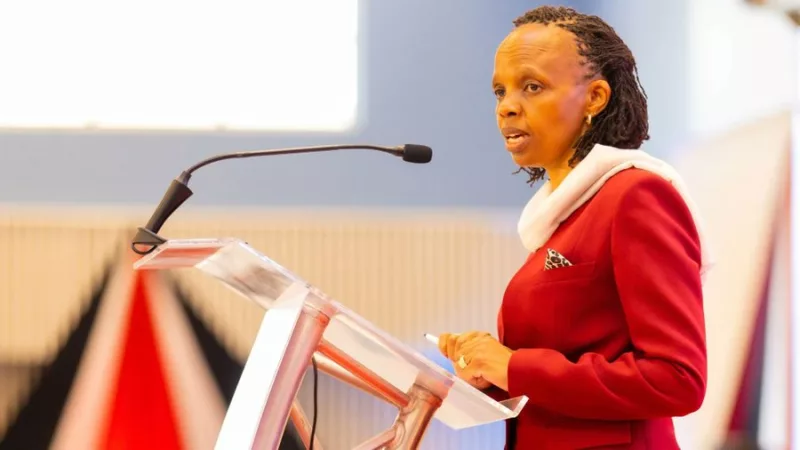
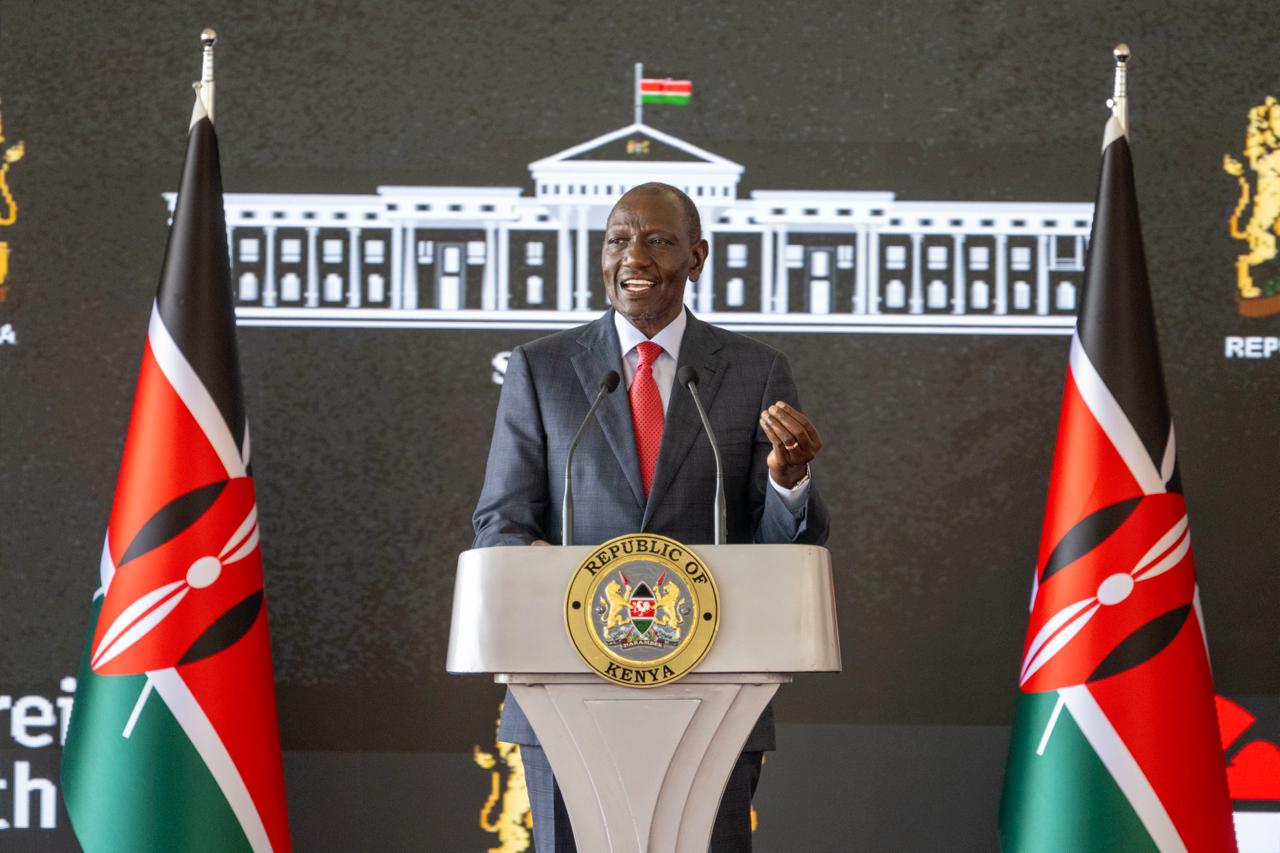
Speaking on Wednesday, the President said the committee would coordinate the government's engagement with private sector investors ahead of the project's implementation, adding that preparations had already advanced to the point where a groundbreaking date had been identified.
"I have asked the Deputy President, Kithure Kindiki, to chair the government committee that is going to work with private investors and employers for what will be one of the largest investments in our country, the investment in the East African oil refinery," Ruto said.
He said the proposed refinery represents an investment of about Sh2.2 trillion.
"We have already set up a date for the groundbreaking, for your information," the President said.
Ruto's announcement places Kindiki at the centre of one of the government's flagship industrialisation and energy initiatives, which seeks to strengthen regional fuel security and reduce dependence on imported refined petroleum products.
The latest development builds on discussions that have been ongoing for several months following an offer by Nigerian businessman Aliko Dangote to invest in a major refinery serving the East African region.
Speaking during the Africa We Build Summit in Nairobi in April, Dangote said he was ready to construct a refinery similar to the one his company operates in Nigeria if governments in the region provided the necessary support.
At the time, he said East Africa would play a critical role in advancing the project, arguing that Africa had the capital, raw materials and expertise required to finance large-scale industrial investments.
President Ruto welcomed the proposal, saying Africa must shift from exporting raw materials and importing finished products if it is to achieve meaningful industrial growth.
In May, the President disclosed that discussions with Dangote had continued and said resistance from interests benefiting from fuel imports would not derail the refinery plans.
"I had a chat with Dangote yesterday, and he was telling me how much resistance has been built by the people we are buying fuel from now because they want to continue buying their fuel," Ruto said at the time.
He maintained that Kenya and its regional partners were committed to pursuing long-term investments that would transform the energy sector and strengthen fuel supply security.
The President also revealed that the government had previously dispatched a technical team to study refinery models across Africa before engaging Dangote and other regional leaders on the proposal.
Wednesday's announcement marks the clearest indication yet that the government is moving from discussions towards implementation by establishing a formal structure to coordinate the project.
Dangote told the media recently that Lamu in Kenya had emerged as the preferred location for the proposed refinery, officially confirming the project's site.
If implemented, the refinery is expected to become one of the largest industrial investments in the region and could significantly reduce East Africa's reliance on imported refined petroleum products while supporting value addition in the energy sector.