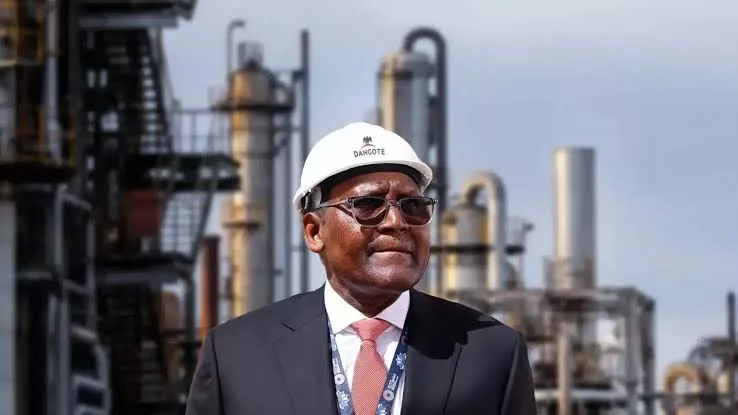
 Nigerian businessman Aliko Dangote./SCREENGRAB
Dangote Industries has identified Lamu as the proposed site for its planned Sh2.59 trillion (US$17 billion) oil refinery in Kenya, according to the company's Vice President for Oil and Gas, Edwin Devakumar.
The upcoming 700,000-bpd facility is set to become the largest refinery in East Africa. Once operational, it will rank as the second-largest on the continent by nameplate capacity, advancing Dangote’s strategy to scale fuel-processing operations outside Nigeria.
"The project site has already
been identified, with soil testing underway and engineering and design works
having commenced," Devakumar said.
The refinery is expected to primarily supply fuel to Kenya and neighbouring countries. The project forms part of Nigerian billionaire Aliko Dangote's broader strategy to expand refining capacity across Africa and thus strengthen regional energy security.
According to Dangote Industries, Kenya was selected after assessing commercial, technical and logistical factors, including its strategic location, growing domestic fuel demand and access to regional markets through the East African Community (EAC).
Lamu was chosen because of its proximity to the Lamu Port-South Sudan-Ethiopia Transport (LAPSSET) Corridor, a flagship infrastructure project designed to improve trade and transport across East Africa.
The Kenya Ports Authority (KPA) has previously stated that Lamu Port's deep-water berths can accommodate large crude oil tankers, making it suitable for energy-related investments.
Industry analysts note that projects of this scale often face significant hurdles, including securing financing, obtaining environmental approvals, fluctuations in global oil prices and ensuring a reliable crude oil supply.
Competition from imported refined petroleum products and changing demand as countries transition towards cleaner energy sources may also affect the refinery's long-term commercial viability.
Dangote Industries said it plans to finance the project primarily through internal cash flows, debt securities and proceeds from a future initial public offering (IPO), reducing its reliance on external borrowing.
However, the project would require an Environmental and Social Impact Assessment (ESIA) and approval from the National Environment Management Authority (NEMA).
Land acquisition, county government approvals and compliance with Kenya's petroleum and investment regulations would also need to be completed before full-scale construction starts.
The Ministry of Enegry and Petroleum as well as NEMA had not yet to publicly confirm the project's approval by press time.
Construction is expected to take about three years to fully complete.
When completed, the refinery could significantly expand refining capacity in East Africa and reduce dependence on imported petroleum products.
Kenya currently has no operational oil refinery following the closure of the Kenya Petroleum Refineries Limited, making the proposed investment one of the largest energy projects in the country's history.
![[PHOTOS] Elderly brave cold to vote in Ol Kalou](https://cdn.radioafrica.digital/image/2026/07/d2345b9e-578f-45ff-9bb0-d7819671c165.webp)


![[PHOTOS] Ol Kalou residents turn out in large numbers to vote](https://cdn.radioafrica.digital/image/2026/07/fe42d51c-7f79-466e-94e8-59561f77bbe7.webp)