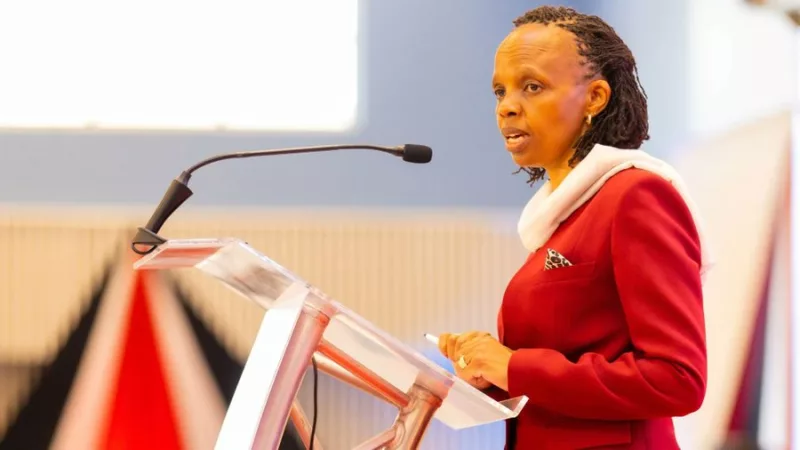
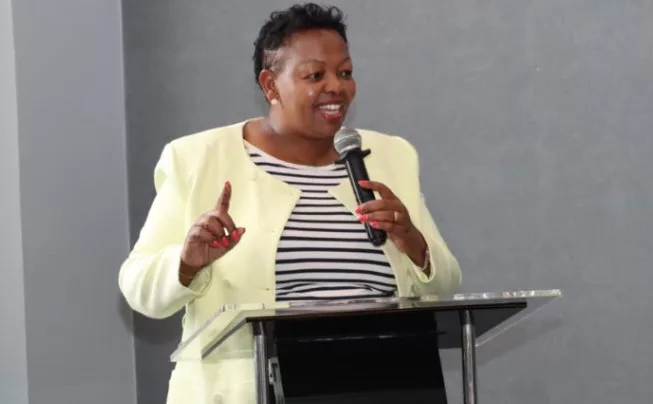
 Nominated Senator Veronica Maina /HANDOUT
Nominated Senator Veronica Maina and Mzalendo Trust have defended a new legislative proposal designed to resolve the country's long-standing gridlock over the two-thirds gender principle through a unique constitutional "top-up" mechanism.
Maina, who was nominated to Parliament by UDA, said the Constitution of Kenya (Amendment) Bill, which was initiated in the Senate, seeks to amend Sections 97 and 98 of the constitution.
The proposed changes would allow for the nomination of additional women to top up parliamentary numbers in the event that a general election fails to naturally achieve the required two-thirds gender threshold.
"We are seeking to amend section 97 and 98 so that the number of women that you will be lacking in either of the houses can be topped up after—the important thing is after—the general election," Maina explained, expressing confidence that the mechanism "does not require a referendum."
She spoke during a forum hosted by Mzalendo Trust. Nominated MP Catherine Muma, Gilgil MP Martha Wangari, Nominated MP Irene Mayaka, Nominated Senator Connie Wakwabubi, Machakos Woman Representative Joyce Kamene and Crawn Trust executive director Daisy Amdany also attended the forum.
The senator raised concerns over what she described as a "clawback on gender equality, equity, and implementation of the two-thirds gender principle," noting a visible decline in female leadership since the 2022 general elections.
She said while Kenya successfully elected seven female governors in 2022, that number has since dropped to six.
Caroline Gaita, executive director of Mzalendo Trust said previous attempts to enact the law have failed due to a lack of consensus and complications surrounding political party processes, such as top-up mechanisms.
She expressed hope that since the Bill has been sponsored by the government, it will sail through.
"Unfortunately, many past attempts have not been successful, and so we hope this bill that's originating from the Senate will give the process the impetus that is needed ahead of the general elections," the Executive Director stated. "We hope that by commencing this conversation now, we can begin to create a momentum that will also ensure we see a critical mass of women running for office."
"It's one of those bills that, if done right, might not necessarily require a referendum," Gaita said. "It borrows heavily from the model of county assemblies where, if you don't meet the required threshold, then you do a top-up."
Maina criticised counter-proposals from critics who have advocated for the elimination of the 47 County Women Representative seats.
"Already there are proposals to claw back. And yet over half of the population is made up of women and girls," the senator said.
"Why would we want to claw back and we are taking girls to school, we are educating them, giving them capacity? And after giving them capacity, why would we not want to allow them to have equal opportunities with the men and with the boys?"
Linking gender inclusion directly to economic growth, Senator Maina said Kenya’s Gross Domestic Product (GDP) is driven equally by both genders, making inclusion a necessity rather than an option.
"So inclusion is not like something we should be saying 'oh, I wish', 'oh, I don't wish', 'oh, I'll do it', 'oh, I'll not do it'. No. Women are part of that equation," Maina stated.
She said global data proves sustainable and holistic development can only be achieved when women are actively included in governance. "When you exclude over half of the population, it is very suspicious and it means you actually don't want the country to develop."
The Monday forum also called for address of systemic barriers to political inclusion, notably the rising cost of campaigns.
The discussion coincided with the Independent Electoral and Boundaries Commission (IEBC) publishing its campaign financing regulations and opening public participation on spending limits.
"Money is really becoming an exclusionary factor in the participation of especially women and young people," Gaita said.
To help citizens better evaluate their leaders based on merit rather than financial influence, Mzalendo Trust also launched a new digital platform called BungeMeter.
The platform is designed to summarise the contributions of members of
Parliament across both houses, allowing voters to track performance in
representation, legislation and oversight.