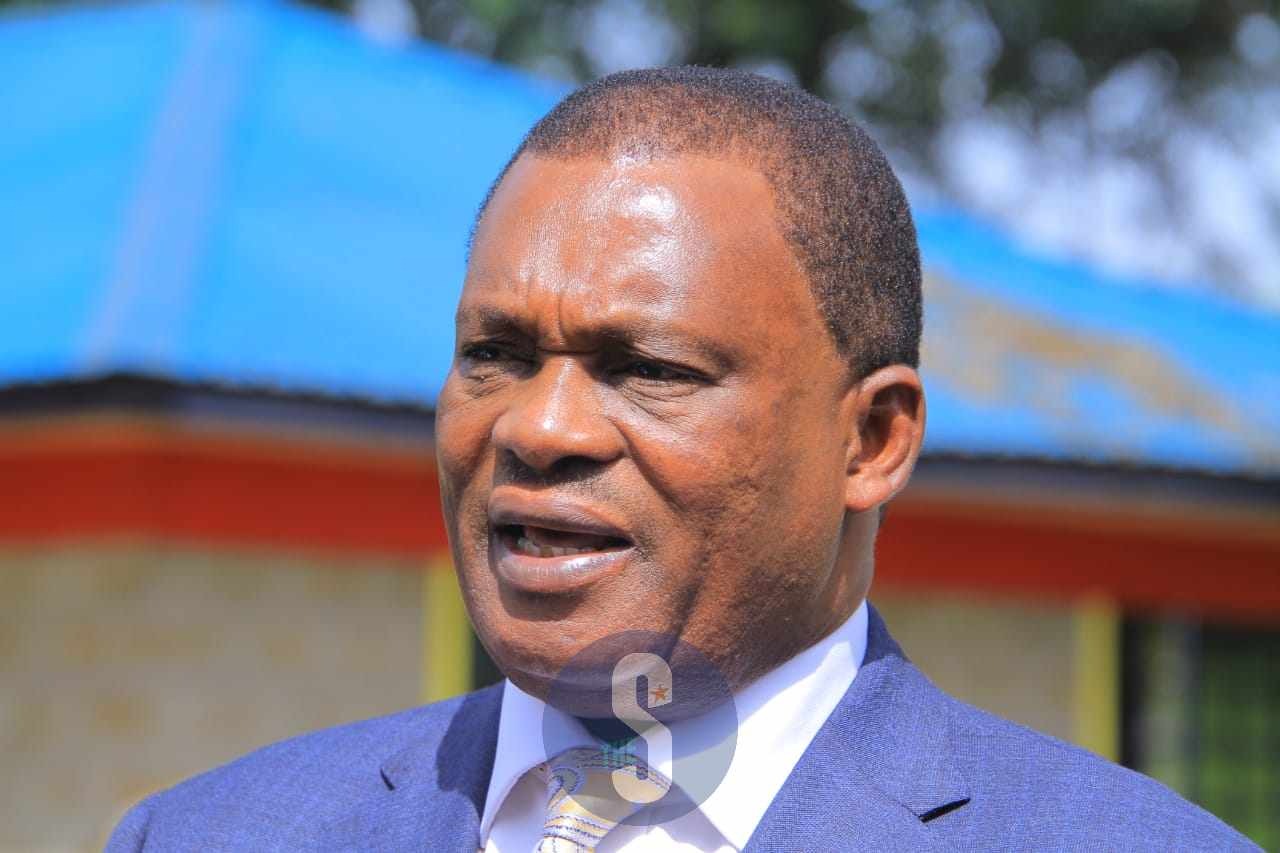
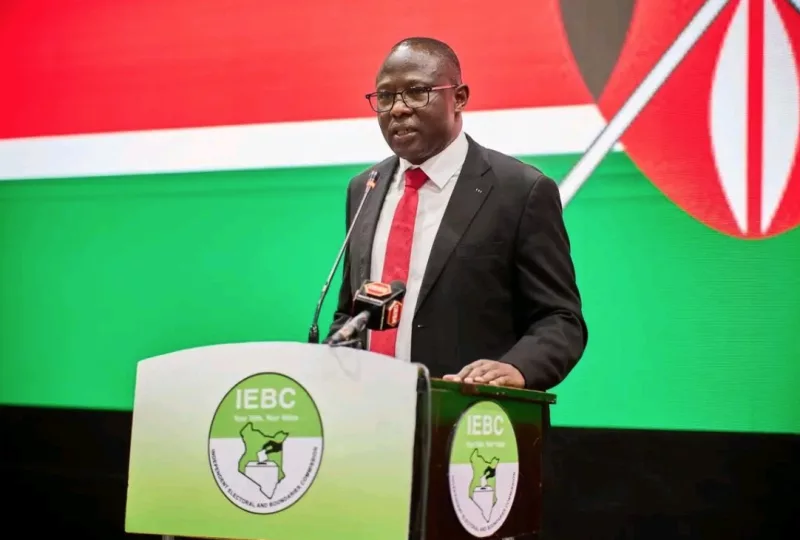
 The Independent Electoral and Boundaries Commission (IEBC) chair Erastus Ethekon/HANDOUT
The Independent Electoral and Boundaries Commission (IEBC)
has proposed a Sh4.44 billion campaign spending limit for presidential
candidates.
The commission capped expenditure by political parties at Sh17.7 billion as part of a broader package of reforms aimed at regulating campaign financing ahead of the 2027 General Election.
The proposed limits, which are contained in draft Election Campaign Finance Regulations, will be subjected to public participation before being forwarded to Parliament for approval.
The commission is also urging Parliament to pass the reforms by the end of August to allow the electoral body sufficient time, about one year, to prepare for the August 2027 General Election.
According to the IEBC, the proposals are intended to operationalise the Election Campaign Finance Act and create a more equitable electoral environment by regulating campaign expenditure across all elective positions.
Under the proposed framework, the total spending limits across elective positions include Sh5.63 billion for ward elections, Sh5.26 billion for constituency elections and Sh2.39 billion for county elections.
The commission said it arrived at the figures after estimating average campaign costs at the county, constituency and ward levels through consultations with stakeholders and by reviewing campaign financing practices in other jurisdictions.
To determine the expenditure ceilings, IEBC classified electoral areas into urban, sparsely populated and other categories.
It then applied a formula that assigns a 60 per cent weight to population and 40 per cent to land area, in accordance with Section 18(4) of the Election Campaign Finance Act.
The proposals acknowledge the higher costs associated with campaigning in geographically expansive counties.
If approved, candidates vying for governor, senator and woman representative seats in far-flung counties such as Turkana will be allowed to spend the highest amounts, capped at Sh123 million.
Candidates contesting similar positions in Nairobi will have a spending limit of up to Sh117.3 million, while those in Marsabit and Wajir will be allowed to spend up to Sh114 million and Sh113.8 million respectively.
The commission also proposed varying expenditure ceilings for parliamentary races depending on the size and characteristics of constituencies.
North Horr Constituency in Marsabit County would have one of the highest campaign spending limits at Sh94 million due to its vast geographical size, while Tetu Constituency in Nyeri County would have a ceiling of Sh11.2 million.
Kilgoris Constituency in Narok County would have a limit of Sh22.4 million, while Kibra Constituency in Nairobi would be capped at Sh14.5 million.
The IEBC also outlined the major areas where candidates and political parties are expected to incur campaign costs.
For political parties, transportation accounts for the
largest share of projected campaign expenditure at Sh11.81 billion.
Advertising and media campaigns are estimated to consume Sh1.84 billion, while the payment of election agents is projected at Sh1.52 billion.
Other significant expenditure items identified by the commission include branding, campaign materials and logistical support.
The commission said the proposed limits are intended to enhance transparency, accountability and fairness in campaign financing while preventing excessive spending that could undermine the integrity of elections.
The proposals form part of a wider package of electoral reforms that the IEBC has been pursuing since the beginning of the year in collaboration with Parliament's Justice and Legal Affairs Committee as preparations intensify for the 2027 polls.
The campaign finance rules also seek to breathe life into the Election Campaign Finance Act, which was enacted in 2013 but has never been fully implemented.