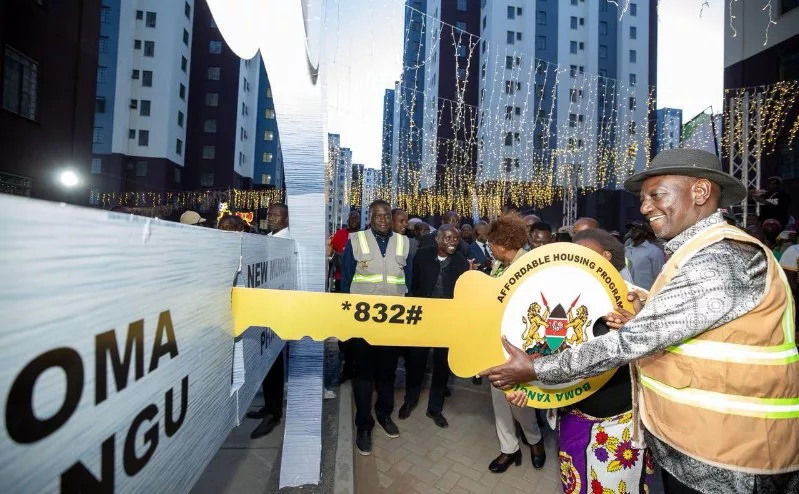
As the government rolls out the affordable housing to address housing shortage in the country, a scholar had faulted how the programme is being rolled out.
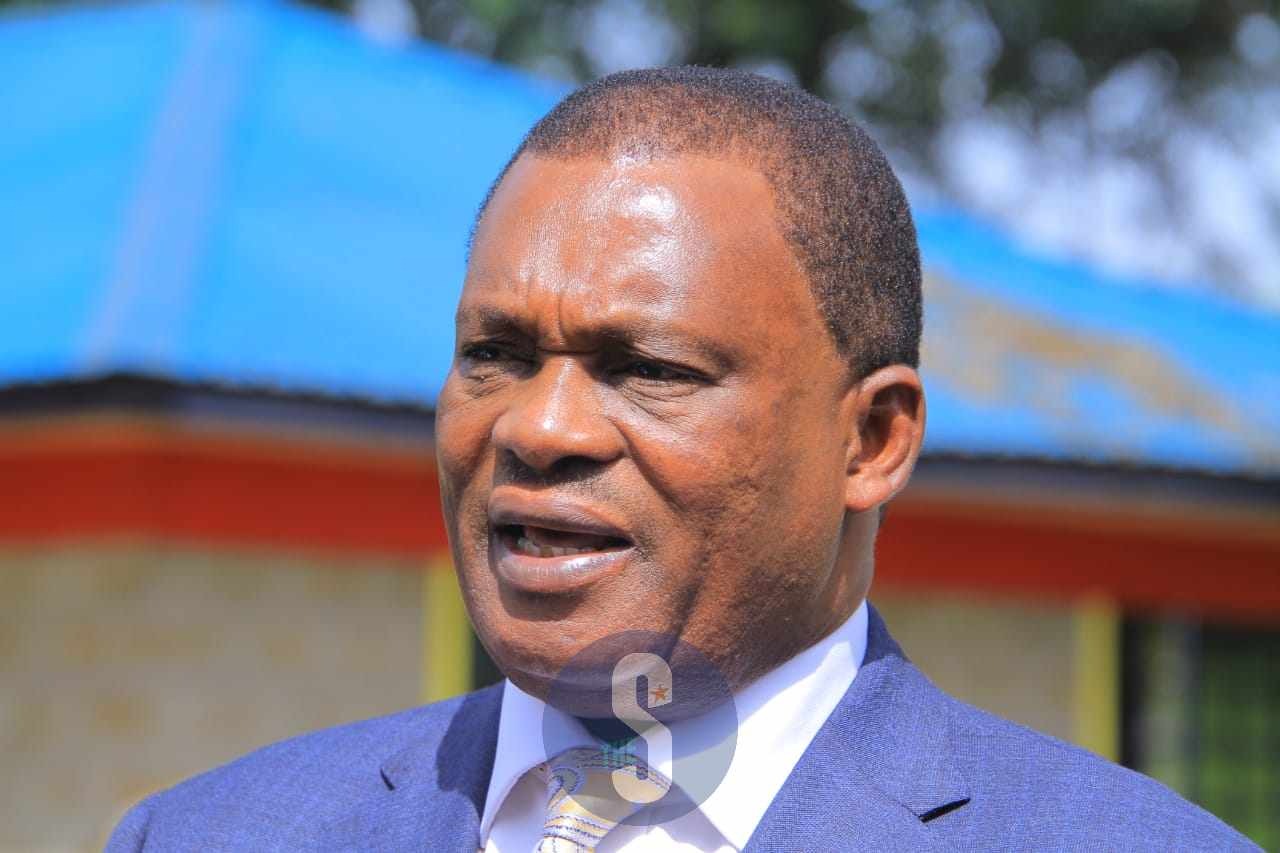
Prof Peter Ngau says reserving only 20 per cent of the ongoing houses for social housing for the low-income earners is not fair.
“The government should do more houses for the low-income housing because the 20 per cent social housing for the low income is not enough,” Ngau said.
The former don was speaking on Friday during the Muungano wa Wanavijiji International Conference at the Kenya School of Government.
Challenges facing those living in the informal settlements were highlighted.
They include insecure land tenure, poor housing, limited access to basic services and growing vulnerability to climate change as rapid urbanisation continues to pile pressure on cities.
The conference also marked 30 years of Muungano wa Wanavijiji, celebrating its role in promoting community-led urban development while strengthening partnerships between grassroots movements, researchers and government institutions to shape more inclusive cities.
Ngau has been doing research on the informal settlements for more than 30 years.
He is also a former lecturer at the University of Nairobi.
The annual housing demand in Kenya is estimated at 250,000 homes.
Currently, about 50,000 homes are developed annually, predominantly in the high-end market, leaving a deficit of 200,000 homes, particularly in the low-income segment.
The affordable housing programme is trying to address this gap by offering social housing for individuals earning up to Sh 20,000 per month, affordable housing for those earning between Sh20,000 and Sh149,000 per month, and affordable market housing for those earning more than Sh150,000 per month.
Ngau estimated that about nine million Kenyans live in informal settlements, including around 60 per cent of Nairobi's estimated 5.5 million residents.
He said the pricing for the houses will lock out many people.
Ngau said the majority of the people in the informal settlements earn very little money.
“Many of them do survival techniques and you find the average income is around Sh10,000 a month. What do you do with the 10,000? You have a family of three or four.”
He said the poor incomes will also lock out most of the informal settlement dwellers.
Ngau said the requirements for one to own a house also has a potential of locking out several people.
“When you look at what is required for someone to own a social house, because it is rent-to-own, you find many of them still cannot be afforded by the people in the informal settlements.”
Ngau said urbanisation has seen a lot of infrastructure, such as roads and housing, coming up.
He said vegetation was being cleared to pave way for such structures, a move that he said has compromised the integrity of the city.
“One of the things about resilience we need to address is that every building should be surrounded by some green vegetation.
“If you look at some of the high-rise buildings which are coming up, other than the building which is high-rise, a lot of the surrounding is concrete.”
Ngau said the buildings have increased global warming.
He decried that there was traffic congestion, emitting a lot of fumes to the atmosphere and also contributing to the warming.
“The way to address the problem of traffic generating or undermining urban resilience is to ensure that we use transport modes which are compatible with good climate adaptation.”
Ngau said efforts to establish bus rapid transit has failed due to the lack of political will.
He added that bus rapid transit in Tanzania has many advantages.
The buses do not emit dangerous gases, they carry many
people and they move fast as they have dedicated lanes.
He warned that if urgent action is not taken, there will be chaos going forward.
“If we don't take action, we will end up into a situation like what you see in some cities like in India where people actually can't go out during the day because of the smoke levels. We haven't reached there, but we are almost getting there.”
Ngau said the floods being witnessed in Nairobi
each time it rains is due to the fact that climate adaptive building designs
have been ignored.
He said many areas have been turned into concrete, a move that has reduced the water sinking capacity of the city.
Joe Muturi, president Global Slum Dwellers International-Kenya, said many people living in abject poverty in the slums cannot afford to pay for the houses.
“I think there has been a lot of talk about affordability, we are talking about basically the lowest unit, which is around Sh4,000. You are getting somebody who has been paying rent of Sh1,500 shillings or Sh2,000 which is a little bit expensive for them.”
Muturi said livelihoods must be in-coorporated into the affordable housing.
He reiterated that the community should be involved in the designing, dreaming of the affordable housing.
The movement has spent the last 30 years advocating affordable housing, secure land tenure and improved access to clean water, sanitation and livelihoods.
Communities have been empowered to identify their
own priorities by collecting data on population, housing, land ownership and
access to services.