Kenya signs work plan as nuclear power project gathers pace
Framework aligns Kenya's nuclear priorities with IAEA technical support
by FELIX KIPKEMOI
Audio By Vocalize
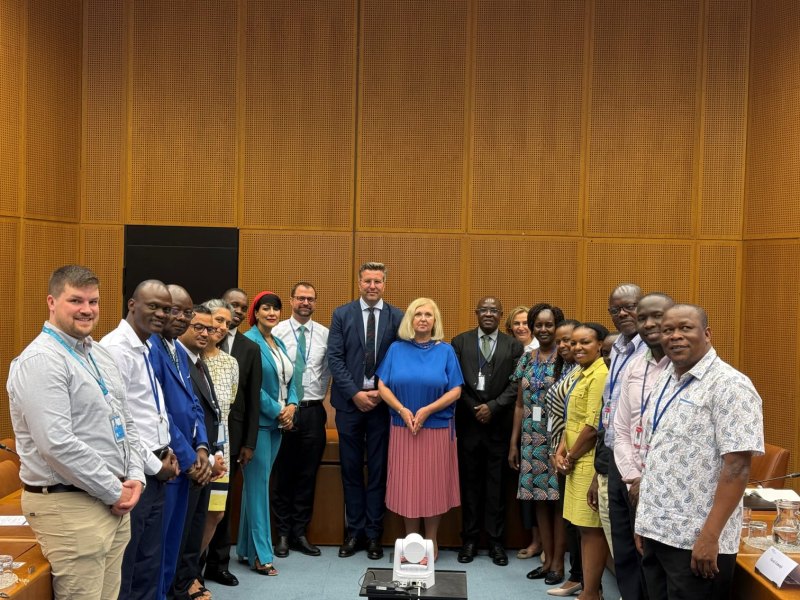
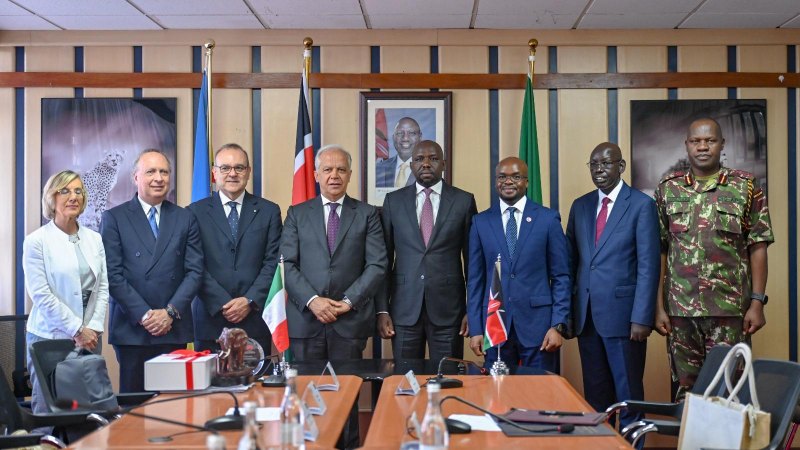
Kenyan delegation with other IAEA officials during a high-level
technical meetings held in Vienna between June 29 and June 30/NUPEA
Kenya has taken another step towards developing nuclear
energy after signing a new three-year cooperation framework with the
International Atomic Energy Agency (IAEA).
This sets the stage for the next phase of preparations for
the country's first nuclear power plant.
The Integrated Work Plan (IWP) for the 2026–28 cycle was
concluded during high-level technical meetings in Vienna between June 29 and
June 30.
The framework aligns Kenya's nuclear priorities with IAEA
technical support as the country advances plans to develop civilian nuclear
power.
The Kenyan delegation was led by Nuclear Power and Energy
Agency (NuPEA) CEO Justus Wabuyabo and included senior officials from NuPEA,
Kenya Electricity Generating Company (KenGen) and the Kenya Nuclear Regulatory
Authority (KNRA).
"The Integrated Work Plan provides a clear roadmap for
technical cooperation and strengthens Kenya's preparedness as we move towards
implementing our nuclear power programme," Wabuyabo said.
The joint participation of the three institutions
highlighted Kenya's coordinated approach to implementing its nuclear energy
programme in line with international safety and regulatory standards.
The agreement comes as the government moves ahead with plans
to construct a 2,000-megawatt nuclear power plant in Siaya county, a project
expected to become one of the country's largest energy investments.
The plant, estimated to cost about Sh500 billion ($3.8
billion), is scheduled for groundbreaking in 2027, with commercial operations
targeted for 2034.
Once operational, it is expected to provide reliable
baseload electricity, support industrial growth and reduce dependence on
weather-dependent renewable energy sources.
Government projections indicate the plant could help lower
electricity costs for manufacturers to between 4 and 5.5 US cents per unit,
enhancing Kenya's competitiveness as a regional industrial hub.
Lake Victoria was selected as the preferred location because
it offers the large and continuous water supply required to cool nuclear
reactors.
During the Vienna meetings, Kenya and the IAEA also
reaffirmed the roles of the country's three key nuclear institutions.
KenGen, which was designated the owner-operator of the
future nuclear power plant by Energy Cabinet Secretary Opiyo Wandayi in
December 2025, will oversee project financing, technology procurement,
construction and eventual plant operations.
"The designation of KenGen as owner-operator ensures
the project is anchored on an institution with decades of experience in
developing and managing complex power generation infrastructure," Wabuyabo
said.
The utility is expected to draw on its experience in
managing large-scale geothermal and hydropower projects as it prepares to
operate the country's first nuclear facility.
NuPEA will continue serving as Kenya's Nuclear Energy
Programme Implementing Organisation under the Energy Act, 2019.
Its mandate includes policy development, strategic planning,
capacity building, site characterisation and public engagement in communities
hosting the project.
Meanwhile, the Kenya Nuclear Regulatory Authority will
remain the independent regulator responsible for licensing, radiation
protection, nuclear safety, security and compliance with international
non-proliferation obligations.
The authority will also oversee environmental safeguards and
the management of radioactive materials to ensure public safety.
Before concluding their visit, the Kenyan delegation held
consultations with officials at Kenya's Permanent Mission in Vienna, led by
Ambassador Edwin Afandi, to brief them on the country's progress in
implementing the nuclear programme.
"Building a nuclear programme is not only about
technology. It is also about people, institutions and long-term
capability," officials noted during the Vienna engagements.
The newly signed Integrated Work Plan provides a roadmap for
technical cooperation over the next three years.
It covers
infrastructure development, regulatory strengthening, human resource training
and environmental assessments.
The latest agreement marks another milestone in Kenya's
long-term strategy to diversify its energy mix and meet growing electricity
demand through low-carbon, reliable power generation while adhering to
international nuclear safety standards.