
At least 60 women journalists are set to benefit from a project seeking to protect journalists from online abuse, sexual harassment and physical and psychological trauma.
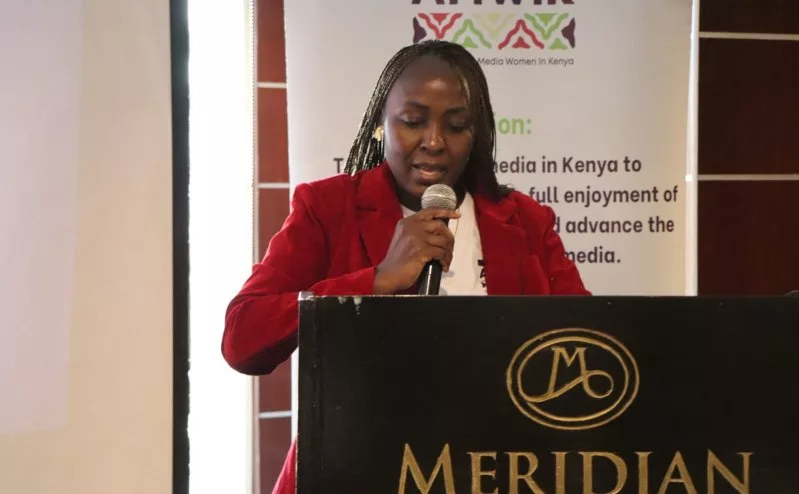
The Empowering Journalists for Safety and Equity in Kenya initiative was launched by the Association of Media Women in Kenya in partnership with Unesco.
The project seeks to address the challenges by strengthening newsroom policies, promoting digital safety, expanding mental health support, increasing women's participation in media leadership.
It also seeks to improve coordination among media stakeholders to respond to threats against journalists.
“Women journalists, interns and young reporters continue to face disproportionate levels of workplace harassment, online violence and limited access to psychosocial support,” Amwik executive director Queenter Mbori said.
She said the organisation has already made progress through a model sexual harassment policy developed in partnership with Journalists for Human Rights.
"We already have a model sexual harassment policy. About 23 media houses have been equipped with training, and about 20 of them have adopted the policy," Mbori said.
She said the project will build on those gains by bringing more media organisations on board while addressing existing implementation gaps.
"Right now we are talking about 60 per cent, affecting mostly media professionals at the entry level and interns. Through this project, we hope to onboard more media organisations, train them and share the model sexual harassment policy so that we are able to eliminate the high incidences of sexual harassment in the media," Mbori said.
Mbori also expressed concern over the low representation of women in newsroom leadership.
"We have 2.8 per cent of women in media leadership and about 3.7 per cent in editorial leadership. These are really minimal numbers," she said.
Amwik is investing in digital capacity building and mentorship to help women journalists build resilient careers while protecting themselves from online abuse.
Unesco Communication and Information Specialist Kharel Aakriti said the partnership is intended to strengthen freedom of expression by ensuring journalists can work safely online and offline.
"With this intervention we expect to train young journalists, provide mental and psychosocial support and make them resilient to continue doing their work while promoting freedom of expression," she said.
The launch also renewed calls for justice for journalists injured while covering public events.
Kenya Union of Journalists Secretary General Eric Oduor said the union has already moved to court over cases involving journalists injured during recent protests.
"We have already filed the matter in court. We want officers who abuse their powers when journalists are doing their job to be held personally responsible, prosecuted and, if possible, jailed," Oduor said.
He added that journalists injured while carrying out their professional duties deserve compensation and equal protection under the law.
On press freedom, Media Council of Kenya Manager for Press Freedom and Advocacy Rebecca Mutiso warned that attacks on journalists directly undermine democratic governance.
"When journalists are threatened, democracy is also threatened. We want to strengthen the mechanisms for protecting journalists and enhance technology to track violations and ensure timely interventions," Mutiso said.
Meanwhile, Kenya Community Media Network National
Coordinator Tom Mboya called for greater attention to journalists working in
community media, saying they are often the first targets during politically
charged periods because they live within the communities they report on.
"We hope journalists from community radio stations will
be part of this programme because they are easily identifiable and often become
targets during elections and conflicts," Mboya said.
Echoing the need for stronger support systems, Kenya
Correspondents Association Director of Programmes William Janak urged the
industry to prioritise journalists' mental health and mentorship as Kenya
prepares for the next election cycle.
"The environment is difficult, but let us not give up.
We need stronger psychosocial support and intergenerational mentorship so young
journalists are better prepared for the challenges ahead," Janak said.
Stakeholders agreed that protecting journalists requires
collective action from media houses, regulators, government agencies and
development partners, noting that a safe and independent press remains
essential to protecting the public's right to information and strengthening
democratic accountability in Kenya.