
President William Ruto's administration has turned Ol Kalou into a hive of activity, rolling out a flurry of projects in what is widely seen as a strategic bid to bolster UDA's chances to win the July 16 by-election.
In a
coordinated show of government might, Cabinet Secretaries, Special Projects
head Dennis Itumbi and Principal Secretaries have crisscrossed the constituency
to commission projects. The development projects span housing, transport,
education, trade, land administration and digital connectivity.
The
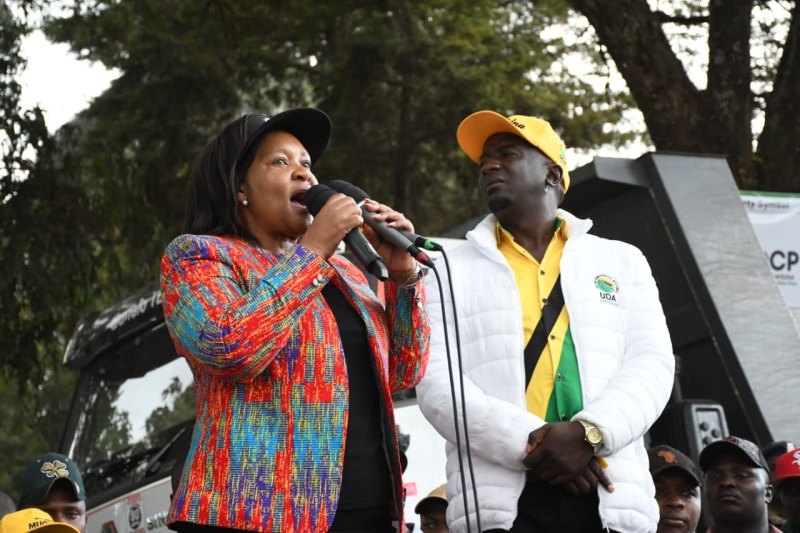
launches have frequently been attended by UDA candidate Muchina Nyaga.
The
development offensive comes as the Kenya Kwanza administration seeks to shore
up support in the Mt Kenya region, where popularity has dipped following the
fallout between Ruto and former Deputy President Rigathi Gachagua.
The Ol
Kalou contest is thus shaping up to be an early political test of whether the
government can reverse growing discontent in the Mt Kenya region.
Lands CS
Alice Wahome launched the Ol Kalou Affordable Housing project and commissioned
a modern market expected to benefit hundreds of traders.
Wahome led
several of the events alongside former Public Service CS and presidential
adviser Moses Kuria, with Nyaga, Nyandarua Woman Rep Faith Gitau and county
leaders in attendance.
The
government also launched Nyandarua University, a long-awaited institution
expected to expand access to higher education in the county. Ol Kalou Technical
and Vocational College hostels have also been commissioned.
The
transport sector has equally featured prominently in the government's charm
offensive.
In a
milestone for the region, cargo and passenger trains resumed operations on the
Nairobi-Gilgil-Ol Kalou-Nyahururu railway line for the first time in nearly
five decades. At the launch, wagons transporting fertiliser destined for
National Cereals and Produce Board depots in Ol Kalou and Nyahururu were
dispatched.
Kuria
hailed the revival as evidence that Ruto's economic transformation agenda was
gathering momentum.
He noted
that the line would reduce pressure on the Nairobi-Nakuru highway, while
lowering transport costs for farmers.
Tourism CS
Rebecca Miano also described the revived railway as a catalyst for economic
growth across the Aberdare region.
"The
revived Nairobi-Nyahururu railway line will not only cut travel costs but
reduce carbon emissions, while opening economic hubs across Ol Kalou and the
Aberdare Highlands," she said, crediting the initiative to Ruto's
Bottom-Up Economic Transformation Agenda.
The
government also opened Nyandarua county's first land registry in Ol Kalou, a
move officials said would decentralise land services and reduce the cost and
time residents spend seeking title documentation.
Miano later
joined Wahome in issuing title deeds to residents, saying secure land ownership
would unlock investment, improve access to credit and strengthen agricultural
productivity in one of Kenya's key food-producing counties.
"By
fast-tracking land registration and delivering title deeds directly to the
people, we are turning dormant capital into active economic assets," she
said.
ICT CS
William Kabogo on Thursday launched three digital hubs in
Wiyumiririe, Passenga and Mirangine, saying they would expand Internet access,
digital literacy and employment opportunities for young people.
Taken
together, the projects touch virtually every voting bloc in the constituency,
from traders and farmers to students, youth, commuters and landowners.
This
underscores what political observers see as a carefully calibrated effort to
demonstrate the benefits of remaining aligned with the national government.
Throughout
the launches, CSs have repeatedly framed the projects as evidence that the
President's Bottom-Up Economic Transformation Agenda is delivering tangible
benefits at the grassroots.
The
concentration of high-profile government activity has, however, reignited
debate over the use of state development programmes during election periods.
Opposition
leaders led by DCP leader Rigathi Gachagua have said project launches amount to
a state-backed campaign designed to influence voters ahead of the by-election.
Senator
John Methu, who is leading the DCP campaigns, has described the infrastructural
blitz as an overt attempt to bribe the electorate using public resources.