 National Social Security Fund (NSSF)
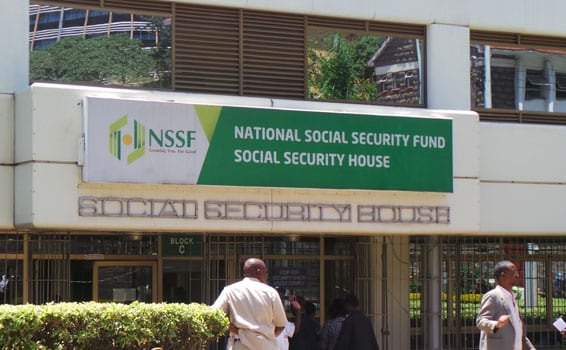
The Court of Appeal has acknowledged a procedural error in the long-running dispute over the implementation of the National Social Security Fund (NSSF) Act, 2013.
In a statement acknowledging the mistake, the appellate court set aside a ruling that had inadvertently been delivered on an application that was no longer before the court.
In correcting its earlier proceedings, the court found that a ruling delivered earlier in May had addressed the wrong application and could therefore not stand.
“The ruling of 29th May 2026 was founded on an error apparent on the face of the record, as it determined an application that was no longer live," the statement reads.
The dispute traces its roots to the implementation of the NSSF Act, 2013.
The Act introduced a salary-based contribution tier structure, replacing the previous fixed contribution model under which employers and employees each contributed about Sh200 monthly.
The law has been the subject of years of litigation.
The matter was initially heard by the Employment and Labour Relations Court (ELRC), which in September 2022 declared the Act unconstitutional.
Following that judgment, the National Social Security Fund (NSSF) filed an appeal and, on October 14, 2022, sought orders suspending execution of the ELRC decision pending determination of the appeal.
However, according to the Court of Appeal, subsequent developments overtook that application.
According to the statement, the main appeal had already been determined on February 3, 2023, and the dispute later proceeded to the Supreme Court.
In February 2024, the Supreme Court referred aspects of the matter back to the Court of Appeal for hearing and determination.
Separately, the Kenya Export Floriculture, Horticulture and Allied Workers Union had filed an application dated September 23, 2024, seeking to be joined in the proceedings as an interested party.
That application was heard on January 23, 2025, and reserved for ruling.
However, when the matter came up on May 29, 2026, the Court of Appeal inadvertently delivered a ruling on an earlier application seeking to temporarily suspend implementation of the ELRC judgment instead of determining the pending joinder application.
That ruling declined to suspend the implementation of the judgment.
"The error and application to set aside on 29th May 2026, the Court mistakenly
delivered a ruling on the spent stay application dated 14th October 2022, declining to grant a stay instead of ruling on the Union's joinder application,
which was the only live matter before the Court," the statement said.
It adds that after the error was brought to the court’s attention by counsel, the Attorney General filed an application on June 10, 2026, seeking to have the ruling recalled and set aside.
In its latest decision, the Court of Appeal agreed that the ruling had been issued in error.
The judges held that the mistake was apparent on the face of the record because the court had determined an application that had already been overtaken by events while leaving the active joinder application unresolved.
The court relied on previous decisions defining an error apparent on the face of the record as one that is obvious and self-evident.
The judges further affirmed that appellate courts retain inherent jurisdiction to correct decisions where clear procedural mistakes threaten fairness or undermine confidence in the administration of justice.
According to the court, public confidence considerations weighed in favour of intervention because parties had not been heard on the application that was mistakenly determined.
"Public confidence in the administration of justice was at stake, since parties had not been heard on the application that was erroneously decided," the statement added.
"The ruling was amenable to being set aside in the interests of justice."
The appellate court unanimously set aside the May 29 ruling and directed that no party would bear costs, noting that the error originated from the court itself.
The matter will now proceed to a ruling on July 3, 2026, on the union’s application seeking to join the appeal.
Once that issue is determined, the remitted appeal is expected to proceed to a hearing on its substantive merits in line with earlier directions issued by the Supreme Court.
The ruling had prompted various institutions, including the Law Society of Kenya (LSK), the Federation of Kenya Employers (FKE), and the Central Organisation of Trade Unions (Kenya) (COTU), to issue differing interpretations and guidance on compliance.
The latest statement now clarifies the court’s position.