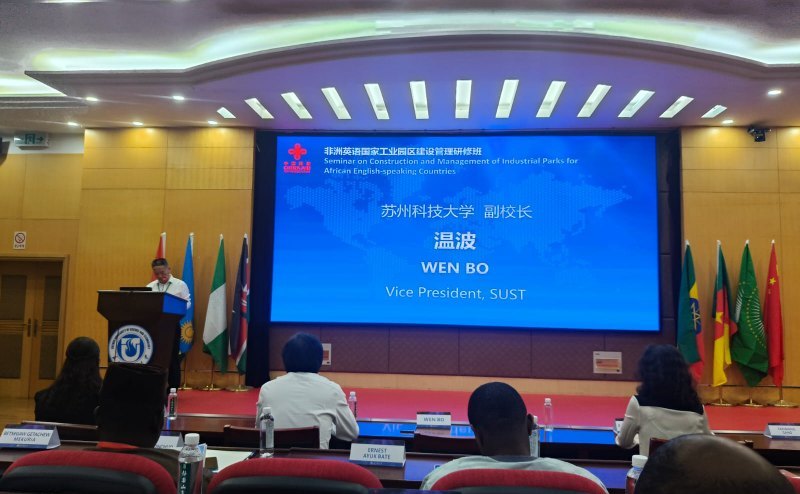
China is sharing its decades of experience in developing industrial parks through a specialised training program at Shuzhou University of Science and Technology (SUST) as industrialisation accelerates across Africa.
The exchanges have already benefited over 2,500 participants from more than 130 Belt and Road Initiative countries.
The program, hosted under the China Aid initiative, brings together government officials, planners, and industry leaders from African nations to study the comprehensive approaches that have made Chinese industrial zones global models for economic transformation.
It addresses a critical need as African countries increasingly look to special economic zones as catalysts for job creation, technology transfer, and sustainable development.
"Industrial parks have emerged as a pivotal platform to marshal resources for growth and development," said Hu Ying, Vice Dean of SUST's School of Architecture and Urban Planning.
"This program addresses the practical needs of African countries and represents an opportunity to implement the China-Africa consensus on industrial development."
The training curriculum covers everything from site selection and taxation policies to environmental sustainability and management practices.
More than 130 short-term training programs have been offered so far, with participants gaining deep understanding of the latest concepts in industrial park management.
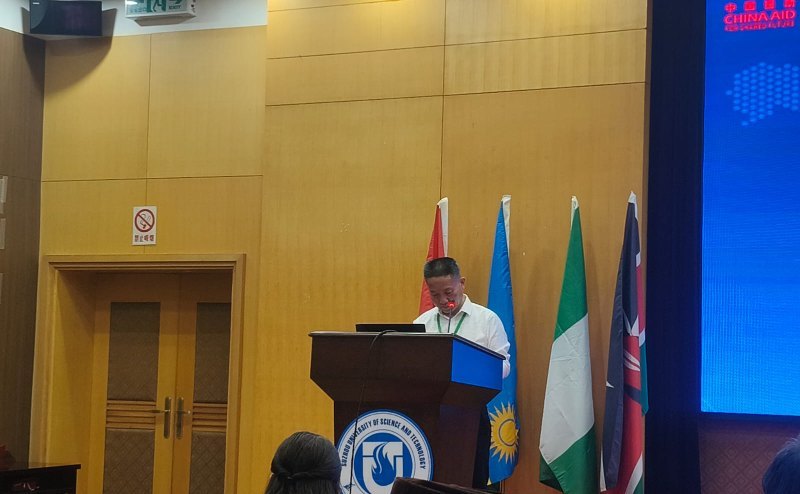
Wen Bo, Vice President of SUST, described the university as a comprehensive institution covering science, arts, and humanities.
He noted that the program emphasises experience sharing among participating countries, allowing African nations to learn from both China's successes and challenges.
Qiu De Hua, Dean of the School of Architecture and Urban Planning, spoke to the practical nature of the program.
"This is not only an academic fete but an opportunity to improve communication between us," he said.
"Industrialisation is an essential path towards comprehensive development and modernisation. African countries have pursued industrialization, and the parks are accelerating that expansion, making skills better for lasting social impact."
Qiu highlighted that Shuzhou stands as a model for upgrading industrial parks and has become an important window to the world.
"China's experience in comprehensive industrial park construction will provide valid lessons to understand the context of parks in sustainable development," he said.
"We seek to address the practical needs of industrial park construction, moving from theory to practice, and promote cooperation between participating countries and China."
Qiu noted an urgent need to seek solutions for green and sustainable economic development—a priority integrated into the training programs, especially in the face of profound adjustments in the current global economic and climate landscape.
Farimang Saho, the Gambia representative participating in the program, expressed appreciation for China's commitment.
"China is doing its best to make the world a better place," Saho said. "Equipping a person with knowledge is the best investment ever."
He added that despite participants coming from different countries, the challenges of industrial development are somehow similar, making the lessons directly applicable for construction of industrial parks back home.
The training initiative is part of the deliverables of the China-Africa cooperation on industrial development.
Industrial data shows that by the end of 2025, China-Africa economic and trade cooperation zones had attracted over 13 billion US Dollars in investment and generated more than 55.5 billion US Dollars in output value, according to Chinese Commerce Ministry. These zones have helped raise Africa's local processing rate from 15 per cent to 45 per cent.
Notable success stories include Ethiopia's Eastern Industrial Zone, which hosts 140 companies, provides 24,000 local jobs, and has produced USD 2.5 billion in total output.
The park has become a model for other African countries seeking to replicate China's industrial development approach.
Kenya is also making attempts to establish industrial parks in every county.








![[PHOTOS] Raila Odinga Stadium construction enters home stretch](https://cdn.radioafrica.digital/image/2026/06/45f6990c-4882-4cd2-b83c-8fc730dcdce5.jpg)
![[PHOTOS] Calm prevails in Kisumu, Homa Bay](https://cdn.radioafrica.digital/image/2026/06/dff8923b-c99a-4f40-a4be-cc996653e4e0.jpg)