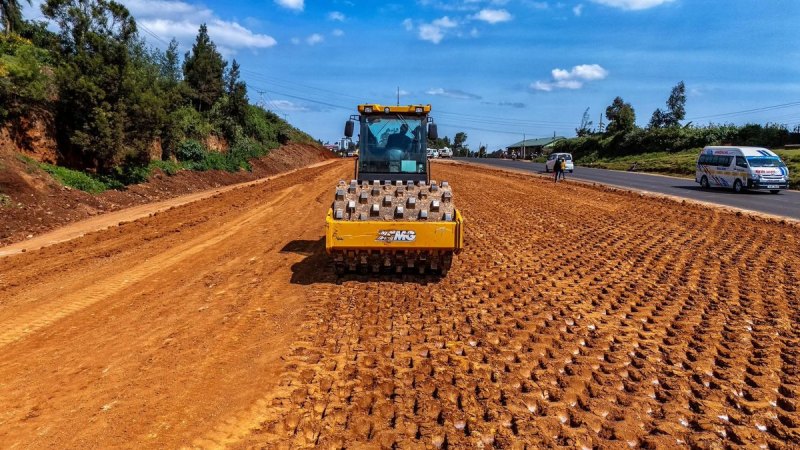
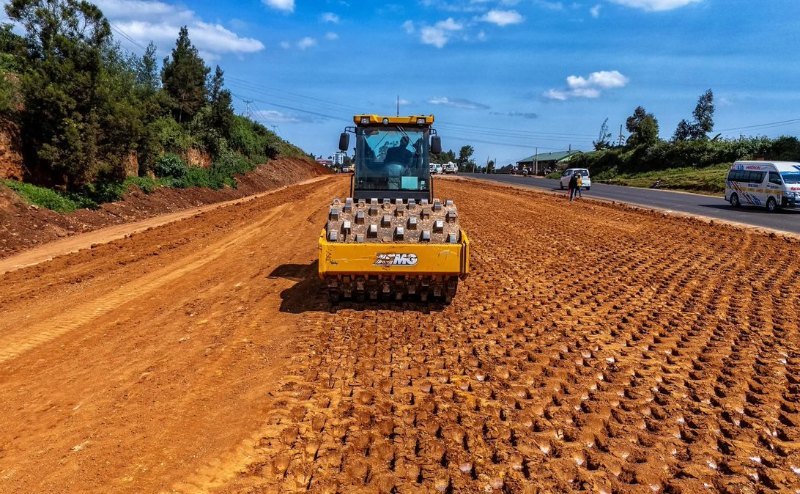
 Mau Rironi Summit under construction/ handout
Motorists using the proposed Rironi–Nakuru–Mau Summit Highway will be required to pay a toll of Sh8 per kilometre once the project is completed, the Kenya National Highways Authority (KeNHA) has confirmed.
The announcement forms part of the government’s wider plan to finance the major highway upgrade under a Public–Private Partnership (PPP) model, which will see private investors construct, operate and maintain the road before transferring it back to the State after a concession period.
According to KeNHA, the tolling system will apply mainly to passenger vehicles, with charges calculated based on the exact distance travelled along the 175-kilometre stretch linking Nairobi to Nakuru via Mau Summit.
Officials say the structure has been designed to ensure users pay in proportion to their road usage, a model commonly used on modern expressways globally. Under the arrangement, the full journey on the highway is expected to cost motorists about Sh1,300 to Sh1,400 per trip, depending on final operational parameters.
KeNHA has also indicated that the toll rate will not remain static. The charge will increase by about one per cent annually, reflecting inflation adjustments and operational cost changes over time.
The authority further disclosed that the expressway will feature multiple toll points under an electronic system that automatically calculates charges based on distance covered. This means motorists will not pay a flat fee but will instead be billed according to the sections of the highway they use.
The Rironi–Mau Summit Highway is one of Kenya’s flagship infrastructure projects aimed at easing congestion along the busy Northern Corridor, a route that connects Nairobi to western Kenya and neighbouring countries including Uganda.
Government officials argue that the upgraded road will significantly reduce travel time, improve safety, and enhance the movement of goods and services, particularly for traders and transporters who rely heavily on the corridor.
As part of the broader tolling framework, certain categories of essential service vehicles, including ambulances, police, and military vehicles, are expected to be exempted or granted special considerations once the system becomes operational.
While the project has been widely welcomed as a major infrastructure boost, the proposed toll charges have sparked debate among motorists and transport stakeholders, with concerns raised over affordability and the rising cost of road use.
The highway is expected to be completed and opened to traffic in the coming years under the government’s ongoing road expansion programme.