Kenya has expanded its debt portfolio by venturing into the Japanese market and securing a Sh22.1 billion loan facility dubbed the Samurai Bond.
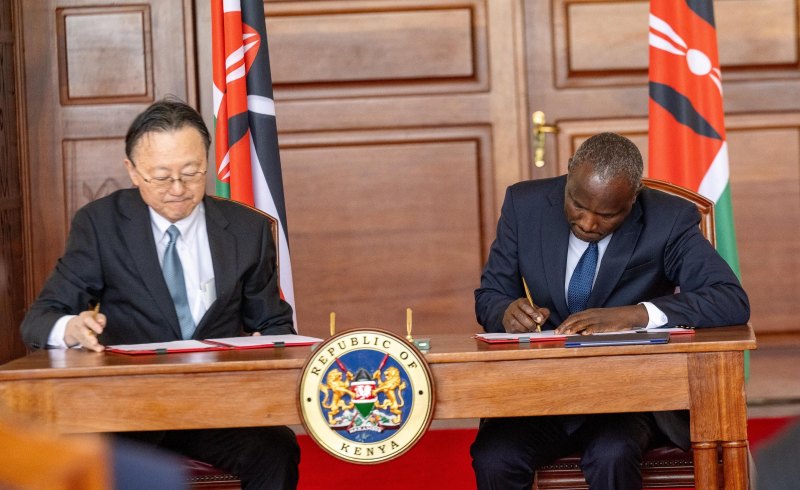
The financing agreement and Memorandum of Understanding were signed on Monday at State House, Nairobi, with President William Ruto touting it as a historic moment, noting that it is the first time Kenya has accessed the Japanese credit market.
"It has never happened before. Not more than two countries in Africa have travelled this journey," he said.
The President said the milestone marks the start of Kenya's diversification of its sovereign debt portfolio to finance major development projects aimed at transforming the country.
Kenya first launched its quest to acquire a Japanese yen-denominated Samurai Bond in July 2023, when the National Treasury initially tabled the option to help diversify external debt and settle maturing dollar-denominated loans.
In February 2024, the two countries inked an MoU for Japan to issue a larger facility targeting e-mobility, infrastructure and energy efficiency, culminating in the issuance of the JP¥25 billion facility.
The bond is targeted at financing three development components, with 15 billion Japanese yen (Sh13.1 billion) going to Kenya's automotive sector and policy framework, the main focus of the agreement and the country's industrial ambitions.
The money will be used to establish car assembly plants and expand the country's manufacturing base, moving it towards becoming a competitive, export-ready automotive hub.
Ruto said this will not only create jobs locally but will also help build Kenyan talent, skills and expertise while reducing the country's dependence on imports by creating value at home.
"For too long, Africa has imported what it could build and exported the jobs that come with it. We are changing that. We will not simply import finished vehicles; we will assemble them here in Kenya by Kenyan workers," he said.
The automotive component aligns with Kenya's broader industrialisation agenda, which seeks to increase local manufacturing, create employment opportunities and position the country as a regional production centre for vehicles and related components.
The second component will utilise JP¥5.5 billion (Sh5 billion) to fund the Reduction of Energy Losses Programme, which aims to ensure Kenya has modern infrastructure capable of producing affordable and reliable power.
A Reduction of Energy Losses Programme is an initiative by the government to minimise power wastage and revenue losses within electricity transmission and distribution networks.
It generally targets two categories of energy losses. The first is technical losses, where power gradually disappears through wires, transformers and ageing equipment during transmission and distribution.
The second category comprises commercial losses, where energy is lost through billing anomalies, unauthorised usage and electricity theft through illegal connections, a problem most prevalent in informal settlements.
Ruto said achieving cheaper and cleaner power is the foundation of an industrial economy and critical to Kenya's long-term growth ambitions.
"By cutting technical and commercial losses, we lower the cost of energy, steady our grid and make Kenyan industry more competitive."
Lower energy costs are expected to benefit both households and businesses by reducing production expenses and improving the reliability of electricity supply, factors considered essential for attracting investment and supporting industrial expansion.
The third component is a JP¥4.5 billion (Sh4 billion) allocation earmarked for supporting Kenya's reform and development agenda.
The money will go towards reinforcing essential public services, protecting key social investments and strengthening institutions that sustain economic growth.
The President said the advancement of this component demonstrates Japan's confidence in the progress Kenya is making and its commitment to responsible economic management.
"Together, these three priorities carry a single message: Japan's trust in Kenya's direction and Kenya's commitment to manage every shilling with discipline, transparency and accountability," Ruto said.
National Treasury Cabinet Secretary John Mbadi said entry into the Japanese market offers cheaper financing options, indicating that, going forward, the new frontier could be where Kenya looks to fund part of its budgetary needs.
"This is in line with our strategy, and our strategy as a country is that we are exploring other alternative concessional funding models given our situation in terms of fiscal space. This is one of those initiatives where we are exploring other alternative sources of funding which are much cheaper than the commercial rates."
Mbadi said the Samurai Bond carries an interest rate of between 0.5 per cent and 3 per cent, subject to the credit rating of the sovereign borrower.
He said such rates compare favourably with many commercial loans available in international markets and could provide the government with a more affordable source of financing for development projects.
The Treasury CS added that this model of borrowing also lowers the risks associated with overreliance on dollar-denominated loans, particularly exposure to exchange rate volatility when the local currency weakens and debt-servicing costs rise.
Dollar-denominated loans heavily burden Kenya by exposing both the government and private sector to severe foreign exchange and interest rate risks.
When the local currency weakens, the cost of servicing these debts swells, draining national reserves, escalating import costs, and restricts funding for public services.
By diversifying its sources of financing and tapping into the Japanese market, Kenya hopes to broaden its investor base, reduce borrowing costs and strengthen its ability to fund critical development priorities while maintaining sustainable debt management.
The Samurai Bond therefore represents more than a financing arrangement. It signals a strategic shift towards alternative and concessional sources of credit as the government seeks to balance development financing needs with efforts to contain the country's growing debt burden.

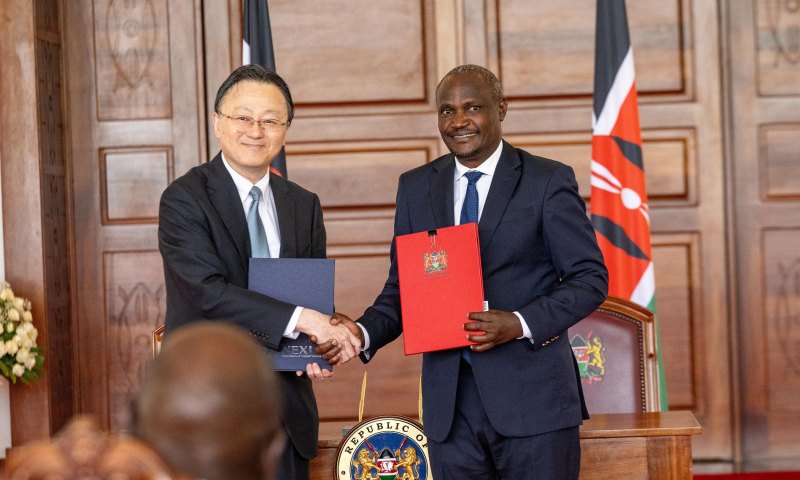 Treasury CS John Mbadi and NEXI CEO Atsuo Kuroda after the signing of the Samurai Bond financing agreement and MoU at State House, Nairobi, June 22, 2026. /PCS