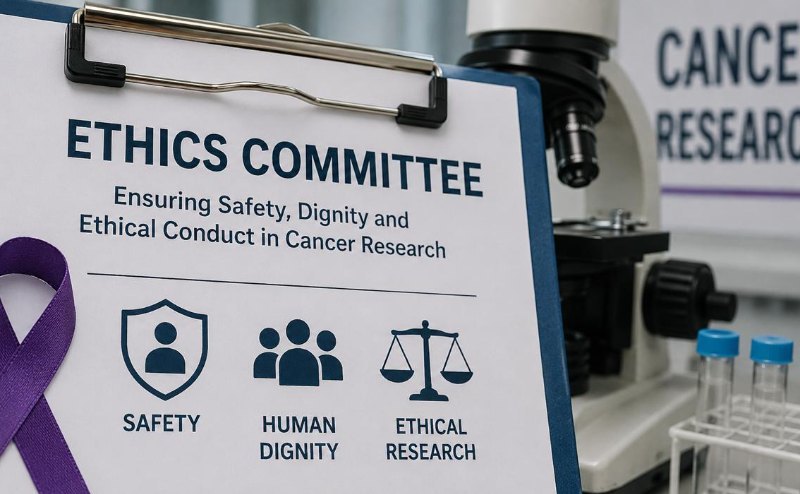
 AI-generated
Kenya has taken a significant step towards safeguarding
participant safety and human dignity in cancer studies following the
establishment of a new Institutional Scientific and Ethical Review Committee
(ISERC) by the National Cancer Institute of Kenya (NCI-K).
The committee, which will provide independent scientific and ethical review of cancer-related research protocols, marks what NCI-K described as “a major milestone in the growth of cancer research governance in Kenya.”
According to the institute, the committee was established to strengthen ethical and scientific oversight of cancer research and ensure studies conducted in the country adhere to the highest standards of scientific rigour, participant safety, human dignity and regulatory compliance.
Members of the newly constituted committee recently completed an intensive ethics training programme facilitated by the National Commission for Science, Technology and Innovation (NACOSTI).
NCI-K said the training equipped committee members with critical competencies in research ethics, informed consent, protection of vulnerable populations, scientific and ethical review of research proposals, quality assurance, community engagement, research integrity, post-approval monitoring and emerging issues in research ethics.
The establishment of the committee comes as research continues to play an important role in informing cancer prevention, diagnosis, treatment and control efforts in Kenya.
The institute said the initiative is expected to “strengthen ethical conduct of cancer research in Kenya” while enhancing protection for research participants and communities involved in scientific studies.
NCI-K further noted that the committee will help improve the quality and credibility of cancer research outputs and support timely and efficient review of cancer research proposals.
The institute added that the committee’s work is expected to contribute to evidence-based cancer prevention, diagnosis, treatment and control policies, helping ensure research findings continue to inform decision-making across the healthcare sector.
By providing dedicated scientific and ethical oversight of cancer studies, the committee is expected to strengthen public confidence in research processes while promoting accountability, participant protection and adherence to ethical standards.
The establishment of ISERC positions Kenya to further strengthen the integrity of cancer research and ensure studies involving human participants are conducted responsibly, safely and in line with national regulatory requirements.