
As wars, geopolitical rivalries and supply chain disruptions reshape the global economy, African and Chinese policymakers are increasingly viewing energy cooperation as a strategic shield against growing global uncertainty.
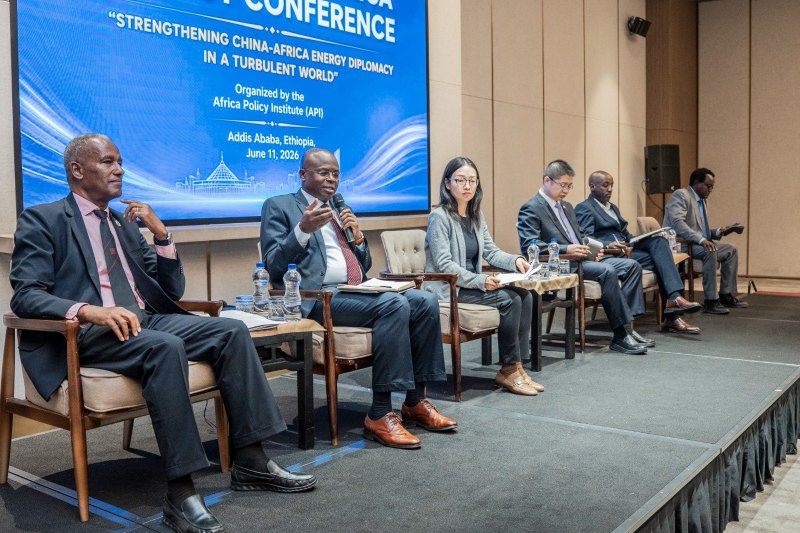
That was the central message emerging from a high-level conference on
‘Strengthening China-Africa Energy Diplomacy in a Turbulent World’ hosted by
the Africa Policy Institute in Addis Ababa, Ethiopia.
Foreign policy and energy experts argued that energy security has become
one of the defining geopolitical challenges of the 21st century.
The discussions came against the backdrop of the tensions in the Middle East,
particularly the US-Iran confrontation, which have ceased following the signing
of a peace deal on Wednesday.
However, ongoing conflicts in major energy-producing regions, such as
Russia, and growing volatility in global energy markets, have disrupted
supplies.
Participants said these developments are exposing the vulnerabilities of
energy-importing economies and accelerating the search for more resilient and
diversified energy systems.
Panellists noted that geopolitical instability and conflicts in key
energy-producing regions have demonstrated the urgent need for diversified and
resilient energy systems.
“Fluctuations in global oil and gas markets often have significant
economic consequences for African countries, affecting energy affordability,
transportation costs, industrial productivity, food systems and overall
economic stability,” they said.
However, experts said Africa is no longer a peripheral player in global
energy politics.
The continent’s vast renewable energy resources, strategic minerals,
expanding consumer markets and geographical position are making Africa a
critical actor in shaping future energy security frameworks.
And as traditional energy supply chains become more vulnerable to
geopolitical shocks, Africa’s importance is likely to increase further.
Participants pointed to the risks posed by instability in the Gulf
region, which remains one of the world’s most important energy-producing hubs.
Any disruption to major maritime routes, such as the Strait of Hormuz,
has the potential to trigger higher fuel prices, inflation, supply chain
disruptions and slower economic growth across Africa and beyond.
Against this backdrop, experts said China-Africa energy cooperation is
evolving beyond traditional resource extraction and infrastructure financing.
Instead, the partnership is increasingly focusing on renewable energy
deployment, green industrialisation, technology transfer, local manufacturing
and the development of resilient supply chains.
The conference highlighted Africa’s comparative advantages, including
abundant solar, wind, hydropower and geothermal resources. The continent also
possesses significant reserves of critical minerals, such as lithium, cobalt,
graphite, manganese and rare earth elements, which are essential for the global
energy transition.
Participants argued that these resources present an opportunity for
Africa to move beyond its traditional role as a supplier of raw materials and
become an active participant in the green economy.
“The next phase of cooperation should prioritise value addition, local
manufacturing, skills development and sustainable industrial ecosystems,” the
conference report noted.
The discussions also reflected a growing recognition that renewable
energy is no longer simply a climate policy issue.
Instead, renewable energy is increasingly being viewed as a strategic
asset capable of reducing dependence on volatile fossil fuel markets,
strengthening energy independence and enhancing long-term economic resilience.
China’s experience in renewable energy technology, manufacturing and
financing was identified as a significant advantage that could accelerate
Africa’s energy transition, while supporting broader development objectives.
Another major theme was the growing importance of energy diplomacy.
Panellists described energy diplomacy as the intersection of foreign
policy, economic cooperation, security strategy and sustainable development. In
an increasingly fragmented world, they argued, diplomatic engagement is
becoming essential to preventing energy insecurity from escalating into wider
political and economic crises.
The conference warned against the weaponisation of energy resources and
called for stronger international cooperation to protect critical
infrastructure, maintain open supply chains and strengthen multilateral energy
governance frameworks.
Experts further stressed that energy security should be viewed through a
human security lens.
While energy debates often focus on states and markets, ordinary
citizens bear the consequences of energy disruptions through higher food
prices, increased transport costs, reduced industrial productivity and rising
unemployment.
The conference also highlighted the importance of regional integration
in strengthening Africa’s resilience.
Expanded regional power pools, cross-border transmission networks and
coordinated energy policies were identified as critical tools for improving
reliability, lowering costs and reducing vulnerability to external shocks.
China-Africa cooperation was seen as playing an important role in
supporting these efforts through infrastructure investments and knowledge
exchange.
Participants called for accelerated investment in renewable energy,
stronger technology transfer mechanisms, local capacity building, research
partnerships and green industrialisation initiatives. They also urged African
governments to develop local value chains around critical minerals and reduce
dependence on imported fossil fuels.
The conference concluded that the future of China-Africa relations may
increasingly be defined not by traditional trade and infrastructure projects
but by a shared quest for energy security in an era of geopolitical
uncertainty.